About this episode
Dimagi has set out to "Exceed Market Expectations" over the next five years: creatively over-delivering on value today while shaping market alignment and raising expectations for tomorrow. A key part of that strategy is deepening partnerships to drive national scale.
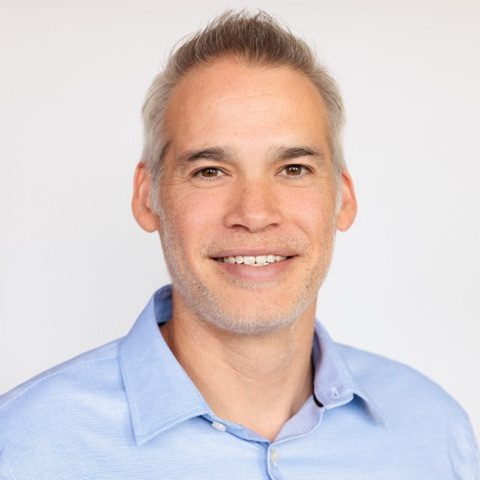
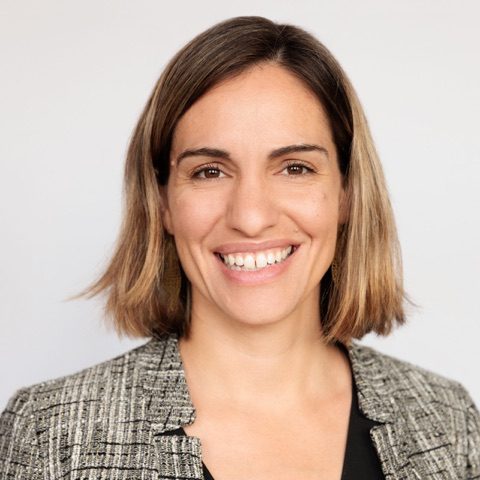
In this episode, the hosts sit down with Ismaïla Diene, Managing Director for Dimagi's Solutions Division, and Fatou Sow, a Project Manager on the Solutions Division team, to dig into why achieving national scale for digital solutions like CommCare matters so much to long-term impact, and what makes it so hard to reach.
The conversation draws on lessons learned over two decades, looks at how Dimagi is approaching national scale partnerships going forward, and explores national scale projects in Burkina Faso and Madagascar.
In this episode
- "Exceed Market Expectations": what Dimagi's five-year strategy means, from over-delivering on value today to raising expectations for tomorrow
- Why national scale matters for the long-term impact of digital solutions like CommCare
- What makes scale hard: the real challenges of moving toward nationwide deployment
- Two decades of lessons on driving national scale and shaping market alignment
- Partnerships as the path: how Dimagi is approaching national scale partnerships going forward
- On the ground: national scale projects in Burkina Faso and Madagascar
- Inside the Solutions Division with Managing Director Ismaïla Diene and Project Manager Fatou Sow
Read the transcriptExpandCollapse
This transcript was generated by AI and may contain typos and inaccuracies.
Amie Vaccaro: Welcome to High Impact Growth, a podcast from Dimagi about the role of technology in creating a world where everyone has access to the services they need to thrive. I'm Amie Vaccaro, your co-host. Today, we're digging in on Dimagi's third strategic priority for the next five years, which is exceed market expectations. So the strategy says that we will creatively over-deliver on value today while shaping market alignment and raising expectations for tomorrow. Today's episode is really fascinating and rich. Jonathan Jackson and I sit down with Ismaïla Diene and Fatou Sow to dig in on one consideration of the strategy, which is we will continue to deepen our partnerships to drive national scale.
So Ismaïla is the managing director of our solutions division. And Fatou is a project manager on the solutions division team. And they are two key players in some of Dimagi's national scale projects, where an entire country's community health workforce is using or has committed to using CommCare to improve health service delivery. Ismaïla and Fatou will share experiences on national scale digital health projects in Burkina Faso, as well as Madagascar. And they're also going to share with you some of the challenges of reaching national scale.
As well as the benefits and how we're thinking about it at Dimagi. As part of that, you'll hear about how we're working with ministries of health. The government agency is responsible for ensuring population health and how CommCare can be used across every level of a health system or a health pyramid from the national level to the districts to the health workers and primary health care centers. Enjoy. Ismaïla, can you start by introducing yourself and tell us a little bit about what brought you to Dimagi?
Hello, everybody. So my name is Ismaïla. I'm based in Dakar, Senegal. So what brought me to Dimagi? I would say a bit of luck. I met the person who brought me to Dimagi, Clara, who became my manager in a business trip I had when I was in my previous company. And I think as well a bit of the good opportunity at the perfect time. I was bored doing IT auditing at the time. I was back in the continent a couple of years before and I was looking for an opportunity. I was looking for a job that would really have impact and to feel a bit more like the work I'm doing and the impact that I was doing rather than auditing systems and not really knowing what the value of my work was towards the partners I was working with.
So that's what brought me to Dimagi. And what has kept you here all these years? Good question. I think a ton of challenges and opportunities. I had potentially six different positions since I joined. Seven years ago. So I think the different opportunities that were presented to me is one part of it personally. But just the work we're doing in general. I think when you, I don't go that much in the field anymore, but just seeing the impact of our solutions, how it transforms ecosystems, how it impacts personally some individuals, not just in terms of like CHWs.
That's community health workers. And the impact they have on the population they're living, but as well in just their... their own, their own kind of self image and then the image that they have in the community. So it's, you know, changing opportunities. You've had multiple different roles and just really like feeling motivated by the impact that we're having. Yeah. And I think as well, maybe the, probably the biggest one is the challenges ahead. I feel like we've sorted maybe 5% of like what we need to sort and that there is like way more to do.
And then I think that's as well, something that keeps me going. On behalf of Dimagi, it's my limb. Happy to. Thank you. I think you're going to present more challenges to your division for your team to take on. I will do my best there. Yeah. No, that's, that's beautiful Ismaïla. And that is something we've heard from some of our other guests too, is just like, there's so much more work to be done. We've, we've made some great progress, but there's so much more to be done.
Fatou, over to you. I'd love to hear a little bit about your story and what brought you to Dimagi. Yeah, definitely. So for me, I joined Dimagi, I think about almost six years now, five years and a half. It was November 26th. And actually I was still working in Paris, still working in France, was looking to come back to Senegal or, you know, any other country actually in West Africa to start my journey here. And I remember I kind of like stumbled upon when I was doing research on the internet, like find some opportunities here.
And then when I was doing some research, getting into the website, getting to know a little bit more about the company, I applied and fortunately I was able to join as a project analyst. And so six years later, what, why are you still here? Yeah, I think that's a great question because I will definitely say one thing. A lot about the people that you get to work with. That definitely makes you want to stay longer in the company. And I think that basically in Dimagi, I've had the opportunity to work with a lot of different, a lot of different projects, a lot of different teams.
So I'll definitely say that the people that you work with make it really special because I feel like we had like a great team here. We have Ismaïla who is, even though he's an MD and all, he's still getting into the project and keep on nagging. He's still getting into the project and keep on nagging us about things to do and all. So we definitely make a big difference. And I will say one other thing, and it's something that he mentioned as well, is regarding the challenges that you face, which I think are quite unique, especially when you come from a more corporate type of company.
You get to go in the field, work with more people and definitely make impact. Working on this case study for Madagascar really made me see the impact that we had there and the work that they're doing in country. So I think that's one other thing that kind of like makes you really want to stay longer. And see what we can do more. And Fatou, I know you've been involved in some of our like largest, widest scale projects. So I can see how that could be just really motivating and also super challenging.
So kudos for sticking with it this long. It's amazing. All right. So I, for today's episode, what I really wanted to dig in on in this kind of strategic priority three is around national scale. And I think Fatou and Ismaïla, you are some of the best positioned to speak to this. Before I ask you a handful of questions, I wanted to actually read from the strategy. So within this strategy of exceeding market expectations, we talk about a handful of considerations. And one of them is we will continue to deepen our partnerships to drive national scale.
And I'm going to read us a kind of summary of this consideration. So a clear pathway for Dimagi to achieve exponential growth is by partnering directly with governments to scale Dimagi's tools and public sector health systems. Okay. And so far, institutional ! institutional But despite these challenges, we've prioritized this market because we know that public-private partnerships with governments are critical to achieve scale. And while it's unlikely that governments will generate much, if any, profit for Dimagi in the near future, that deeper partnership with them will go a long way in terms of transferring skills, cultivating increased national capacity, and generating ambassadors for Dimagi that will be critical in expansion to new countries.
And it also serves as a means to improve our position, our trust, goodwill in the market, and provide a means to influence national government ideas and policy. So you two are both deeply involved in our efforts to deepen partnerships and drive national scale. Before I dig in, I'd love to start with some definitions. So how would you define national scale? And can you maybe even give us an example of a national scale partnership? Let me take... I'll take a stab at that and maybe using just a few words.
National scale for me means usually pulling hair, super complicated, challenging, sleepless nights. I'm not sure where I should stop, but that's what national scale is for me. But more seriously, I think national scale is just for us, the idea that to really multiply the impact our solutions and our partners are having, you need to be able not to just stop at a small pilots or deployments in a district or in a zone in a country, but to really find partnerships with governments and other big stakeholders in countries to cover most of the base, user base in a country.
So being the CHWs, the health facility or other users that are having impact in the country. So typically when we're talking about national scales, we were talking about taking a solution that has been deployed, in a district and seeing how that solution can be taken to all the users in the country, if possible, or at least to a large number of users in the country. In terms of the examples, we have a few. I can give one and let Fatou complete. But talking about national scales, we have, for example, the IeDA project in Burkina Faso that started a bit more than seven years ago, just almost after I joined the team IGEE.
IeDA stands for? The Integrated E-Diagnostic Approach for Child Health. It's a project that is still led with Terre des Hommes, a Swiss NGO, Swiss-based NGO, and in partnership with the Minister of Health of Burkina Faso and mainly the Health Information System Department of the Minister of Health. So there basically in 2014, an integrated community care management system was developed to support health agents in health facilities in Burkina Faso. And since then, that system was developed, piloted, tweaked, improved, and slowly and surely over the years, scale district after district, region after region in Burkina Faso.
And it's currently covering, I think, 85% to 86% of the health facilities in the country. So that's typically a national scale product. And I think I've cited some of the things that we'll discuss a bit later. But obviously, the time that it takes to go to national scale. And then as well, some of the key partnerships you need at that whole level of the health pyramid in the country from the Minister of Health, but really to the users themselves in the health facilities. There's a great case study in our show notes about that work in Burkina Faso.
And I know Fatou is working on other examples like Madagascar, or maybe she can give more details. Yeah, definitely. I think Madagascar is still kind of like a baby when it comes to national scale. We're really at the beginning of getting there. But yeah, I think the one important thing that we've learned throughout this road is that we definitely need to have strong partnership in country to be able to succeed and potentially have this national scale. So working with having a team there, if possible.
I know it's not always easy or having someone consulting because we're working in really remote and far settings. So it definitely helps to have someone being there to support like we've done for other people. So it's amazing that you can work with other countries as well. So still in the process of going to have this national scale and hopefully something we'll be able to achieve in the next couple of years because like Ismaïla mentioned it really takes time to get there. So in Burkina Faso, Ismaïla it sounds like 85% of health facilities are currently the health care workers in those facilities are using CommCare to manage their patients.
Is that right? Yes. That's amazing. And then in Madagascar Fatou who are the users of CommCare? Ismaïla? So the users of CommCare are what we call so we basically mean like CHW still. And then we have like their supervisors who are also using the application. So the goal for this access project at this moment is to scale to 5,000 users, which is already like a big number of CHW. And right now we're at about 3,000 users currently. Why is national scale so important? I think Ismaïla, you talked about like, if we stop at the pilot stage, we leave a lot of impact on the table.
Is there anything else either of you'd want to say about why is it so important that we actually go after these incredibly difficult national scale projects? I can comment on that. I think as Ismaïla and Fatou were saying, these take years. You know, the partnerships that we're building with these national governments take an exceptionally long time to build up. The application design, the user testing, our designer of the mango tree philosophy. And so there's a huge amount of investment that happens in years one and two during the build phase.
And so we're really looking at the impact of these national scale projects. But the impact really comes through partying with the government to scale that after it's built. And often these projects get into a vicious cycle where you kind of get to 500 or 1,000 users, and then the funding has a gap or even ends. And then all that work gets restarted, either again on CommCare or on some other platform. And so the success that we see is really based on a deep, long lasting partnership with the government where they're set up for success to go to huge scale and we've seen that takes five plus years to really achieve that type of scale out.
And it's critical to keep that long term timeline in mind. A lot of people think digital, oh, we can scale quickly. And that's not really true because the governments are exceptionally busy. There's a ton of other factors that are nothing related to digital, training, supplies, logistics, so many other things. You know, digital is just one component of a successful health systems intervention or frontline program. And that's really where I think our holistic approach to partnering with governments has served us really well.
But it's a huge challenge. And we understand the time constraints and resource constraints all of our partners are facing and that we're just one piece of a very complex problem they're trying to solve. Yeah, I think one additional component I would add that's from another angle is being, for me, is being as well a bit inclusive in the way we approach things. Because we believe in digital solutions, in the fact that they can have positive impact. We've proven it. We've come here.
We've been in many different countries. And I think if we start in Madagascar and we have so much impact generated, not just because we think of it, but because people are telling us that, right? They are telling us, hey, this solution is really helpful from a different point of view. I think if we were settling in saying, hey, we just deployed in a district, we would be failing a lot of people, right? So for me, why is it important? It's because the idea is to really include as many people in those systems, so to make sure that they generate better outcomes, and that they as well create as much impact as they can.
So that's as well, at least personally, one reason why I think it's really important to pursue these complicated challenges. And to build on what Ismaïla said, also, I think often in our industry, successes did CommCare get stood up, or did some other product get stood up? And that's actually not an important goal at all. It's an intermediate outcome on a way to, did the frontline worker become more empowered? Did she get more support?
Did she get more support? Did she have the ability to create better outcomes? Did the patients get better care? And people often look at the technology as like a big milestone in getting it stood up, but that's not relevant at all to the real problem we're trying to solve, which is increasing access or quality of care. And so that also is important to always keep in mind as we look at what national scale sustainability really looks like, and as we talk about how to meet the market for what it needs today, and also advocating for continuing to get more impact out of these programs.
I think one thing that comes to mind for me when it goes to national scale, for me when it goes to national scale, is mainly having the MOH being involved, because they're one big component of this system. MOH stands for Ministry of Health. And when I think about that, it also goes into the sustainability, because once we're not working anymore with a partner or a program in country, at least we have someone else who will continue on like doing the deployment, helping the users, and just making sure that the tool is working altogether still in country, providing data and support to all the users.
So I think that's one other aspect. When I think about Madagascar, for example, the fact that we're moving to this national scale slash more engagement with the MOH is also something that will help in terms of having like a longer term impact with the tool and just being able to make sure that it's still going to be used even after the MAG is not there anymore. One thing I really appreciate about what Fatou said is the continuity part of the equation. Basically, if you don't scale nationally and hand this over to the government, like you depend on NGOs coming in countries running the system, and then they go after five years, and then you have a year like we had in Madagascar, when you don't know who managed the system, and users start disappearing because they have issues and nobody is there to help them.
So making sure that we scale and we get this in the hand of the government is really key to the continuity of the system and obviously to the sustainability. And when you get to that level of embeddedness, you also get to the point where you're like, OK, I'm going to do this. And then you also get to drive a different set of innovations. So one of the really interesting things that I saw, Fatou, from your work in Madagascar was they built digital training into the application.
And this may not be a top priority initially when you're piloting software. But as you think about scaling to 5,000 users and the turnover that you might experience in a frontline workforce, retraining users becomes incredibly expensive, difficult, and a lot of time investment. CommCare is a great platform for embedding digital training into the application. And so we're really looking at how programs invest there because they're busy building out new features or other service delivery, which is critical.
But as you get into these multi-year programs, you can really take a wider lens on looking at all the different ways that digital might be able to enhance a program. And accelerating training or lowering the cost of training or doing certification to ensure you have the right quality are great ways that national scale programs can continue to get more and more impact out of the system after they've made that initial investment. And that's a super cool part of the Madagascar project that has been really helpful to the application.
MELANIE WARRICK- That's really cool. Fatou, do you want to share a little more about that particular piece? FATOU ALIOUDOUDOUDOUDOUDOUDOUDOUDOUDOUDOUDOUDOUDOUDOUDOUDOUDOUDOUD So yeah, so I think that piece that Jon is talking about is definitely, I would say, an innovation in a way because, like you mentioned, it does help to get to those users. And I think one other thing that's also embedded that also goes in line with whatever we discuss about innovation slash sustainability is that we also have some help desk frontcodes, which is also embedded, that will allow them to reach out directly to their supervisor.
And in that way, get support even faster. So all of that are things that we're making sure that we're putting also into place, along with the e-learnings and everything, so that once we start reaching and having more users, they also have the dedicated tools to be able to receive some support if they face any issues with their device. And also to be able to learn whatever we've been implementing more into the app, so that they don't really need to go off into the field, retrain the users, and such.
All right. We've talked about some of the successes we've had. I do want to go negative, too. I want to dig in a little bit on, Ismaïla, your first comment, which is that national scale is sleepless nights. It's pulling out my hair. We know that this is incredibly hard. I'm curious to unpack that a little bit with you both in terms of what are some of those key challenges that keep national scale programs from existing? Because I think just in the abstract, you're like, oh, yeah, of course.
And I think that's a really important part of what we're doing. If you've got this one application that's helping community health workers deliver better services, just give that to everyone. It sounds like it should be simple. But we know that's not true. ISMAELA TOURIK- Yeah. And it's easy to see the successes and just what worked. But even for those things that work, the journey has been really complicated. And it's still complicated to make sure that those solutions are sustained over time.
So I think we can go in many directions. But I think there are countries where we build solutions that We believe we're a good solution, but failed for different reasons, right? So some of those reasons might be just not enough kind of collaboration with the government, for example. So we have projects where we work with NGOs that had these grants for four or five years, but they were never really integrated with the Ministry of Health to make sure that they are part of all the steps of these programs.
And then they think about ownership of the program on the long term. Often it's like, OK, I got the blessings from the MOH. I'm good to go. I'm good to work with these CHWs. And that's where it stops. And I think often, and particularly, I think more like four or five years ago, it was a lot the case where some programs, like especially with these digital solutions, were not thinking about like just thinking about an ecosystem and the National Health Information System, but more doing their thing on their side.
And I think that has been a big challenge. There are other challenges that are just like finances. Where does the funding come from? Is the government able to pay for some of this? And I think that's across the board. We can take 53 countries in Africa. I'm not sure how many are there. And probably 50 of them have that problem because there is not enough funding, or at least the solutions are not thought about. Just about as a cost and an investment, and then not as a way to improve, and then maybe as well to save money elsewhere.
So funding is a second issue. And then I think as a third issue, I see a lot is in terms of the governance around these systems, how they are embedded in the health information system and in the health system in general. Often they are seen just as a new piece, and like kind of a savior. So when it's not really fully integrated, it becomes more a burden for the MOH and for the health information system, rather than an asset and a tool to help. And typically one clear example you can take is that often when these systems are introduced, CHWs are asked to do double work, right?
They still have their paper registries where they put their information about the children that they have consulted, and the women, the pregnant women that they are seeing, and as well use the app. So when you do that, you just kill the purpose of all of that because you double the work of the person, and you usually don't pay them that much anyway. You incentivize them. So I think from that point of view, we see successes where the solution is really brought in, but the whole system is reviewed.
I think it's crazy the amount of times that we start projects with no path to getting off paper. And we've seen this inside of Dimagi as the CEO. Every time I have an initiative that doesn't have a clear milestone for how to get it done, how it's going to make our employees jobs more efficient or better, and we kind of just start something with no plan, it dies and it should die. And it's obvious it was going to die. And so it encouraged everybody listening. You know, if you're starting a project thinking you'll just the digital system will be so good you can just abandon paper.
That rarely happens in my experience. And so having a very clear pathway to why the user's job is going to be better if you're successful, I think is a pretty, pretty necessary ingredient to success. Right? So you're thinking about, okay, how do you, how you're doing training? Like Jon was saying, are you, just going to do training every month or every quarter like you were doing, or are you using the solution as well to provide some type of remote training and reduce your amount of physical training?
So the system has to be embedded and the solution has to be embedded in the system, but as well, the system has to adapt to the solution and then use the strength that and opportunities that the digital solution is bringing to the table. So if I had to summarize, it sounds like there's three key things you're picking up on. One is when there's not enough collaboration, collaboration with the government teams are working in silos and not thinking about that full ecosystem.
The second is really the funding who's going to pay for this system. And that's obviously a challenge. And then the third around governance and how is this new system that we might be bringing with CommCare or another solution? How is that embedded into the larger health information system? I'll maybe mainly build on the first point that Ismaïla mentioned about the government. Cause I think they're, they're like the most important piece of this whole equation when we, when it comes to national scale.
So the first thing is like, there are some cases if we talk, think about Madagascar, for example, where we did have a good relationship with the government, but because it's a long project and it goes like through like five, seven, eight years, there are some changes that will happen at the government level. And it's not really something that you will, even if you plan it, you don't know how, like the new person will like, what will be the politic around this? You know, digital tool by the new minister or like someone from the government and how they will take it.
And they have the potential and the power to kind of like stop whatever you've been working on for the past year. So I think that makes it really hard also in terms of being able to plan throughout like years and decades on like how this tool will be used and how we'll be able to go to national scale. And I think it's something that Ismaïla had had faced also with Madagascar, you know, having to go back to having new stakeholders and explaining to them, again, like what the tool is about, like what we plan to do.
It's, it's a long process to get there and sometime you have to do it all over again, unfortunately. And I think regarding the last point and also still talking about Madagascar, even in the case of Madagascar, we do have access, for example, using Mikolo, what we call Mikolo application. And then we had other partners who started being interested into this, but each of them were trying to build on their different, different tool. And then we have to get to a point where we have a consensus around like, what tool are we using and like, what will be the differences between each one of them so that when you scale, and when you have the discussion with the MOH, it will make more sense for them to understand, like, why do you need to scale this tool?
Because it's the one that is being used by multiple partners. And it does give you more leverage when it comes to having this discussion with the government. Yeah. So to summarize, a complication of that first one is really the government's change. And these projects are so long that the governments will inevitably change. And every time that change happens, the project, could get changed, turned off and, or you need to get new stakeholders up to speed. And that's just a laborious education process.
Exactly. Yeah. And I think one interesting way to think about it is how to sustain a system or a solution when you have dependencies with elements that are cyclical, right? So the funding is cyclical. It's four years, five years comes and goes. The stakeholders, they have a cycle, right? The governments that are elected for five, seven years, whatever, whatever the NGOs you're working with, et cetera. So really the difficulty is like to find that balance between those things that are, that are just coming and going.
And it's really hard for a system like this. So often nothing, what the solution obviously is to make sure the roots of their system are really embedded. And that's by like working on the governance, right? If it's in the SOPs of the, of the MOH. SOP being standard operating procedures. If the digital solution is embedded in the SOPs, if the user base is solid, et cetera, et cetera, like you have embedded the roots of the system. And even if like the cycle of the funding or the government come and goes, often it's harder to pull off.
Even if we have seen example where that didn't stop people from pulling off. But I think, yeah, that's, that's at least one solution to look at is how you embed the roots of the solution for, to test the test of time. And I think this is where a lot of our thinking around this priority came from is making sure that you're able to meet, you know, the needs and wants of the government today and drive to shared vision tomorrow, because you do get these cycles that is my, that said, and Fatou mentioned.
And I think to a large extent, I was naive about how you could get a project to become too big to fail. I now don't think any project is ever going to be too big to fail. Like you constantly have to make sure it is, or it's the investment. And it's not just a one-time investment during the build phase, but the ongoing investment to replace phones, to retrain workers, to continue to improve the application. And all of these have to be valued by the ministry, by the users, by the local implementer community on an ongoing basis, not just when you get the project off the ground.
And this is something we're spending a lot more time working on to create that shared definition of success that can survive through political transitions, which are inevitable funding cycles, which are inevitable and make sure that it's constantly adding value to the Yeah. user and to the health system in a way that's measurable and understood and not necessarily based on what we wished everybody cared about, but based on what they do actually care about, which might have a little bit more distance than we would like some time, but finding that common ground and ultimately knowing like we're there on behalf of the government to support them and their vision.
And there's plenty of scope to both get to everything they want and also hopefully get to what we want as well. Yeah, that's, that's great. And that's actually a good segue to, I want to kind of shift from some of these challenges to, what are, what are some of those like lessons and takeaways, right? And Jon shared one, which is really like from day one, it's not enough to just build a digital system alongside the paper system. There needs to be a plan in place to take away, like to remove the paper system, right?
Otherwise you're just double burdening community health workers or frontline workers that are already keeping track of something over paper. And now they have an app to use as well. What are some of the other kind of learnings that we've had along the way that we're kind of taking forward as Dimagi? I think to add on that, having a longterm vision that you, that you not just share, but get the buy-in from like the different key stakeholders in countries, the funders, the government, the key stakeholders.
I think that vision is important because often I think we are short-sighted by, okay, we just have to build this application and deploy it, and then we'll figure out what works. But when you get there, you have so many challenges that you either didn't think about or didn't anticipate that you maybe lost two, three years of work or progress you could have made on those challenges. So typically, for example, over one big topic on national scale is local hosting.
So how does this government host this system locally and maintain them over time? And often that discussion is brought up only maybe three years in, four years in, while, for those, for those three years, there could have been some capacity building, some, uh, the different ways of making sure that when it's the time to host locally, people are ready to do that. So I think, yeah, the long-term vision and what are the key milestones to get there are important because they help mobilize like the people, the team and the funding necessary as well.
So that's, that's one learning I got from different product. I think for me as well, like, it's, it's true in life in general, but like just having the right people in front of you and making sure you have champions around you is key. I've said it before, but in Burkina Faso, obviously we had terrorism, but on the government we had Dr. Bukhari who have been playing a key role in the success of these programs. In Madagascar as well, we had like key people that are, that have been there and are pushing, uh, shared vision, and are pushing like the initiatives on the, on the right direction.
And I think it always come back to people, but I think it's, it's really important here. We know that, like we said, there are those cycles and those people will come and go, but, when you have them, it really changes between success and failure sometimes in some countries. How do you, Ismaïla, how do you find those people, right? Those key champions to collaborate with and partner with? Well, should I say just luck? No, but I don't think there is any like, secret source or secret recipe to finding them.
I think you have to, I think we have as well to, not shy away from actually going and looking for them. Me, meaning sometimes, you come in a country, you're working with an NGO and then you're just going to the, doing the work. But there is some type of quote unquote advertisement and marketing to do quote unquote around, around this work, right? Like it's not just that everybody will jump on and say, Hey, yeah, this is perfect.
Let's just use it. You have to convince them. And then I think we have to go and talk to as much people in the ministries, like the general secretary, the different directors. And by doing that present, then the vision, you often, you convince people and those people become your allies and are pushing for you. So I think personally, I learned, I've learned that I'm, I'm not a big fan of working with, I mean, it, I haven't been forever, but now it's my whole job, right?
And I think before I was like, yeah, but I mean, if you build a great system, people will follow, but it's not the, it's not the case. Like we have to do that advocacy and convince people. And then I think when you do that, increase your chances of finding the right person. But I don't think like there is any secret sauce behind that. But before I move on, is there anything you want to add? I actually wanted to talk about the people, but Ismaïla has covered, I think 90% of what I wanted to say.
So definitely I would say at the level of the MOH, there's one thing, that's quite happening and recurring is that they're always busy. Like whenever you want to get them to sit down and discuss about things, you will, it's really hard to even get them to do even technical things because they're really spread out between different projects, having to go on the field. And so what we're trying to do, at least it's in Madagascar is getting like two key people that they will be working with us.
And that will be dedicated to actually helping and making like this, the CommCare and like the local server work, easier. And I think that's something that we've seen in the past couple of weeks that has been helping a lot in terms of getting things to move forward with them. Get people more accountable there and like just really make sure that we have key people that we can talk to. And these people issues that we're speaking to are not unique to global health or global development.
This is true of the work we do in all markets. And so I think that Fatou, that's exactly right. And if you don't have that also, sometimes it's really important to reflect of like, is the time, I mean, right for this project, you know, if you can't find those government champions and nobody has sufficient time, the project is unlikely to succeed. And I referenced this a lot, but you know, the prior probability of any given project working, that's a big digital transformation project is not high to begin with.
And then you add to that all the cyclical funding that is my dimension, all the NGO churn that we talked about and what thought to just mentioning about government champions and like you drive that probability down even lower. And so these are very difficult projects to start and you really want to make sure, you have as many of the necessary ingredients for success as you can at the start of the project and question whether the product should be started. If you don't have those.
I want to ask, looking forward, Ismaïla and Fatou, what are, what are your team's plans? What does it look like for Dimagi to continue to deeply invest in these national scale? Excellent question. So I think part of it is in our strategy, there are different layers that are kind of all connected together. For me, one critical part of it is in our, developing our partnerships. So not necessarily just with the government, but other organizations and partners in country, because I think one of the challenges is how do we sustain these programs?
And we know that there are financial issues, there are capacity, technical capacity issues, et cetera. And I think by building local partnerships with organizations, maybe universities, we can, we can create an ecosystem of people who know these technologies. And we can serve the government and other organizations in country for the long term. And that as well help on the financial side of things, because that they can probably bring good quality and then value at a good rate as well.
So I think that the partnership part of things is critical. I think continue to improve on the technology and then, and I think over deliver there is something we're, we're continuously doing. And I think that's something that's, that's key for Dimagi. But I think for me, there is one point that I haven't solved yet. And I'll bring it to the audience, to Jon and then to you guys is for me, it's the, about the accountability behind all these programs.
Right. And I think that's, that's why sometimes like it's, it's, it's really difficult to sustain these things because everybody have an angle that they're following an objective. The NGOs is probably to spend like the budget that they have in the, in the time that they have. So they can get future grants. The governments, they have some, their internal, their internal politics that they're dealing with. So sometimes they're going to prioritize doing a field visit in a certain region.
That's not really critical than deploying the system in another region and doing training there. Everybody's following their own agenda. So often like when the money is injected in these huge programs, uh, there is no real accountability attached to it because each partner have like various reasons and various way of doing it. And I think we should create some impact metric that everybody's accountable for in that ecosystem. We should really treat impact as a business and then create value behind impact.
And then that would force people to really be accountable. And that would, I think naturally push everybody in, uh, towards the same direction. Obviously that's like bigger topics and decisions that you cannot do. But I'm really thinking about how we would bring accountability into these systems. But I think regarding what we, what we control, Dimagi will continue to over deliver continuity, invest in programs that we believe in, like in Burkina Faso, where for example, the government is trying to set up their local instance of CommCare and we're pro bono-ing our time to support them to do that.
So Dimagi will continue to do that. And then I think we're just at the beginning of a, of a lot of challenges we can, we can help to fix. Ismaïla, I love that concept of like, can we treat impact as a business and create accountability around the impact metrics? I think that's just really, really powerful concept. And probably worthy of its own episode to really dig in on that. Fatou, anything you want to add to that? I just wanted to talk mainly about the local server and how much it does impact and having, just thinking about that from the get go, like when we start the project.
So definitely I will say that's the biggest thing that I can think of, which our team will be working on. And I think it will definitely help. And I know more projects are doing it within Dimagi, but I'm sure like, as we go, we'll have better process and like a better way to support, the countries that are choosing to have this local server or maybe local cloud. So, yeah, so I think that's the biggest thing that I can think of right now in terms of work that we'll need to focus on.
The question of where does the data live is a key challenge. And a lot of these projects during the project it's hosted, we're hosting it. And then at the end of the project, there's a desire to transition it to local hosting. Right. And so creating that plan earlier on. Yeah. So there's that part of like, where is the data living? Because with the MOH, they tend to want to have it in country. And I think the other thing is that who is paying for the subscription? And it's something that they want to take off when the project is ending and, you know, not have to pay for that anymore, which is, I think one other big reason why people are also pushing for having this local server and having the hand on like, you know, where the fees are going and like having more control over the system.
I think another area that we don't spend enough time on is bringing the administrative finance along. A lot of this is talking to the administrative health and what the health outcomes are going to be. And so I think the really good use of digital ideally could save money, you know, in a variety of ways. We talked about the example of digital training. Training budgets are massive for frontline programs. So making sure you understand where you could potentially be driving cost savings with our programs or with other digital solutions.
I think there's not a lot of modeling out there. We try to do a lot of TCO analysis and ROI analysis, and it's extremely hard. TCO is total cost of ownership and ROI is return on investment. So I'd encourage anyone listening, who's interested in that, to do a lot of research. I think that's a really good use in this area to contribute. But I think that's also a key factor in sustainability and success is, you know, are you able to drive cost savings into the health system? And if so, then you got a really strong case to be sustained because pulling it out actually costs more money.
Yeah. And there is on that point, there is a study that the London School of Hygiene and Tropical Medicine have done about the IeDA project in Burkina Faso. That shows that the ministry is saving actually a ton of money every year, thanks to the IeDA program. And including CommCare in that example. Wow. So much rich content in today's episode. Thank you to Ismaïla Diene and Fatou Sow for joining us. So I want to take a moment to share some of my takeaways. I know we covered a lot of ground today.
You heard about Dimagi's work in Burkina Faso, as well as Madagascar. We'll be sharing links to more information on those projects in the show notes if you want to learn more. First, we talked about why national scale is so important. It's really about being inclusive, and how we approach these projects. So how can a project include as many people as possible in the systems that we're building, so those people can generate better outcomes. And you heard how with national scale comes the possibility to innovate, once you've really embedded with the government and grown a system to national scale.
We also talked about many of the challenges to national scale. And I think you heard vividly from Ismaïla, especially around just how hard it can be to get a system up to national scale. So three key things I want to highlight there around some of the challenges. So one is having a lack of collaboration with the government when systems are working in silos, and there's not a larger plan in place. On top of that, working with the government can be really challenging because there's instability involved, right?
Governments change over time. I need to be aware of sort of those cycles of governance, of funding. And the program depends on all of that. The second challenge was really around the importance of the government. The second challenge was really around The second challenge was really around government funding, right? In many cases, there's a lack of funding at the government level. And governments are seeing these programs as costs and not as a way to save money or improve systems.
And so we need to flip that thinking. The third challenge is really around governance around the system. So how is this system embedded into the larger health system? Lastly, I want to share some of the lessons learned. So one is really just the importance of creating a shared vision and definition for success for a project from the start. So in particular, making sure that you've got a plan for getting off of paper. It's not just enough to set up a digital system and people will see how great it is.
There has to be a plan that you're actually switching from the paper-based systems replacing to that digital system. You also need to think about the long-term plan for how the system is going to be hosted. We also heard about just how important it is to collaborate deeply with the ministries of health. And as you're doing that, to really find the right champions to work with. So you can't just do the work. You need to be advocating around the work, finding the right people to champion and support the work.
Here we also heard from Jon about the potential of bringing the Ministry of Finance along to really show the cost savings. We also talked about leveraging partnerships to create an ecosystem to support the success of these projects. We also touched on an unsolved problem, which is around accountability for impact. Ismaïla talks about how all the different players involved in these large-scale projects have different incentives and different goals. How might we create and align around shared measures for impact?
Thank you so much for joining us today. It's been a pleasure. Please follow, like, subscribe, share. We really, really appreciate it. And we will see you next time. Welcome to High Impact Growth, a podcast from Dimagi about the role of technology in creating a world where we can all be together. Thank you. Where everyone has access to the services they need to thrive. I'm Amie Vaccaro, your co-host. Today we're digging in on Dimagi's third strategic priority for the next five years, which is exceed market expectations.
So the strategy says that we will creatively over-deliver on value today while shaping market alignment and raising expectations for tomorrow. Today's episode is really fascinating and rich. Jonathan Jackson and I sit down with Ismaïla Diene. We're going to talk about how we can create a world where we can all be together. And Fatou Sow to dig in on one consideration of the strategy, which is we will continue to deepen our partnerships to drive national scale. So Ismaïla is the managing director of our solutions division, and Fatou is a senior project analyst on the solutions division team.
And they are two key players in some of Dimagi's national scale projects, which is where an entire country's community health workforce or any kind of workforce is using or has committed to using CommCare.
Ismaïla and Fatou will share experiences on national scale digital health projects in Burkina Faso, as well as Madagascar. And they're also going to share with you some of the challenges of reaching national scale, as well as the benefits and how we're thinking about it at Dimagi. Enjoy.