About this episode
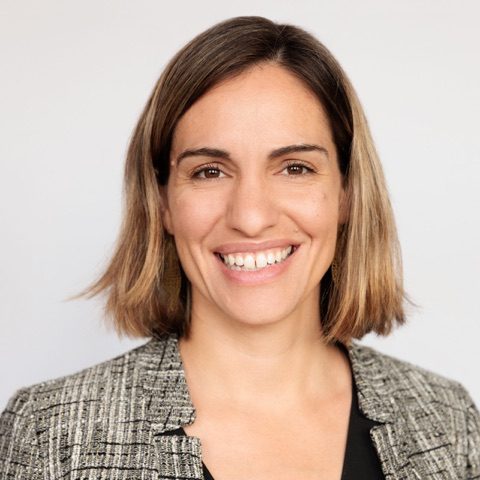
Recorded as a dispatch from the 2022 Global Digital Health Forum, this episode features Jonathan Jackson in conversation with Innocent Chiboma, Principal ICT Officer for Digital Health at the Ministry of Health of Zambia.
Their discussion centers on what a whole-of-government approach to digital health looks like in practice. Chiboma argues that understanding a person's health means looking at everything that concerns them, from sanitation to water to the role of local authorities, which is why digital health cannot live inside the health ministry alone. The conversation explores what it takes to build coordination and collaboration across government ministries and agencies, as well as the private sector.
“So we should not limit digital health to ministry of health. It's something that will go to all the other government ministries and agencies and may I say including the private sector.”
Innocent Chiboma, Ministry of Health of Zambia
In this episode
- The whole-of-government thesis: why a holistic picture of a person's health pulls in sanitation, water, and local authorities, not just the health ministry
- Coordination in practice: what it actually takes to align digital health work across government ministries and agencies
- Beyond the public sector: bringing the private sector into the digital health conversation
- A view from inside the ministry: Chiboma's perspective as Principal ICT Officer for Digital Health in Zambia
- Dispatches from the field: recorded live at the 2022 Global Digital Health Forum
Read the transcriptExpandCollapse
This transcript was generated by AI and may contain typos and inaccuracies.
Amie Vaccaro: Welcome to High Impact Growth, a podcast from Dimagi about the role of technology in creating a world where everyone has access to the services they need to thrive. I'm Amie Vaccaro, Senior Director of Marketing and your co-host. Today's episode is the next in our series of conversations that took place on the sidelines of the Global Digital Health Forum in Washington, D.C. in December of 2022. In today's episode, Jonathan Jackson, my co-host and Dimagi's CEO, sits down with Innocent Chiboma, the Principal Information and Communication Technology, or ICT, Officer for Digital Health for the Ministry of Health of Zambia. Mr. Chiboma has an incredibly ambitious approach to tackling digital health as not just a Ministry of Health priority, but a whole-of- government approach. In today's conversation, he shares with us some of his approach, his learnings, and his experience.
And his advice from nearly two decades of work in Zambia. Interestingly, Jonathan and Mr. Chiboma worked together 15 years ago when Dimagi was involved in working with the Zambia Ministry of Health on a project called SmartCare, which developed an electronic healthcare record system for HIV care in Zambia. We won't go into detail about that project today, but you can hear more about that project on our second-ever episode, which I'll link to in the show notes. Enjoy. Welcome to High Impact Growth. I'm here with Innocent Chiboma, and we need to go back to the beginning of the pandemic.
Welcome to High Impact Growth. I'm here with Innocent Chiboma, and we need to go back to about 15 years. Innocent and I worked on the SmartCare project together in Zambia, and Innocent has now been with the Ministry of Health for many years and is leading up a lot of their digital work. So excited to talk here at the Global Digital Health Forum. Innocent, could you just share a quick background and what your role is at the ministry? Okay, so maybe my background is that I came from the private sector, joined the government and the Ministry of Health, and of course, it was to do with the electronic health record, the SmartCare.
And I think we worked with Dimagi for quite some time to build the first version of it and rolled out to the country. Currently in 1,600 facilities out of the now 3,000 facilities. We're now moving to a newer version of it, which is more web-based. But the work has been very interesting.
I didn't think that it would be this exciting. I wanted to quit at some point, but look, this is like... It's exciting. You wake up in the morning and all you're thinking about is digital health, and it's very interesting, I think. That's awesome to hear, and it's great to see you after all these years. We were able to grab breakfast this morning. I have extremely fond memories of Zambia. It's where I actually met my wife now. Back when we first started doing work, it was the first country that Dimagi operated in.
So really exciting to have you here. When you wake up excited about digital health, obviously, it's been a huge journey for me, many governments around, starting with pilots and proof of concepts a decade ago to now having well-formed national digital health strategies and enterprise architectures and thinking through that. What are you most excited about right now with where Zambia is and what the vision is for where you're trying to go? So I think what really excites me is I think the realization that is coming to the entire government and also everywhere, I think even in the private sector, where you realize that the digital transformation really makes sense and that it will bring changes and some of the things that we've seen earlier on in our time, the gains that we've seen and the benefits that we've seen, especially in the HIV space, where we're just having a record of somebody and being able to track their medication and all that saves their lives.
And so all that can translate into wider gains for the sector, for a lot of other areas and not just HIV. So I think that's really exciting. Thank you. I think that's what makes me excited. And I think we in the sector, in the health sector, can really show how this can work because we have seen it. And you raised a really interesting point when we were talking about earlier how digital health is not just necessarily the purview of the Ministry of Health.
It's a whole-of-government approach. Healthcare happens in many other areas. Can you speak a bit about that and what could be the potential here if we can unlock the entire digital health across multiple government agencies? Yeah. So I was saying that digital health is not a Ministry of Health. It's digital health for the nation. And there are so many things that contribute to the health of a person. And we're talking about the issues of the environment and there's another ministry that deals with the environment and how that the environment really impacts the health of a person.
I was also talking about the Ministry of Mines and the work that they do and how that still impacts the health of the people. You know, the people who work in the mines and they get diseases like TB and so on. There are some things that health experts are suspecting that the rise in cancer is maybe due to the increased mining activity. And maybe we should be monitoring that and finding out what's really happening. Maybe there's radioactive material out there that people are getting exposed to.
And so if you want to get a holistic picture of a person's health, you have to look at everything. And if you want to get a holistic picture of a person's health, you have to look at everything that concerns them. Including, for instance, just the issues of the local authorities, the sanitation, everything, the water, everything to do with that. So we should not limit digital health to Ministry of Health. It's something that will go to all the other government ministries and agencies.
And may I say, including the private sector. So the private sector, they benefit from a healthy citizen. So they need to contribute to that. So I have been advocating that we need to have more contribution from the private sector as the corporate social responsibility, because this is really bringing a benefit to them because they have a workforce that is healthier and therefore they're not losing as much money. Yeah, that's an excellent point. And not just CSR in the traditional charity sense, but it's in their own interest to have a healthy workforce.
And it's in their interest to make sure people are not out of work on the side. And that's what I'm trying to do. I'm trying to do that. So it's not necessarily or undesirably. So that's an excellent point. Obviously all this is easier said than done. The tech is a really hard piece and the software is a really hard piece, but the politics and the governance of this is way harder. And that's where you said, as you think about the challenges you're facing and strategically thinking about, often we see connecting systems just within the Ministry of Health is pretty hard and challenging undertaking, much less when you go outside of the Ministry of Health, other ministries.
How are you thinking about the governance, the strategy, the way that you can get the different groups within the Ministry of Health and outside of the Ministry of Health bought into this vision? So we've had some great things happening over the past few years. So the government formed a body called Smart Zambia, which is more like a coordinating body for ICTs. And we've been privileged to work very closely with them. And I think they've understood our direction and they respect us.
And what that has done is that we have become some kind of a model that they think that we can use in all the other government sectors. But at the same time, that brings about the fact that we need to think beyond just our sector and really think. So the enterprise architecture that we're thinking about in digital health should actually... go beyond just our sector. There's the entire government enterprise architecture. And that's what is really exciting. And they understand that.
And so I think it gives us an opportunity to be able to contribute to the government-wide space. We're working very closely with our Home Affairs for the birth and death registration. And I think we'll be working very closely with other ministries. I think, as I mentioned, the mines and so on, environment, et cetera. And so... I think showing the little success that we've had, I think, is good enough to convince them to buy into this vision, this broader vision. So we should never think in silos.
The broader government vision, I think, has really helped with that. That's extremely compelling. And so I'm sold. You know, there's a lot of work that all of these countries in high-income, low-income, middle-income countries, are thinking about. Obviously, digital transformation is a high priority for most heads of state, you know, across their country in various dimensions. But sequencing can be very challenging and the building blocks. How are you and your colleagues thinking about this?
Because it can be daunting, you know, to do this. So, yeah, true. It can really scare you when you think about how large this whole thing is. But I think even just looking at our digital health strategy, if you look at our digital health strategy, we have like 32 initiatives that we're looking at doing, the next strategic initiatives that we're looking at for the next five years. And the biggest component of that is the workforce, so building up the workforce. So we have like 10 strategic initiatives that talk about building the workforce.
But more than anything else, you need to have a very strong governance structure. And so within the sector. But then we think about the sector. Yeah. I think that this is something that can be replicated across other government ministries where there's a proper governance structure and there's a team that is multisectoral that can kind of be a gatekeeper in this space. I think I mentioned earlier how in a lot of countries, if they didn't have a strong governance structure, there's been these problems of everybody doing everything and then you have all these multiple silos.
So I really think the governance piece is very important. And maybe that's the first one that you need to really set out. And then from there, begin to work on the workforce. I know the infrastructure part of it is it's a given you need to get infrastructure out there. But infrastructure without proper governance of it and without the workforce to manage that infrastructure, really, it won't work. I wholeheartedly have experienced that in my work. And I definitely think the governance and the workforce development is way harder than the technical side of this for a lot of environments.
You mentioned that committee and that technical working group approach. I think a lot of governance structures theoretically know that's the right thing to do and struggle to cause it to have enough power, enough regularity, the right people in it. How were you able to successfully build this technical working group in Zambia? And do you have any advice or lessons learned for other countries who may be trying to do that as well? So I think it's really about being consistent. And probably that's what I'm trying to do.
And I think it's really about being consistent. That's what helped us. We were just talking earlier on with another colleague from the WHO from Zambia. And she mentioned that really, I think the consistency, like meeting consistently and moving and working on things that make sense, I think is the key. And also trying to direct those processes. So if there's a new innovation that's coming around, when they approach us directly, yes, they're able to talk to us. But we tell them, look, we have this structure.
We have all these people from all these donor agencies, from all these implementing partners, from the university who sit on this committee and other government agencies. So we'd like you to really present to all of us and then we'll talk to you after that. So I think being consistent in the way that you deal with it is really key. Because I think that's when it to earn you that respect from the higher powers that to think that really. This is really working. Because I think one of the reasons why they know that it's supposed to be the correct way, but they don't use it is because they think it's a white elephant.
This, these TWG things are really white elephants. So let's get work going. So they overstep them. So I really think it's to do with consistency and organization. Then it will help you to get that kind of respect that you need. You've brought up respect a couple of times, and I think it's a really interesting perspective. Because I remember when we were working together, you know, 15 years ago or so, IT was kind of off in the corner and digital had like no seat at the table.
And now it's like the main thing a lot of governments are talking about. And so that also, I think, helps a lot with just the relative prioritization it has. But I love the point you brought up on consistency. I think it's really hard to be consistent because everybody's busy. You know, human capital is one of the most scarce resources governments have. And did you have early successes within the technical working group that made everybody feel? Like it was worth their time? Like what caused it to be able to be consistent?
And what caused it to be able to be something that people were willing to consistently put time into? I think, yes, there were some early successes. So the fact that we were consistent and we were able to show that we were not biased towards anyone or any partner and we're able to do heavy work. All right. And I think that probably earned us some respect. And because it's not just about. You're doing something and you're going to. Of course, money is important, but it's not like we're doing it just to get paid for it.
But that level of respect that people will have you when you go the extra mile towards something and you deliver on it. For instance, just development of our strategies like the past. We've had like three digital health strategies, the latest one being launched in October this year. So the consistency there and being able to push. And to gather everyone to contribute and to launch it. I think those are the kind of things that earn you that respect to see that you're just not producing a document that you want to archive somewhere.
You're following what you have said. Though our success rate in terms of implementation wasn't. Well, it's okay. I can't really say it was great, but it's okay. But just people being able to see that and we respect you. And they'll listen to you when you speak. So I think that's where it came from. Jason, it's been great having you here. What have you been excited to talk to folks about here at the Global Digital Health Forum? If there've been conversations or new technologies or new approaches that have really been something you think is going to be helpful to you in the Zambian national health system?
What I found here that is exciting. So we had a talk with some colleagues from the organization. I forget the name. But. Doing an. Open source. A telehealth. System from India, I believe. And we had some very interesting conversations and those things are really exciting. And seeing that they've really done some work and probably gone to scale. It's something that we're considering. Then we've also had, you know, the conversation with yourself and really exciting to see what Demaghi is doing.
And we think that some of the things can apply to our country. We've had conversations with another, some other organizations. On. Especially the open source stuff. Then of course we've, we've had conversations with WHO and talking about, uh, fire. We've talked about, uh, the issue of, the smart guidelines that, uh, we're working with them on and seeing what other countries are also doing in this area. I think, uh, is really exciting and we think that we'll be able to harness a lot of benefits.
We'll be able to get a lot of benefits from this. So just the whole thing of standardizing things is really, really important. And. And I think we're excited about that. That's great. Well, we thank you so much for coming by and appreciate your time. Thank you very much, John. It's been good to see you again. Thank you so much to Mr.
Innocent Chiboma for his time today. I learned a lot listening to this conversation and I wanted to share my three top insights from his approach. So first is invest in good governance. Mr. Chiboma. Talks about creating a coordinating body for ICTs called smart Zambia, which has really helped set the stage for all the work that he's leading and needs to do without good governance. Other investments say in infrastructure or workforce development may fall flat. Second, stop thinking in silos.
We really need to think holistically about people and doing so requires thinking holistically about government and every aspect of government impacts human health. So Mr. Chiboma. Talks about how we really need to be working across ministry lines to pull together and support a healthy, thriving community and population. My third and final takeaway is to prioritize and invest in building buy in.
So to get buy in from ministries outside of the one you might be working with or within some tips include showing success, being consistent with meeting to create progress and build that muscle of collaboration, as well as creating a strong process. For. How to introduce new ideas and make change. This may feel like a lot of hard work and potentially even tedious, but it really pays off. That's all. Thank you so much for joining. We would really appreciate it if you could take a moment to like rate review, subscribe and best of all, please share this episode with someone who you think could value from this rich conversation.
And if you've got ideas or questions for us, email us at podcast at demagee.com. We'd love to hear from you. Thank you.