
ON THIS EPISODE OF HIGH IMPACT GROWTH
Who Actually Owns This? Naming What’s Broken with Nithya Ramanathan
LISTEN
Transcript
This transcript was generated by AI and may contain typos and inaccuracies.
Amie Vaccaro: Welcome to High Impact Growth, a podcast from Dimagi for people committed to creating a world where everyone has access to the services they need to thrive. We bring you candid conversations with leaders across global health and development about raising the bar on what’s possible with technology and human creativity.
I’m Amy Vaccaro, VP of CommCare Growth and Strategy at Dimagi, and your co-host, along with Jonathan Jackson, Dimagi’s CEO and co-founder. Today, we’re going back to first principles on ownership. What does it actually take for anyone to truly own a project, a technology, or an outcome? Our guest is Nithya Ramanathan, CEO and co-founder of Nextleaf Analytics, back for round two.
She’s recently co-authored a piece in the Stanford Social Innovation Review on country ownership. In today’s conversation, we dig into the three ingredients of ownership, the dance between tech and policy, and the case for flipping the 80/20 investment split between tech and human systems. Heads up, this is a fast-paced, candid conversation between two longtime social enterprise CEOs. If you’re new to the show or the global health and development space, this episode may not be the easiest place to start. For our returning listeners, I’m so glad you’re here. This one’s for you. We push past the polite version of the ownership conversation, name what’s broken in the current value chain, and sit with some hard questions , that we cannot fully answer
Amie Vaccaro: All right. Welcome to the podcast. So I’m here today with Jonathan Jackson, Dimagi’s CEO and our co-host. Hey, Jon. Good to see you.
Jonathan Jackson: Hey, Amy. Great to see you.
Amie Vaccaro: And we are so excited to welcome back to the show Nithya Ramanathan, who is the CEO and co-founder of Nextleaf Analytics. Nithya, great to have you back.
Nithya Ramanathan: Always happy to be here and in conversation with you guys.
Jonathan Jackson: Yeah, great to you.
Amie Vaccaro: so last time that we talked, it was about a year ago, and one of the things that you said was, “The system has burned down, and this is our moment.” And I remember that really stuck out to me. Also, I think we made it, like, the title of the episode ’cause it was just such a poignant line. I’m curious, like, in the last year, what’s sharpened in your thinking? What feels different now than it did a year ago?
Nithya Ramanathan: Yeah. That’s a good question. Two themes have just been pushing themselves to the surface. And, , John, I’m curious if you found this, but my experience at Skoll a month ago really reinforced these themes. So the two themes are country ownership and durability. And then a theme kind of underneath those two is around an increased focus on performance performance-based outcomes, performance-based incentives, things like that.
And I think what’s been really interesting is all three of these things, you know, thinking about – durable systems, thinking about country ownership, and then ultimately thinking about, like, the performance systems that underpin both of those, have really been conversations that John and I have been having for ever since I met you, many years ago.
Jonathan Jackson: We’re not that old, Nithya. You are.at Skoll for a while, how we really are that old, but yeah.
Nithya Ramanathan: Well, so the point I was gonna say is that I think what’s interesting is, so it’s not like these are new themes. These aren’t new ideas. And I mean, I’d say that the thinking has gotten clearer, but to me, what’s really changed is actually that the rest of the sector has really honed in on these things are ultimately what matters if we wanna get to impact and scale and all the lovely, delicious things that we all talk about. Yeah.
Jonathan Jackson: Yeah, I think that’s right, and definitely agree with that being a theme of what we heard at Skoll One thing in, in a more recent article you pur- published, but also that you just mentioned that I’m curious. I’ve been for years talking about, like, is government ownership really the end goal here? because as we see as US citizens, there’s a lot of challenges with how governments can change over time and may or may not be the, right home for certain initiatives.
And I actually think I wanna broaden it to just ownership, right? Whether it’s government ownership, local ownership, foreign, whatever it is. there’s so many projects, programs, products, initiatives, innovations, fill in your word du jour, don’t really have an owner, right? The person kicking it off doesn’t really care. The funder doing it doesn’t really care. The government overseeing it doesn’t really care. And then obviously the citizens might not care. but I think just what are the key success ingredients for ownership, period? Then we can talk about ideally who owns it, but we need to back all the way up to just like, does anybody feel sufficient ownership over this?
And I’ve been, I won’t say disheartened, but I think in some ways talking about government ownership or local ownership is sometimes passing the buck in a way that’s really unhelpful. you know, when we talk about decentralization or pushing budgeting control from the federal to state level or federal to district level, I’ve learned, you know, as I’ve gotten more experience in working in politics both in the US and abroad, that’s often a gimmick for like, “We’re just gonna defund this program,” right? “We’re gonna call it defund.”
Nithya Ramanathan: are you running for president and I didn’t know?
Jonathan Jackson: I’m not running for president, and when I say get more involved in politics, I meant get more involved in selling to governments, not the political side of this. but you know, often that is a budgeting trick for, “We wanna zero this out at the federal level. We’re gonna, quote unquote, ‘decentralize’ it,” but then it didn’t get refunded at the local level. ‘Cause I think you have way more experience, like, for NextLeave’s partnership with governments building product innovations and budgeting and these things, and I think it is so admirable what you’ve been able to do on the ownership side and the way this has continued post, USAID and MA’s changes. And sometimes government’s the right answer, but like, it’s not like inherently bad if somebody else is the owner as long as we all agree that’s a good owner, but I think so often, like, there’s zero owners. It’s not the wrong owner, it’s zero owners.
Nithya Ramanathan: Man, I think that is such a great point. I’ll respond to a few of the just kind of table stakes, like let’s like lay the table a little bit. So, you know, one conversation that I had a fair amount at Skoll also is It is 100% true government is not the right owner for all sorts of things and for all sorts of reasons. So, you know, let’s just like lay the table with that. I think your question is really interesting of what are the ingredients for good ownership, essentially. And then I think your bigger question, your maybe slightly more existential question is, when we talk about health outcomes, is there an owner right now?
Like, is there one, period, whether it’s government or not? So I think those are really good questions. Just to maybe answer the slightly easier one, in terms of ingredients for successful ownership, I do think money often should exchange hands, but doesn’t have to. You know, so we can debate that.
Like, do people value things that are free? Well, you know, we can like go down that rabbit hole, but like in general, it’s helpful when money exchanges hands for, you know, certain value. It allows the seller to like appropriately price and it allows the, you know, buyer to appropriately kind of, you know, put a dollar on the, or a number on the value.
So you want money to exchange hands, but that’s not nearly enough, and I think that’s where a lot of the conversations have stopped short. And so it’s not enough to have a line in a budget. It’s not enough to have the money. It’s not enough for the money to exchange hands. There’s so much more that goes into ownership.
And so, you know, when we talk about putting aside government ownership for a moment, but when we talk about technology ownership, there is something about control that I’ve found is really important, whether it’s an individual or a government or a company, but control and both a feeling of control and then actual control, which those are two different things.
So that’s super important. And then I think the third ingredient kind of comes down to pride and that sort of like intangible , trust, pride, et cetera. And so, you referenced the paper that we wrote in SSIR. One of the examples that hit home way more than I expected it to was I talked about how governments feel true ownership over paper charts.
And paper charts have been one of those things from like, you know, Bill Gates to everybody, right? Like people love to complain about paper charts. It’s true. They’re inefficient. They’re, you know, ad hoc, the blah, blah, blah. At the end of the day, why do paper charts persist? It’s because governments can feel ownership.
They can feel control. They can feel, , all these things. They know where to buy the paper. They know how to do it. They have the systems to do it. So those I’d say are the three main ingredients for kind of successful ownership I mean,, maybe you can reflect on that, but then yeah, let’s talk about the bigger question of like who ultimately feels ownership over health outcomes.
I know that it shouldn’t be donors, you know, and it shouldn’t be you and me. So, it starts to cross off, you know, some of the usual suspects off the list. But yeah.
Jonathan Jackson: No, a-a-absolutely. And I think with something as complicated as healthcare, obviously talking about ownership, whether it’s the patient themselves, the family, the household, the community, the government. But I think we can definitely rule out tech vendors and donors as being the right answer to that question. I love those three ideas of what is necessary for ownership. And going back to the pride one, you know, I think this goes to a huge challenge in the healthcare sector that we see in all markets, not just resource-constrained markets. But is who has accountability, who has decision-making authority, which goes down to the control, and then also just like who cares, right? ‘Cause you have a lot of people who really deeply care about this. We do, donors do, like everybody does. But do they have the authority? Do they have the accountability? Do they have the control? And the answer definitely should not be yes to, that question for donors or tech vendors, right? And so I think you’re absolutely right.
Like, there has to be transactions because that… There, there has to be transactions not ’cause transactions are inherently good or bad, but they are a output and an outcome of real accountability existing, right? ‘Cause if there’s no transaction, then it’s like the reason the transaction didn’t happen is lack of accountability, lack of control.
And so yeah. I think that’s really prescient. And in, your article it’s extremely thoughtful in what you were talking about with how you think about scale. And the technical piece is what a lot of people talk about with digital public goods and the technical ownership. But like, as you talked about in the article, it’s the operational ownership.
It’s who’s trying to actually make this work? And why are they trying to make it work? And are they accountable for making it work, right? ‘Cause you’re like, yeah, donors try to make stuff work all the time. We try to make stuff work all the time. But like, it’s ultimately like we don’t have the accountability or the authority to say this cold chain should really work, this CHW program should really work.
And I think it’s easy to delude yourself that person or that function within a government exists. You know, I am disappointed at where the US government has progressed on a lot of different areas, There’s plenty of people who care on both sides of the aisle in the US at least.
The people who have control and authority are unfortunately not the ones who also care, And so, like how does that unique blend come together- And what is our role as advocates ultimately of just like is the impact reaching the constituency we’re trying to support? What is our role in trying to help make sure that’s possible or available to then go sell our solutions into?
Amie Vaccaro: Let me, just jump in for a quick note for the audience. The article that we’re referencing, which we’ll link to in the show notes, is in Stan-Stanford Social Innovation Review. It’s called “Scale That Lasts: A Framework for Moving from Government Partnership to Country Ownership” that Nithya co-authored with some of her co-authors. So we’ll link to that. Continue the conversation. This is great. Back to you, Nithya.
Nithya Ramanathan: Yeah. Thanks Amy. But like get in here, we want you in this.
Amie Vaccaro: Well, I was like… I prepared all these questions, and I was like, “They’re just gonna jump in and, go.”
Jonathan Jackson: I would, And I would like the record to show that was not a post-recording aside that Amy just inserted there. She did it in real time during the recording to, to make sure that people knew what we were talking about. I appreciate
Amie Vaccaro: Yeah.
Nithya Ramanathan: You know, it’s interesting. There’s kind of a few different directions that we can go. I’ll just put a pin in a few of them. One is around incentives and, , the incentive structure. I think there are increasingly incentives that are moving the sector towards what Kevin Starr calls Coke bottle philanthropy, which I think is hilarious, but true, right? And so it’s this false notion that there is a single owner of outcomes, and the reality is there is no single owner. And I think that’s what gets really difficult here. I don’t think there’s zero owners. I think it’s just that there’s no single owner, and that’s what makes this so complicated.
So would love to come back to that. But what I’ll just say just to close the loop on something, which is going back to who should own the outcomes. I think for Nexleaf, what I’ll just say is we’ve been really fortunate is that when it comes to the systems that we’re working in, which is in vaccine cold chain and making refrigerators and infrastructure work, there is a lot of visibility and care within the government, and there is an ability to transact something.
So governments are able to actually buy our devices, and then they are able to, once we recognize, okay, we need to invest in the operational systems, they’re able to do that and operationalize it. So to some extent, Nexleaf’s success and scale has been also because it was like a problem that fit into that mold, and governments could truly own the solution and all of that.
So I think part of this is maybe to make this a slightly more tractable question, it’s more about what are the types of problems where government can truly own end to end, and like really unpacking that. Because again, I definitely agree that government can’t and shouldn’t own everything when it comes to healthcare delivery.
Jonathan Jackson: You’re reminding me of a quote I used to give when I was lecturing around social entrepreneurship, and it was “Don’t bring a technology to a policy fight.” Right? Yeah. your point here is like, you didn’t have to fight the policy fight necessarily. Like, people wanted their cold chains to be working, right? ‘Cause they wanted their things to be working. I think one of the things that given the constrained funding we’re in, given this, it is really important, I think in a way that it wasn’t maybe two years ago, to just have efficient conversations with each other.
Like there’s, we’re short on time, we’re short on funding, and like, we just need even just our dialogue between donors, entrepreneurs, governments, implementers, like just to be more efficient. Like our industry is not accused of being too efficient very frequently. And this point of like, is the enabling policy environment correct for innovation?
And the thing I used to tell a lot of bright-eyed and bushy-tailed MIT entrepreneurs is like: Look you have no idea what you’re getting into if you need to go change policy. And in all likelihood, you don’t want anything to do with it. Like, that’s not why you’re excited to wake up and like go, you know, into your wet lab to figure out the next thing.
And so partnering on that, and if, to your point of like it’s never one person. Maybe the stars align such that it’s like a few small people and like all the policy is done, but it’s almost never clean on the policy side. Like it’s always some or the other. But I think you’re right. It’s like a, this collective ownership is going to always exist on these gnarly problems, ’cause if they were single owners, you probably would’ve solved them by now, right?
If the ownership was easy it would’ve been there. So I think that’s just great for the audience to, to really take that into account, as you’re saying, because if you do have multiple owners, you really need to know where you fit. I forgot who just mentioned this, it was a European leader, but it, you know, you’re either at the table or you’re food.
You know? So you need to be at the, you need to be at the table,
Nithya Ramanathan: you, so witty today.
Jonathan Jackson: And I know I’m just like, I’m just pulling a lot of stuff up in here. But you definitely don’t wanna be food, but you need to be like, why are you at that table? What are you adding? Like what value add are you bringing- Yeah … to this discussion?
And again, I think just this efficiency, ’cause both this year’s Skoll and last year at Skoll, the passion everybody has is like even more visceral, You can feel the desire people have to continue trying to make an impact.
Nithya Ramanathan: Mm-hmm.
Jonathan Jackson: At the same time, some of the conversations feel like they’re the same things we’ve been having for five years, and you’re like, what is going to flip this conversation into a different mode?
And it’s not like any one of us think we have all the answers, but we’re just like, it doesn’t feel like we’re talking differently enough about things, right? It doesn’t feel like- We’re now trying to think about how to approach these problems in different ways, and I think you, you’ve always been ahead of the curve on thought leadership around government ownership and product innovation in these areas.
And I think, like, really thinking through, like, what do we mean by ownership? Like, what are the necessary ingredients? And as I’ve talked about a lot over the year on this podcast when you really honestly think about it, you may realize, like, “Hey, half of our country programs don’t have the key ingredients we need for us to be successful in the way we want to.”
And, like, we all have to start being more honest with ourselves and our funders and governments and being like, “Yeah, I hear what you’re saying.” And like, “I can’t solve that for you, and if you don’t have another solution,” I’m like, “This probably can’t work.”
Nithya Ramanathan: Yeah. I think that’s exactly right. One thing I, wanna come back to that you said that I think is so important, which is, if we just narrow ourselves to problems where government has ownership, right? So recognizing, like I think you brought up a really important question about all the other problems where government is not the right owner.
But if we narrow it to just, you know, problems where government’s the right owner, one of the most common mistakes I see is people treat government, exactly as you’re saying, as one person. And that goes all through, like from the design of like, “I’m gonna design a solution for this one person, and then I’m just gonna hand over the solution to them, and I’m gonna, , walk away and like we’ll do the garlands and everyone’s happy.”
And so it works– Yeah. And so really recognizing that government literally is hundreds of people, each with their own incentives, their own, you know, et cetera, et cetera. And so like I do think it is incumbent upon us as solutions providers to really think about how are we solving problems for all the many stakeholders within government for a solution to be, have full uptake.
~But the other thing that I think is really important about this is, There’s something that I wanted to comment on around– Well, okay. You know what? I’ll come back to it. Darn. You know what? Wait, let me just see if I can… It’s gonna bug me now, ’cause you said something else, John, that I really wanted to… No. Okay.~
Jonathan Jackson: ~Take time. We can edit it. Take your time. it, ~policy-wise? Yeah.~
Nithya Ramanathan: ~It was– Oh, yes. That was. Thank you very much. Okay. Yeah. I was gonna say thank you in advance for editing out all the pauses. Okay. So I think I will~push ~
Jonathan Jackson: ~We’re not editing anything, by the way, Amy. Leave it all ~in.~
Nithya Ramanathan: ~you. ~
Amie Vaccaro: ~I mean, like, there’s a lot of ideas on the table here, so I appreciate– ’cause I’m like, “Oh man, so many threads. Which one to take?” So I appreciate~you showing that ~
Jonathan Jackson: ~got through half of Amy’s question one. She got the ~quote out from and then everything else is just like a wasteland of prepped questions ~
Amie Vaccaro: ~We’re just…~
Nithya Ramanathan: ~Oh.~ So I do disagree with you a little bit on don’t bring a technology to a policy fight.
Jonathan Jackson: Good. Have at
Nithya Ramanathan: Last week had our big cross-country learning workshop, right? So Malawi, Tanzania, and Rwanda ministries all gathered in Uganda, you know, brought in the Uganda ministry, and everybody was talking about fridge maintenance, right? The sexiest problem on earth. And what was super interesting to me is that for the first time that I’m aware of, and, you know, I’ve been doing this work for like 15 years, right? For the first time that I’m aware of, the ministry actually said, “Now that we’ve sorted out the visibility and technology…” The ministries, I should say, all of– There were about like 30 people in the room.
So all the representatives from those four governments said, “Now that we’ve kind of solved the, and addressed the visibility issues, actually now what ultimately we need is policy around cold chain.” So it was really interesting though, like we never approached the government to say like, “You need better policy.”
But it is really interesting that now that there’s a certain amount of uptake and adoption, actually the government is saying to us like, “Okay, we gotta now figure out cold chain policy, otherwise none of this stuff is gonna stick.” So it’s not maybe fully disagreeing with you, but I think it’s more recognizing the sequencing of these things.
Like don’t bring a technology in order to solve policy on day one, but also don’t forget that ultimately policy does need to adapt and react if the technology is truly gonna work and like stick.
Jonathan Jackson: I love that, and you’re completely right. It’s an ebb and a flow, right? At various points in times, projects technical problems or policy problems. And that’s so cool, by way. Congratulations that’s the state that you’re in, but that’s absolutely right. Like, the whole point of all the data stuff we’ve all been doing this whole time is like, now that you have the data, you can get higher value for money because you imposed higher requirements, because now you can see everything.
But if you don’t turn that into policy, then it doesn’t matter that you can see underperformance or leakage or waste or any of these things. , You have to actually have the policies to back it up and be like, “Great, now that we got this baseline that took us a decade,” like it did take a while.
But now that we have this real-time data flowing in, we should update our policy. And I think that you’re absolutely right. Like, it’s a back and forth. It’s not a one-time… It’s not one and done. It’s always go solve the tech problem, now go solve the policy problem because you solved the tech problem,
Nithya Ramanathan: But it is a constant loop actually, which is why, and I mean, you know, this is something, John, that you speak really effectively at in terms of like technology being the enabler for that continuous improvement loop, whatever it is. And I think you’re basically just bringing that concept now to policy, recognizing that policy also needs to kind of continuously iterate, like as the, you know, technology increases the visibility.
So I think it’s really interesting, and it’s one of the reasons why I do feel like and this is maybe unpopular, but like I think as tech solutions providers, we’re actually really well-placed to help be at the table when policy is being set. And people hate that idea because they think we’re all gonna cr- help create some policy to like, lock in our technology and like finally like land the millions of dollars or whatever, like nonsensical concerns honestly people have.
But I do have ongoing concerns when you have organizations that are just policy or that are just tech, because I think they often don’t understand this continuous loop that you are describing.
Jonathan Jackson: I love your articulation of that. And also, You think the wrong things are hard,
Nithya Ramanathan: 100%.
Jonathan Jackson: When you’re a technologist, you think the wrong things are hard about how to change policy. And when you’re a policy person, you think the wrong things are hard about how to technically solve problems, right?
So I’m sure you’re at the table, and they’re like: “Oh, we can never do this.” And you’re like: “I could push code tomorrow that does that for you,” right? “I thought that would be impossible for you to change.” And they’re like: “Oh no that’s what we’ve always wanted.” And you’re like: “I’ve been begging you to want this.”
And they’re like: “We always have. You just said it in the wrong way,”
Nithya Ramanathan: Yeah. Yeah. It’s fair enough.
Jonathan Jackson: Um, right. that’s awesome. let’s just dig in for a second on, on this amazing meeting that you had. Like, I think all of us aspire to want, you know, our government partners to want to meet across country boundaries and talk about how to get e- Like, how did you pull this off?
Like, was it hard to convince everybody to come together? What did you guys talk about? Like, dig into how.
Nithya Ramanathan: You know, this is a really good time to just insert something, which is, you know, I think, John, you and I feel this very, , keenly that we have incredible teams, and that is how these things happen. And even just to go back to the SSIR article, you know, I think unfortunately people have, because my name is a little more recognizable, but my co-authors, Nilima Otipa and Jose Akintu, have like all the expertise that actually went into that paper.
And so similarly with this cross-country workshop, What we found is there was zero convincing. And, again, I don’t wanna speak for my incredible team who really pulled this off. So, you know, Nikhil Patil and Hannah Mills and Kevin Artz, who really, like, have been deep in the work with then all of our in-country teams.
But what my understanding was that this came directly from ministries from the beginning, and it was like, “Oh, great. We’re working across three countries. Like, let’s make sure that we build in time so that we can learn from each other.” And this is something that we’ve seen over and over, actually.
Countries are regularly asking to be able to, like, go to other countries, learn from other countries. I think there’s a little bit of, in our sector, I think a malaise around travel and also a feeling of this unsaid thing, which is so much money goes into travel for trainings. And if you ask anybody, I’ll say the quiet thing out loud, which is like most people say that these in-person trainings don’t work, they don’t stick, there’s turnover.
A year later, nobody can find the SOP, blah, blah, blah. And so one of the things though that we have found is that these types of in-person, like cross-country learnings are always super productive. It does take a lot of logistics, but we didn’t have to convince anybody except for maybe a little bit of convincing with Gabby, who’s been kind of supporting this multi-year program to actually rethink the operational processes of maintenance.
Jonathan Jackson: think it’s, it’s, it’s great. And I think you know, we aspire to do this with our adopters of community health systems on CommCare for our national scale programming. And we had an amazing meeting two years ago so before USAID had transitioned, and it was amazing. And to your point, we didn’t have to convince people.
Everybody wanted to come and see it. And it is due to the amazing staff that put that together. But you’re like, there’s appetite for this stuff and– but it has to be real. It is a non-trivial amount of work by a ton of people to make it real, right? And to figure out the right level of information sharing, ’cause each country probably is at very different phases of their journey. But that’s so cool, Nithya. thrilled to have that. and, and can a second? I’m curious, like, they obviously, like, care a million percent about this ’cause it… You can’t do vaccinations without functioning cold chains. How do they look at the value of learning across countries and this type of effort ’cause like obviously somebody’s gotta pay for the travel and like this is zero sum against a lot of other– like you could buy vaccines instead of travel to this meeting .
Jonathan Jackson: So how does that dialogue happen with Gavi or other funders that you have around, you know, the value of governments getting more collaborative, learning more, sharing best practices, et cetera?
Nithya Ramanathan: Yeah. this started this conversation with Gavi started like five years ago. And the conversation went something like this. Sensors don’t fix fridges, people fix fridges. And so if we are going to solve the fridge maintenance problem it is ultimately gonna be, you know, the humans, the policies, all of that. And so, and the biggest, I think, insight that we brought, insight in quotes, is that no technology works without really thinking about the human operational systems to use that technology. And so, you know, you can’t swap paper for a real-time sensor and keep the processes all the same. That makes no sense. So as the technology evolves, the processes must therefore evolve. So it was a very long conversation, many years with Gavi to really kind of address that. And I get it because donors are really incentivized by their stakeholders to have Coke bottle solutions. And I feel like we could have a whole separate conversation, honestly, about the challenges of Coke bottle philanthropy.
But at the same time, you know, Gavi is so fantastic at having brilliant individuals who understand this. And so basically, many individuals stepped forward and used the system in order to support this work. Like this work is not something that Gavi normally supports.
Sonia had to sign off on this thing finally, right? Like it was that sort of unusual and anomalous, this kind of work of like, okay, we’ve got a technology, great, but like how do we really rethink the human systems now around that tech? It was a huge risk that they took, honestly.
But I do think innovation and the thinking around innovation at Gavi is really forward compared to a lot of others, so I’m not surprised, I guess I could say. But yeah, so then we had conversations around really designing this thing, and we were able to channel feedback from countries that this kind of a workshop at the end was going to be a really valuable way for countries to think about not only how to operationalize it, but the big thing on everybody’s minds because Gavi’s funding has, you know, been cut, every country basically said to us, “We have to do this.
This is no longer a nice-to-have. Like, we have to figure out how to maintain our fridges ’cause there’s no more money to keep buying new fridges, so we have to figure out how to sustain this program.” There is no more JSI or CHAI are coming in with the new next fancy program. This is it. We have this rapid response and repair program.
How are we gonna make it work? So countries really, like, came together with that mandate that they themselves articulated.
Jonathan Jackson: That’s awesome. And I think that mindset is starting to shift, as you said, Nithya, of that recognition of like, we have what we have, how are we gonna maximize the resources we have? ‘Cause there’s not some, like, big new program that’s gonna come in and upgrade or replace what we have. And it’s a really important thing for people to understand has a real cost, right? To invest in the people side of all these technology innovations. ‘Cause we-we’re hearing a lot of great thinking on scale-up of innovation, on financing for innovation, on blended blended financing for innovations, and I’m really excited to see how this plays out in the next couple years from Gavi and others.
But also there’s like really just hardcore people stuff that’s gotta happen, and that’s either gotta come from the margin you’re making selling your product for even more money or somebody else has to pick up the tab for it. Like, you know, these things aren’t free, they aren’t cheap. But it’s such critical work, and it might be some of the highest ROI work a funder can do, once they really believe in the tech and they believe that this is the approach to, to change.
Nithya Ramanathan: I completely agree. You know, just to make the picture a little bleaker, it’s not only is this work not free or cheap, but it’s also not totally repeatable, which I think is challenging and I think important to say. , The technology can be repeatable, , that’s not the hard part, but it’s designing those human systems around it that isn’t. I really think, and I have been talking about this more, I think our sector does need to go through a big shift in how we invest in tech. And, you know, I’d say that historically, we’ve spent 80% of the resources trying to perfect the technology and put the finishing touches, and 20% into like thinking about the human systems, and we’ve gotta flip that. And John, I feel like you’ve been doing really good thinking around that when you’ve been talking about even like rethinking Dimagi’s pricing model and talking about good enough. Like, let’s stop designing… You say it much better, but like let’s stop designing the perfect widget. Like what’s good enough and like how do we make that affordable? I think that’s exactly the right question, and nobody’s wanted to ask that historically.
Jonathan Jackson: And if you are cheap enough and good enough, then it really also reinforces that this is a people problem. You know? And if you have the point of like, yeah, get it good enough, get it cheap enough. And like we as CEOs and tech companies, like you always think you need the next five features. And like, if you only had the next five features, then this great thing would happen, everybody would want it. It’s never true. We’ve all built 500 features, so we’ve been wrong 100 times. And what we have is good enough. And frankly, if you’re not good enough at this point, like you’re in a lot of trouble. Like if you don’t believe you’re already good enough, there’s not a lot of capital to go around. Like, so now you should presume you’re good enough or get there very quickly, then you gotta figure out how you’re cheap enough, and then you gotta figure out how to solve the hard…
After you do all of that, then you get to the hard problem of how you actually switch people processes to, to do it.
Nithya Ramanathan: I think that’s right. You know, I think that’s the real hard problem.~It’s not just ~
Jonathan Jackson: Which is really encouraging that we’re just starting to get to it now. So that’s great.
Nithya Ramanathan: you know, going back to what Amy started us off with this is why I think the systems have burned down, but this really is our moment because I think it’s allowed a lot of the bullshit to fall away and kind of we’ve all gotten brass tacks. I think countries have said, “Okay, there’s no more new fridges coming. There’s no more new programs. There’s no more this.” And we as tech vendors are also saying, “Okay there’s no more kind of free capital coming from the sky to like perfect our tech.” Like what is good enough? How do we make it cheap enough? And then like how do we really crack now the hard problem? To me, I think what I would like to see is donors recognizing the real hard problem, right? I’m concerned that there’s still hesitation and that people are still looking for that silver bullet that can bypass the people problem.
Jonathan Jackson: Yeah. , And the other thing too, I’ll say, I’m curious if you had other partners besides the governments and Nexleaf at the table when you were doing this. But in an ideal world, would you wanna hire a consulting firm to maybe broker the meeting between the tech vendor, like Nexleaf, and the four governments and things? Maybe hypothetically you could like do the math and it pencils out to be more ROI effective, but I’m like, we don’t have the money. So the tech vendors have to get reasonably good at this. And if they don’t, there’s not money to do the 4X cost version of the meeting you just had. Like it, it’s not just that our technology has to be good enough, but our ability to support the government to change has to be good enough as well. Like it just… can’t bring in a million partners anymore
Nithya Ramanathan: I think that’s right. And also though, I think smart partnership also matters, ’cause the thing that we can’t have, going back to your point around efficiency, the thing we can’t have is the old dinosaur model of like one organization grows real big to try to do all the things and capture all the revenue. Like, let’s all agree that was broken. And, you know, those institutions that are still around trying to do that are probably dinosaurs. So, I think there’s that. But I totally agree with you. I think it is about getting really sharp now about what are the capabilities that we as technology vendors, tech companies need to have in-house?
Where do we partner very intelligently? And I agree with you. I don’t think it’s in bringing in that consulting firm to facilitate these conversations like we as tech companies, if we don’t have those co- relationships with users, governments, et cetera, then there’s probably other challenges there. And so, I do think there’s there’s a little bit of like, yeah, we have to get really scrappy, be able to do this on very small budgets. But we did have– To your question, we had other partners around the table. So, Wendy Prosser, who’s been this incredible leader in like, she has this whole campaign around making maintenance sexy.
But, you know, so she’s been a real thought leader, so we brought her in. She flew in from the US to like, she’s been supporting ministries for over 10 years, rethinking maintenance. So, you know, we brought some real experts to the table. But also people who are known to listen. Because the other problem we have in our sector is that the experts love to talk.
And so, you know, we’ve I know. You and I we do not fall into this bucket at all. But yeah. So we handpicked the experts.
Amie Vaccaro: This is such a cool example of like, how much work it takes to like do really good work and just how like, I think kind of what you guys are saying is like tech is the easy part. People, processes, systems, like all of that is, is way harder and takes a lot more time and energy, and it’s nothing’s ever as simple as we think it’s gonna be. And it’s so interesting, like as you were talking about that workshop, Nithya, like, and just how powerful it was to have people in person, even though like, you know, we might be kind of like pushing back on that ’cause of budgets and stuff. I feel like every day with the like intensification of life with AI, with tech, like it gets more and more important to have that like in-person time. Like it just like there’s no substitute to that. So, yeah, I really appreciate you kinda sharing , that example.
Nithya Ramanathan: So somebody on my team yesterday told me something really cool. And you guys might think this is really dumb, but I thought this was fascinating.
Amie Vaccaro: I love that
Nithya Ramanathan: knows, I’ve been like real excited about digital learning. And at the same time, my team has been saying, countries don’t wanna just completely replace in-person physical trainings. Like there is something very real, exactly as you’re saying, Amy, that just gets imparted when we are in person. We learn better, we learn differently, et cetera. So we’ve been going back and forth and like breaking our heads and one, I believe this is in Rwanda, the Rwanda ministry did something very clever with our digital learning hub, which is what they said is, “The problem we have is that when people come in person, not everybody is geared up to learn.
Not everybody’s ready, not everybody’s motivated,” et cetera. John, you look like you know where this is going. I was like flabbergasted by this. And so what the Rwanda ministry did is they used the digital training to prep people and then actually weed out the unmotivated people so that they just had the motivated people that they invested in.
I thought that was so clever. So anyways, I think there’s ways that we we are not yet thinking of how to preserve what we get from in-person, but getting much more intelligent about getting the most out of that time together.
Amie Vaccaro: like just weaving, yeah, using the digital to like maximize the in-person time. And I do think there is something interesting where I remember in college I was in a meeting the woman who had like convened the meeting kind of called us out, like there was a number of students in the room, and she, I don’t remember what she said, but she was sort of like You guys are sitting here, but I can tell you’re not here, you know?
Nithya Ramanathan: Yeah.
Amie Vaccaro: tired. Who knows what? We were distracted. And so yeah, absolutely, like when you’re in person, it doesn’t necessarily mean you’re absolutely gonna learn better. But maybe because we’re more, more starved for it now, like, and there’s more ways to prepare us for those moments so we can actually like invest in them better or make sure the right people are there.
Jonathan Jackson: we’ve talked about this, Amy. Like, we’ve had a lot of team, like, summits and divisions getting together and sub-teams getting together. Amy and I just got together last week to, to rebuild one of our websites, and there’s something about being in person. It’s not that it’s literally impossible to pay attention on Zoom for two hours and, like, be creative, but it’s like, it might as well be declared impossible at this point in time, right?
So there’s something that getting together in person, whether it’s governments for a workshop or something, getting out of your, like, home environment, getting away from your literal physical desk, It’s not that it was technically impossible to do it remotely, but it’s like bump you get in thoughtfulness, in, like, relationship building, in willingness to, like, really try to dig into a gnarly problem for a couple hours as opposed to just give up.
It is expensive to get together in person, but, like, it’s the cheapest way to do this. ‘Cause the alternative is asking for people to, like, behave in a pretty unreasonable way to, like, actually pay attention on Zoom for two hours in a row, right? Like I, I think we haven’t, like, priced in that’s just like, that’s an impossible request at this point in time. e-even like half an hour is a tough get sometimes. Also, You mentioned it’s really hard to replicate, but I’m actually now picturing, I wonder if you can actually share this. Like, I wish I had the report out of how you planned this, how it went, that we can start to get some momentum around, like, look at how much value. Like, it sounds ludicrous to pay to fly everybody together for three days to do all this stuff. Like, it always sounds crazy when you get the initial price tag, ’cause it’s not cheap.
But then you look at the outputs and you’re like, “This is going to accelerate how we deploy, tens of millions of dollars of investment.” And it costs like 100K to do this. And no amount of remote meetings had any chance of causing this type of thing to happen.
Nithya Ramanathan: Yeah, and I’m happy actually to share the planning and also the outputs. I mean, the team is literally right now putting that together.
Jonathan Jackson: Your team is gonna listen to this and be like, “Nithya, I hate Like, why did you do this?” That’s great. I appreciate Yeah. I’m wondering, so, we’ve covered a lot of ground and I think you’ve started to hint at some bigger thoughts around like the sector and how it’s organized, Nithya. And so I did wanna come back to a thought. This was something that you had shared with me like in advance of this conversation that you’re kind of thinking about, which is, , as official development assistant, all these budgets are shrinking dramatically.
Amie Vaccaro: Sort of the old ways like that work was divided between philanthropy, multilaterals, governments, tech vendors, et cetera, is being disrupted. If you were redrawing the org chart of who does what how would you wanna see the sector reorganize?
Nithya Ramanathan: Man, that’s such a good question. Here are some of the challenges with how things work today, and John, you spoke to this a little bit in the beginning, but there’s this kind of what I’d call like a broken value chain a little bit in terms of how ideas develop. And so, I have this picture that I show in my talks of an equipment graveyard, And it’s, very visceral because you see all these like devices and they’re all just like junked in this graveyard. A lot of them look new or whatnot, right? But they’re, they’ve just been trashed. And the reality is, is that like most solutions in our sector end up in these graveyards, whether we see them or not, right?
Like tech and software and these virtual graveyards. And it’s because I think we’ve been stuck in this like donor to hope loop is what I call it, where it’s like, you know, an idea germinates with a donor, it goes to a pilot There’s then a hope for adoption and scale and handover, and then we just go right back to like the donor, right?
So it’s like this kind of loop that keeps just pushing out all of this trash into these graveyards. So it’s like a very visceral picture. And so, there’s lots of things, there’s lots of reasons why that keeps happening, and no one,, individual or institution’s fault. , So we have like a system that’s like kinda generating trash, if you will. And so I think one of the most important things, and again, just acknowledge like I really come from the frame of government is my customer. So like everything that I think and say is from that frame of reference. But, we can no longer just do fancy pilots in a lab, right?
Like I think our sector has tried to think of ourselves , like we’re pharmaceutical companies. So we think that we can do R&D in a lab, and then we think we can like go through regulatory approval, and then we think we can run a randomized control trial, and then we think we can scale and like hand out Tylenol to everybody and headaches go away.
And the reality is like tech does not work like Tylenol, as we all know. So I think the biggest shift that needs to come, and this goes back to John, what we were just talking about, is that money has to go from day one, when a pilot happens, it has to go towards operationalizing whatever that solution is within the system that it’s going to be used.
So another maybe easier way to say this is no more parallel systems, no more parallel solutions, no more parachuting in, creating the fancy ideal conditions, and then pointing at that to say, “Great, the technology works. Now you just have to fix the people.” That’s bogus. Like we’ve gotta from day one, the pilot has to be operational within the human systems, within the actual people, the job descriptions.
But, and I think this is the really hard part, to John’s point earlier ultimately like given that technology solutions and policy are in a like continuous dance, if you will, you know, , it becomes tricky to figure out like what does an operational pilot mean versus what is like the full institutionalized pilot where the tech is locally hosted and the policy’s getting of, you know, all of that. Like it’s very, There’s no clear lines.
Jonathan Jackson: 100% agreed. I would add to the end of what you were saying of how you define that. Like, when you are executing phase one, I wouldn’t even call it a pilot, are you offering it at a price that has any chance of being purchased in phase two? Right? So it’s not to say that you… Again, I just like there’s not enough money anymore for the answer to be no to that question. Like, I think 10 years ago, sure, kick the can down the road, try it, just see if like CHWs can even use phones. Like that made sense to do once, maybe twice, not 17,000 times. But at this point in program, right, at this point in time, that’s a really long journey. We all know it. And like, I just don’t think there’s a credible case you can make that there’s likely funding if you don’t already know you can sell at a price that the government might be willing to pay for, or the private sector or influencer community
Nithya Ramanathan: I completely agree with that. Okay, so here’s like item number one on things that needs to change then with our sector. I think our sector has this very bizarre split personality around what a free market is. And so there’s this notion in our sector that you can’t pick winners, that, you know, you have to let a thousand flowers bloom, and that’s, you know, ultimately how you help the market.
You allow the market to, you know, do its thing. the problem with that is that you end up learning 17,000 times exactly as you just said, John, that like, you know, whether, a CHW can use a phone or not. Like that is the opposite of efficiency. And so I would say number one thing that I’d like to see change, I’m not saying donors have to pick one winner, or pick Nexleaf or pick Dimagi.
That’s not what I’m saying. But I think this relentless desire to seed competition in a way that actually just spreads resources so thin that nobody can do anything successfully is idiotic, and we’ve got to break free from that. So that would be my number one thing to change. And I think what’s really tricky and requires then CEOs like you and me, John, to think very differently is we’ve got to elevate our thinking on leadership.
Like it can’t just be about Dimagi succeeding or Nexleaf succeeding. Like we similarly have to step up then and like really commit to thinking about what does the sector need to succeed, because it is gonna require sharing and cooperation and collaboration in ways that maybe historically, you know, haven’t made as much sense.
So I’m not saying I know how to do all those things, but what I do know is the like let a thousand flowers bloom and see what happens, that has to stop.
Jonathan Jackson: That’s a great place to close it. I love that, Nithya. And we used to have a phrase like 10 years ago where I was like, “We’ve gotta be able to out-collaborate, not out-compete.” ‘Cause it’s just like if we find ourselves trying to compete, there’s not enough profit in any one of these markets you can reap the rewards of right?
Like, that’s the other fallacy I think of like letting 1,000 flowers bloom and having competition. Like, point me to where the profit is in this market. Like, we’re gonna be lucky enough to survive, but to have real competition, you need profit that causes the competitive markets to work.
Nithya Ramanathan: the risk is worth it. You need outsized profit in order to mitigate the risk-taking. ~Otherwise, ~
Jonathan Jackson: ~Exactly.~
Amie Vaccaro: Thank you. This has been so much rich food for thought, Nithya. Thank you so much for your time, and I can see that there’s a lot of fodder for a part three at some point, so, we look forward to potentially having you back if you’ll, if you’re willing. Yeah.
Jonathan Jackson: Awesome as always, Cynthia
Nithya Ramanathan: Great. Really had a good time. Thanks so much for having me.
Amie Vaccaro: What a rich conversation. Thank you, Nithya, for coming back and pushing all of us to think harder, and thank you to our audience for listening. Let me pull together some of the pieces that really stood out to me. First, I love Nithya’s framing on the three ingredients of ownership: money exchanging hands, real control of the tech, which is where accountability and decision-making authority live, and pride, that intangible this is mine and I care feeling. Second, tech and policy work in a dance together, not a battle. Tech opens the next policy door, policy keeps the tech working. We should all expect to keep looping between them. Third, tech is the easy part. Humans and systems are hard. Nithya invites us to flip the 80/20 investment across tech and human systems. Get your offering good enough and cheap enough so you can actually have room to invest in the people side. Fourth, Nithya invites us to break down the donor to hope loop. Here’s the pattern she names. A donor funds an idea, it becomes a pilot, it gets handed off to a government with the hope it will scale, and then everyone heads back to the donor for the next idea, while the last thing they built sits in an equipment graveyard. It’s a broken value chain. The fix is to make every pilot operational inside real systems from day one, not a parallel lab that gets parachuted in Fifth, don’t underestimate getting people in the same room. In-person is the highest bandwidth tool we have, and digital can amplify it, not replace it.
Nithya shared how Rwanda’s ministry used a digital learning hub to prep and filter for motivated participants before in-person training even began. Use digital to make the time you spend together really count. That’s our show. Please like, rate, review, subscribe and share this episode if you found it useful.
It really helps us grow our impact. Write to us at podcast@dimagi.com with any ideas, comments, or feedback. This show is executive produced by myself. Parthaana Balachander and Michelle Abulencia are our editors. Natalia Glowacki is our producer, and cover art is by Sudanshu Kanth. A final note in the spirit of transparency, we use AI to assist with guest research, copywriting, and post-production so a small team can produce a high-quality show.
All AI-assisted content is reviewed and edited by humans, and we retain full responsibility for what you hear.
Other Episodes

Meet The Hosts

Amie Vaccaro
Senior Director, Global Marketing, Dimagi
Amie leads the team responsible for defining Dimagi’s brand strategy and driving awareness and demand for its offerings. She is passionate about bringing together creativity, empathy and technology to help people thrive. Amie joins Dimagi with over 15 years of experience including 10 years in B2B technology product marketing bringing innovative, impactful products to market.

Jonathan Jackson
Co-Founder & CEO, Dimagi
Jonathan Jackson is the Co-Founder and Chief Executive Officer of Dimagi. As the CEO of Dimagi, Jonathan oversees a team of global employees who are supporting digital solutions in the vast majority of countries with globally-recognized partners. He has led Dimagi to become a leading, scaling social enterprise and creator of the world’s most widely used and powerful data collection platform, CommCare.
Explore
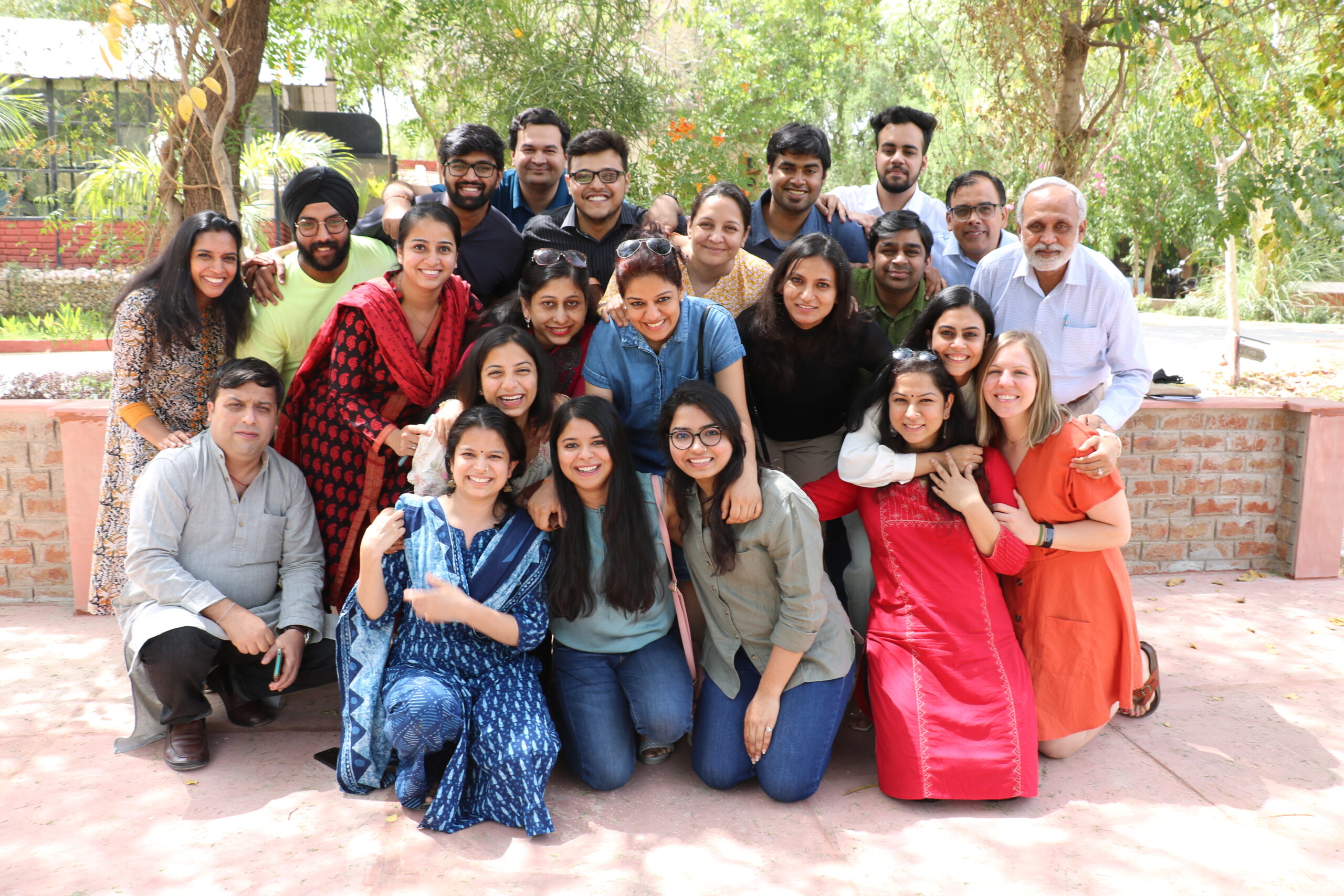
About Us
Learn how Dimagi got its start, and the incredible team building digital solutions that help deliver critical services to underserved communities.
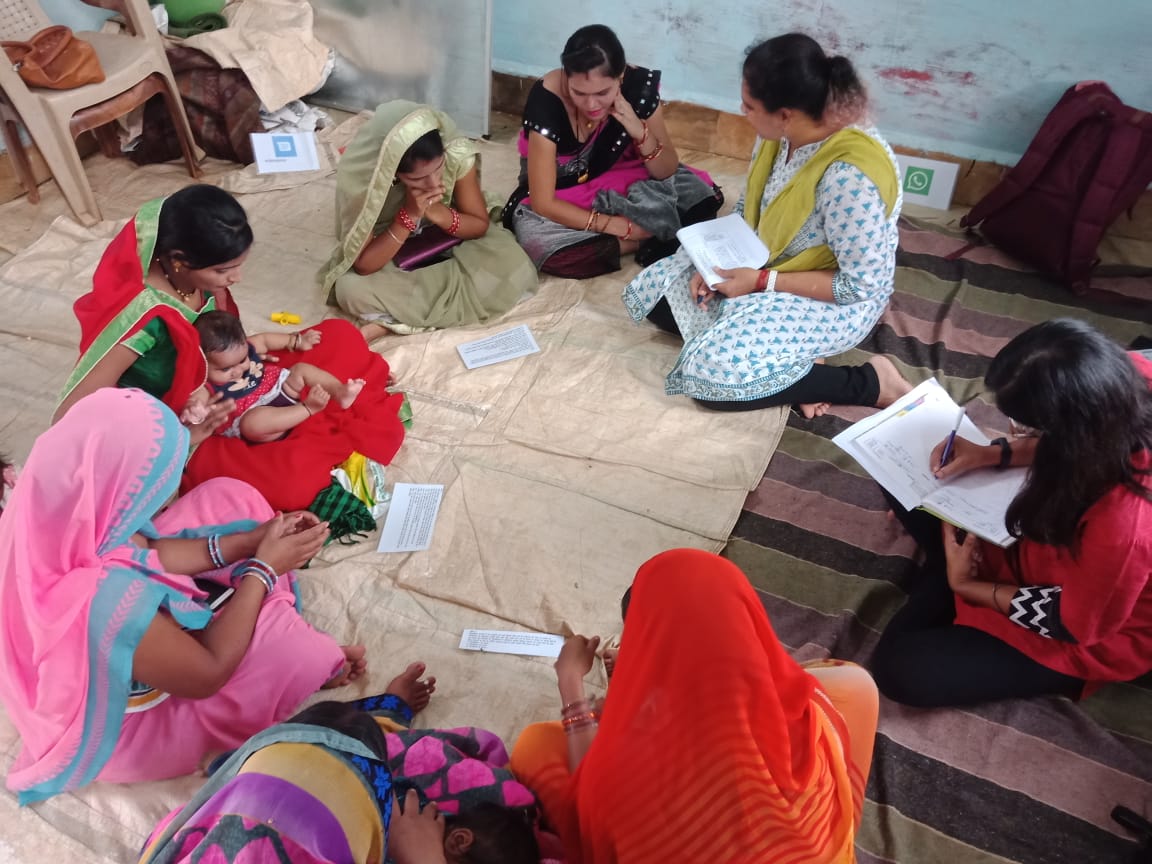
Impact Delivery
Unlock the full potential of digital with Impact Delivery. Amplify your impact today while building a foundation for tomorrow's success.
CommCare
Build secure, customizable apps, enabling your frontline teams to collect actionable data and amplify your organization’s impact.