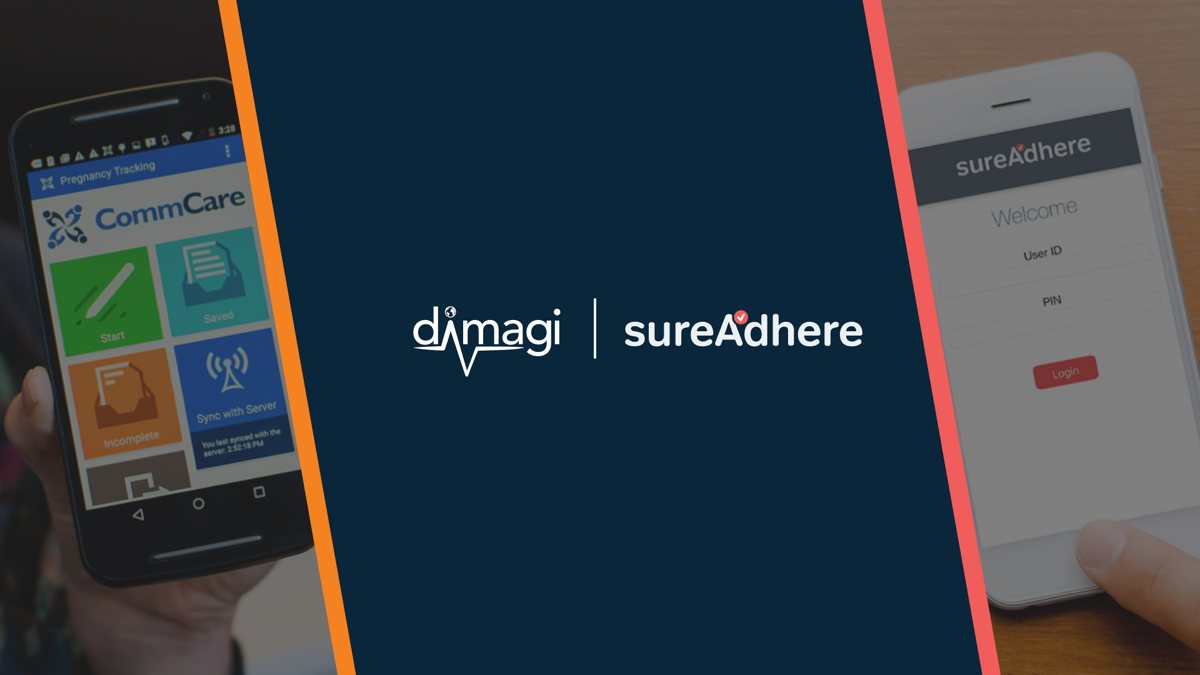
‘Wheels and Waves’, a telemedicine intervention designed to support individuals receiving Medication for Opioid Use Disorder (MOUD), is being scaled by Vermont Care Network and Vermont Care Partners alongside local Opioid Treatment Programs, known as Hubs, across the State of Vermont.
The expansion project results from a successful pilot of the ‘Wheels and Waves’ intervention designed and implemented by the Howard Center in 2016. Pilot results demonstrated that remote observation of medication intake via the SureAdhere Video Directly Observed Therapy (VDOT) platform was successful in tandem with secure medication dispensers to increase patient autonomy, empower patients to engage in their own recovery, and lower traditional travel and cost barriers to accessing MOUD. The same telemedicine intervention design will be used during the expansion initiative at numerous Hubs located throughout the State of Vermont.
Barriers to opioid use disorder treatment
Patients seeking MOUD with methadone or buprenorphine face major barriers to accessing care. Distance from treatment centers, high travel costs, and time away from work and family can cause low retention in MOUD programs, resulting in poor outcomes for OUD patients, especially in rural and underserved communities.
To combat these barriers to care among their OUD patient population, the Howard Center, located in Burlington, Vermont, designed and evaluated the ‘Wheels and Waves’ intervention in 2016. The state had observed that nearly 45% of patients enrolled in Hubs for OUD were not adhering to treatment due to the burden of daily travel to the clinic and the high personal expenses involved. Poor adherence to therapy increases the risks of negative effects of non-compliance, such as social isolation, high rates of relapse, and other related health issues for individuals suffering from OUD.
Designing the ‘Wheels and Waves’ pilot
The Howard Center designed a robust telemedicine intervention that combined Video Directly Observed Therapy (VDOT) in conjunction with a secure medication dispenser as a response. The ‘Wheels and Waves’ pilot was conducted with 58 patients over the course of three years at the Howard Center Chittenden Clinic. The SureAdhere patient-facing mobile application was used to remotely capture daily medication ingestion by patients, while virtual care tools in the SureAdhere case management system enabled rapid triage and remote follow-up with patients who needed extra support.
At the completion of the pilot, 98% of patients enrolled were still engaged with treatment.
Results also demonstrated a reduction in time and personal expenses by 86% per individual enrolled, with median cost savings of $72 per patient per week, and a median travel time savings of 5.5 hours per week.
Scaling statewide with SAMHSA funding
Given these compelling pilot results, in June 2022 SAMHSA awarded $1.15M of Congressionally-directed community funding to Vermont Care Network and Vermont Care Partners, a network of 16 agencies providing mental health, substance use, and intellectual and developmental disability services, to fund the statewide expansion of the ‘Wheels and Waves’ intervention. This expansion program establishes a novel telemedicine approach for OUD as a recognized standard of care in the State, and aims to increase access to MOUD for those suffering from OUD in Vermont.
Beginning in October 2022, ‘Wheels and Waves’ intends to enroll up to 400 patients in treatment Hubs across Vermont. As the technology partner on this project, Dimagi will provide SureAdhere to continue to be used alongside the secure medication dispenser provided by ePill medication technologies. The expansion project will also utilize the same intervention design as the pilot.
Toward a new standard of care
Increasing access to OUD treatment protocols like MOUD is critical if we are to gain control of the opioid epidemic in the US. Vermont Care Network and Vermont Care Partners hope to support the long-term adoption of the ‘Wheels and Waves’ intervention across Vermont, and envision that their methods will eventually become a standard of care for other MOUD programs leveraging telemedicine approaches across the nation.
You can learn more about the project from our partners here, or learn more about SureAdhere.
1. Brooklyn, J. (2022). Characterizing the Clinical Use of a Novel Video-assisted Dosing Protocol With Secure Medication Dispensers to Reduce Barriers to Opioid Treatment. National Library of Medicine. https://pubmed.ncbi.nlm.nih.gov/34282084/
Interested in SureAdhere for behavioral health?
Talk with our team about remote treatment support and video directly observed therapy.
Get in touch