About this episode
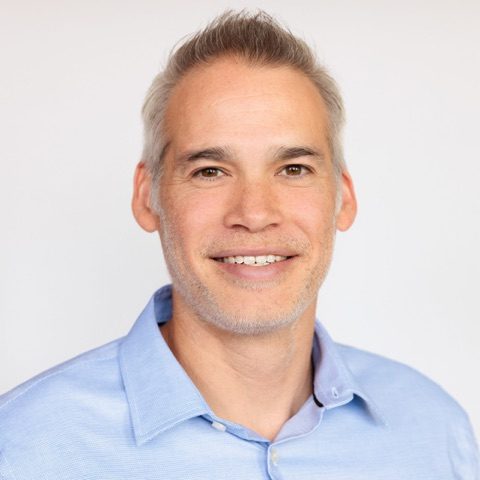
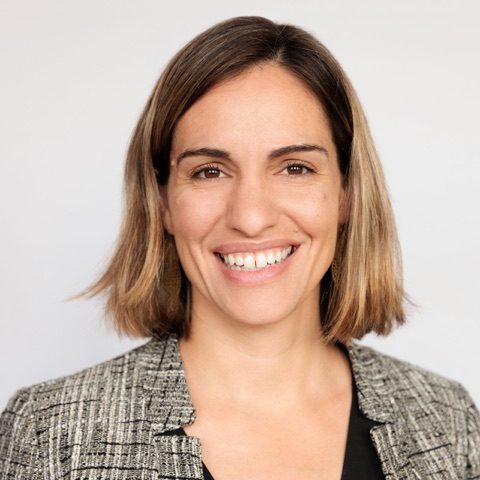
Billions of dollars in new philanthropic funding are expected to come online in the next few years, and Coefficient Giving wants the ecosystem ready to absorb it. Nic Lyon, Program Officer for Global Health and Wellbeing at Coefficient Giving, joins Jonathan Jackson and Amie Vaccaro to explain Launchpad, a new effort to seed and scale outcome-oriented funds, each led by a single accountable general manager.
Nic walks through why funds can make the work legible to new donors and simpler to back than dozens of separate projects, why Coefficient Giving is betting on individuals rather than institutions, and why every fund should have an off-ramp once its goal is met. He also shares what reviewing the proposals has been like: applications about 20% stronger than expected, where AI helped and where it showed, and why a credible pathway to $100 million or more mattered.
Drawing on his early fieldwork at IDinsight and a PhD in political science at Stanford, Nic also talks about evidence generation and when a cause area needs more evidence before it is ready to fund.
“This is the individual who can speak to the donor and say, ‘I’m the one who’s accountable for delivering on this. Trust me to deliver.’”
Nic Lyon, Program Officer, Global Health & Wellbeing, Coefficient Giving
In this episode
- What fieldwork at IDinsight and a PhD in political science at Stanford taught Nic about how evidence gets made, and used
- Launchpad 101: deploying liquid capital now so the ecosystem is ready when billions in new philanthropy arrive
- Why funds rather than projects: legibility for new donors, less complexity, and a clear outcome to track
- Outcome-oriented funds, and why every fund should have an off-ramp once its goal is met
- Betting on people: why each fund is built around one accountable general manager instead of an institution
- Echoes of Coefficient Giving’s 2022 Regranting Challenge and the DARPA model
- How in-house programs like the Health Aid Transition Fund get started, from exploratory grants to a dedicated team
- The two tracks: low-probability bets on pre-seed, and $20 to 50 million or more on seed and scaling
- Applications about 20% stronger than expected, and how AI showed up in the proposals and in the review
- Why a credible pathway to $100 million or more in future funding mattered, and how success will be measured
- When a cause area needs more evidence before it is ready to fund
Resources from this episode
- Request for Proposals: Launchpad Funds, Coefficient Giving’s call for new and scaled outcome-oriented funds
- We’re Scaling Our Global Health & Wellbeing Giving and We Want the Field to Scale With Us, the context for Launchpad
- Coefficient Giving’s Largest Grant Ever, $276 million, co-funded with GiveWell, to the Against Malaria Foundation for bed net campaigns in the DRC
- Announcing the Health Aid Transition Fund
Related episodes
- Grow the Pie: GiveDirectly’s CEO on Absorbing the Third Wave, Nick Allardice on planning for new philanthropic capital
- Joey Savoie: Why Grantmaking, Not Money, Is the Bottleneck, the founder of Ambitious Impact on the absorption problem
Read the transcriptExpandCollapse
This transcript was generated by AI and may contain typos and inaccuracies.
Amie Vaccaro: Welcome to High Impact Growth, a podcast from Dimagi for people committed to creating a world where everyone has access to the services they need to thrive. We bring you candid conversations with leaders across global health and development about raising the bar on what's possible with technology and human creativity.
I'm Amy Vaccaro, VP of CommCare Growth and Strategy at Dimagi and your co-host, along with Jonathan Jackson, Dimagi CEO and co-founder. Today, we're asking what it takes to get ready for billions of dollars in new philanthropy before it arrives. Our guest is Nick Lyon, program officer for Global Health and Wellbeing at Coefficient Giving, where he leads work on new cause areas.
Nick is behind Launchpad, a bet on funding funds. Each fund is built around a single accountable leader and a clear outcome with an off ramp once that outcome is reached.
We get into why funds versus projects, why bet on a person rather than an institution,
and how AI showed up in the proposals and in how coefficient giving read them. If you're a funder preparing for this next wave or an organization hoping to be ready for it, this one's for you.
Amie Vaccaro: All right. Welcome to the podcast. So I am here today with Jonathan Jackson, my co-host as always. Hi, John. Nice to see you.
Jonathan Jackson: Good to see you too.
Amie Vaccaro: Yeah. And today we are so excited to be joined by Nick Lyon, who is program officer for Global Health and Wellbeing at Coefficient Giving. So Nick, we're excited to have you on to talk about Launchpad, which is a new funding model that you recently launched.
I'll share one quick disclosure, which is that Dimagi has submitted to Launchpad this round, as I'm sure many folks in the audience have, but we won't be talking about specific applications today, of course. But just wanted to give that disclosure. So Nick welcome. I'd love to start with a bit of your background.
And I saw in your backstory, you were evaluating programs at ID Insight before you joined Coefficient Giving. I'm curious, what did you learn in that evaluation that changed how you're thinking about funding now that you're on the funder side of things?
Nic Lyon: Awesome. Well, first, Amy and John, thank you so much for having me on. Really glad to be here and to talk about Launchpad. I was at ID Insight almost like a full decade ago, and so there was a long PhD intervening period. And so went to ID Insight directly out of grad school, and I think I was really motivated to understand , the evidence building pipeline in practice, get some fieldwork experience beyond the ground, see kind of the, the nitty-gritty sort of dirty data collection process that has to happen before things go all the way up to the consumer side of some of that evidence.
And so I think, just built a basic understanding of, everything that can go wrong with field work. And so, on sort of the, the other end of the, the pipeline, we're seeing, neatly finished products evidence that has been through this long data collection process.
And so I think we can just understand everything that has gone wrong in that pipeline. And I think what that means for funding is I think we just recognize that, it's easy to say one thing, but then the reality on the ground can be very different. And so, recognizing that, we're reading expressions of interest at an initial level of abstraction and ambition but that there'll be a lot to work out along the way.
Fieldwork and implementation gets dirty, gets messy. And so we recognize that we want to work with, any proposals that we fund to understand sort of what some milestones and what some sort of guardrails can look like over time, but recognizing that the work that ultimately might happen under some of these submissions might look quite different from some of the initial expressions of interest.
And so I think having that sort of on the ground field work, evidence generation sort of experience has at least for me been helpful in understanding sort of that pipeline.
Jonathan Jackson: That's great. And then from ID Insight, what did you do your PhD in and why?
Nic Lyon: Yeah, so I think I knew going to ID Insight, so ID Insight was my first job out of school. I think I knew at that point that I wanted to go back and get a PhD in some kind of quantitative social science, but I wanted to get that, that field work experience. And so at ID Insight, did some, some field projects in Ethiopia.
And so then I went back to Stanford for PhD in political science um, and just really wanted to like dig in on the evidence generation, feel really grounded in some of the causal inference methodology type stuff, just really feel like I was at the top of my game in terms of being able to understand some of that evidence.
And so then after my PhD I joined Coefficient Gaming and just feel really fortunate to be on this side where I'm able to use all of those, quantitative methodological chops. But on the consumer side where I'm able to understand, what good evidence looks like and then be able to make some, some decisions and pull some levers on the basis of that.
Jonathan Jackson: That's awesome. One of the adages that you hear in development and randomized control trials in particular, which is one of the gold standard methods is where's the RCT that RCTs are used? And, what is the evidence that evidence is used? And I'm curious, in your PhD or post - PhD what were some of the interesting learnings that you came about in terms of how this evidence really, informs policy or informs the consumer side in a way that was surprising to you?
Nic Lyon: Well, so I think on, on the PhD side, I think I actually struggled with this quite a bit. It felt for myself, I found it difficult to hit both the moving the needle on an academic question of interest while being policy relevant. I know some folks are, are really good at that, but I myself struggled with that.
And so that was part of my motivation for leaving academia and joining Coefficient Giving is just being in a space where sort of the policy questions are first and foremost understanding what we can do with limited resources to move the needle on outcomes. And so on our side, I think we use evidence quite a bit.
And so, recognizing that there's a whole, gradation of different qualities of evidence and some evidence may be better suited for some types of decisions than others, but, where the best evidence exists, we want to look for that to understand what that is telling us about where our - marginal dollar might go.
And so, maybe just to name an example, you know, um, uh, had, had done some work last year in support of one of our programs on sort of the evidence for air quality monitors changing behavior and policy in in cities that had sort of poor air quality indices. And so just really relying on the evidence to then inform some of our decision making and where we place grants is, I think, a big part of my job on especially our cause prioritization team.
do wanna say, like, of course there, there are some interventions or programs which is a lot harder to do evidence or to find evidence that sort of sheds light on those outcomes. And so, of course, any sort of country level policy type work or technical assistance at the national level, it's really hard to randomize that.
And so, we recognize that there are other sources of evidence that we can rely on. It's not as if everything has to be an RCT for it to look interesting to us. But just trying to, for anything that we might be interested in, trying to scratch beneath the surface and look at what the evidence shows us so that we can feel confident that the grants that we will make will, will have, will make a difference.
Jonathan Jackson: That's awesome. And so taking that into what you have done with Launchpad and how Coefficient Giving is doing this really cool approach. And I think everybody who read the RFP was really excited to see this kind of, like, novel approach to thinking about building new funds. I'd like you to take us kind of back to the starting point.
Like, how did this idea start to gain momentum with Inside Coefficient Giving? How long have you been thinking about a model like this? But maybe to start, let's just go back to what is the, the Launchpad? What are the basics of what you're trying to do here? I believe the RFP is now closed, but it was a really exciting mechanism and I imagine it'll spur further ideas in the future as well.
But just give us the 101 and then take us back to how it , came to be.
Nic Lyon: Yeah, so, , the reason for Launchpad was that, we were seeing what we expect to be, potentially billions of dollars in new philanthropic funding come online in the next few years. And I think a lot have been venting about that, a lot's been talked about that. And I think, we saw the capital that we have, which is currently liquid and, though we can do something about this to make sure the ecosystem is ready by deploying those liquid resources now in the anticipation of that future capital that'll come online in the future.
And so we really saw this as one of the few bets that we're making at Coefficient Giving. And so Launchpad is one way in which we're scaling, but it's not the only way in which we're scaling. And so we saw this as part of our effort to help build and make sure, build the ecosystem and make sure that it was ready to absorb more of that philanthropic capital when it comes online.
And we can talk about why we thought sort of funds were an attractive model as something to seed or to scale as part of that. But I think short story for now is we just though the fund model was an attractive feature that would make things legible to new donors as they come online. And so wanted to just make sure that there were funds that were targeting big neglected problems that no one really had ownership over, even if people might already be doing a substantial amount of work in.
And so just wanted to make sure that infrastructure was ready to go when some of the new capital comes online so that there are destinations to cost effectively absorb some of that new money.
Jonathan Jackson: That's great. And love it. I'd love to hear actually, why as you mentioned, coefficient giving is probably thinking about multiple dimensions related to preparing the ecosystem and making things legible. Why this approach to funds, why specifically are you thinking funds are a powerful mechanism here?
Nic Lyon: Yeah, so I guess maybe taking a step back, I think we're surging our grant making primarily for two reasons. I think the first is that we think there are cost effective opportunities to make grants right now, and so want to surge our spending and bring forward some of those opportunities. And so we are doing a fair amount of sort of direct project-based grant making.
So recently increased our contribution to GiveWell in 2026 to one billion and there'll be lots of sort of direct delivery project based grant making done through GiveWell. Then co-funded with GiveWell, we also made our largest grant to date to the Against Malaria Foundation for bed net campaigns in the DRC.
And so first just want to bracket and contextualize Launchpad within some of that scaling where we are doing a fair amount of project-based grant making outside of Launchpad. And so then Launchpad is really our effort to move the needle on making sure the ecosystem is ready to absorb new funding.
we think funds as appres to projects are helpful to that for a few reasons. And so I think one is just legibility. there are many, many different implementing organizations that are tackling different pieces of the puzzle, but it's sometimes hard to see the forest for the trees.
And I think what funds can do is make all of that work come together and synthesize it in a way where it's more legible to external partners. I think it also just reduces complexity where, if a new funder wanted to make progress on a certain outcome, they could choose to fund a whole bunch of projects, but the right implementing partner in one country might be different from the implementing partner in another country.
It takes some expertise to understand, what are the levers to pull, which partners can pull those levers in different places? Should I target the highest burden country? Should I target the countries that have the most ability for traction? And so it's quite a complex decision making operation to fund a whole bunch of different discrete projects across a wide number of different geographies.
And so I think funds can serve a kind of, I don't simplifying role for funders where, I want to make progress on X, Y, Z outcome. Here's the fund that I would go to do that. And recognizing that fund, that general manager has the expertise to deliver on that outcome. I think those are some of the reasons why we think it, it's attractive to have funds.
And then I would say the third, which is not necessarily funds per se, but what we were looking for on Launchpad, which is more outcome oriented funds with some, some gray area around that. And so, what's an outcome oriented fund? Of course, some cause areas could just be recast in terms of outcomes, but what we were interested in is there a specific thesis that this fund seeks to make progress on?
Where the thesis is oriented around an outcome. And so that could be modality that could be, AI is changing the way we deliver services in a certain area. This fund is going to be oriented around making progress and on that modality. Could be oriented around specific outcomes.
And so it could be, reducing Dally burden from X, Y, Z disease globally. And so in general, we wanted things that were outcome oriented or where we could show progress over time. And the reason for that was that, I think a fear for some funders is that, you put money towards something, maybe you get some, , progress reports back, but you don't really know how it's moving the needle toward what you should probably ultimately care about, which is making improvements on global health, making improvements on global development.
And so I think an orientation around outcome oriented funds is helpful in so far as it, it puts the, the goal more clearly legible in front of both , the general manager who's responsible for delivering on that goal, but then the funder who can track progress against that goal. And I think what we would ultimately like is, maybe when a, a, a goal or a target on an outcome is achieved, it may make sense to wind down the fund at that point.
And I think having sort of an off-ramp where there's the ability to look at what has happened, assess whether it has been successful, assess whether there is a further goal that should be set up or whether the fund has achieved its goal and should be wound down, I think that's also an attractive feature.
And part of why we wanted to fund funds as opposed to projects or organizations where there's a little bit more of an incentive to keep things going.
Amie Vaccaro: I love this. And I think it's really cool just how you're describing, the sort of parallel tracks of, like, continuing to invest in projects and, really surging your grant making there, but then also investing in this new way. Couple following questions are, one is, has this been done before?
Like, are there any, models that you're following? And then maybe kind of building on that, I'd love to hear a little bit more of, , how would a fund that's funded by this Launchpad effort work? , What does that look like? Just so I can kind of wrap my head around it.
Nic Lyon: Yeah, for sure. So maybe on the former I think there are in ways analogs to a process we ran in 2022 called our Regranting Challenge. And so our regranting challenge in 2022 was 150 million committed to grant making, to other grant making programs at other foundations or philanthropic organizations.
And the idea was to surge some of our spending at that time through grant making programs that had already been established, had built some expertise, and that could grow their grant making considerably. There's some sort of echoes of that in, in Launchpad here. I think a few differences as well.
I think one, we are open to, but not strictly oriented around existing grant making programs at other foundations. I think those could be eligible recipients of Launchpad funding. But we are also interested in standing up new funds whose institutional affiliation is TBD or scaling funds at places that may not necessarily be strictly philanthropic foundations.
And so I think there is the sort of literal institutional difference , with the prior re-granting challenge. And then I think more substantively what we are really interested in Launchpad funds is there an opportunity to use Coefficient Giving's support to really serve as anchor capital to then significantly scale the, the, the size of the fund over time by building relationships with other funders and other donors?
And so, 2022 re-granting challenge was more sort of direct use of our funding and Launchpad now is how can this be used catalytically to grow the fund over time? And then I think in terms of ano- another model that this kind of echoes I think the, the DARPA model of, find general managers for certain areas, capacitate them for a certain period of time to really execute on that grant making vision.
And I think there are echoes of that , in this as well. And then
Jonathan Jackson: I think in some ways it is not too dissimilar from what we might expect of a program officer running our work on in one of our internal programs, but not necessarily wedded to that being institutionally affiliated with coefficient giving. And in fact, we see some value in some of the funds that we launch sitting outside of coefficient giving.
Nic Lyon: And so I think it, day-to-day activities would probably be a few things. I think grant investigation, making grants, strategy development, given the orientation around scaling fundraising with the ambition of growing the fund even further. And so, we want a individual to be ultimately responsible, the, the general manager, but it's going to take a, the building of a team around that general manager to fulfill all of those functions.
And so really want to see this as building the capacity around a general manager to grow a fund, fulfill all of those functions, build expertise towards the outcome of interest that the that the fund is hopefully moving toward. and so I, I think it would largely be almost like a program officer type role, but with the, the fundraising add-ons.
Amie Vaccaro: I think it's, a really cool, like, the way you're describing it, it's like you're basically expanding Coefficient Giving's work through these funds, you're kind of, , allowing the work to happen outside of your organization, which seems really thoughtful and just another way of, like, growing the pie, which is something we talked about on a previous podcast.
And I think the thing that I wanted to dig in with you on is, you mentioned this, like, GM approach, like, , there's a general manager for each fund and it does seem like that was a really thoughtful strategic choice that you made of, building these funds around one person instead of around an organization.
So I'd love to hear you unpack that a little bit.
Nic Lyon: Yeah. So I think a few things to be said there. I think one is just logistically, part of our grant making decision will be taking bets on individuals and individuals who have the leadership to execute and have the judgment to ex - to develop a strategy and execute on it but then also to scale the fund over time.
And so I think having a general manager who's ultimately accountable is in some ways just echoing our decision making criteria where, we think this is a bet on people. That's how we do a lot of our program officer hiring. And so someone at the end of the day should be accountable and that should reflect our decision making processes.
I think more, substantively I think having an individual as opposed to an organization be accountable, I think is in part driven by wanting to be nimble and flexible in some of the, the decisions that a, a general manager might have to make. I wanna caveat by saying we, we're open to implementing organizations and we can talk about that a little bit afterwards, but for now we'll just assume individuals are the general managers here.
And I think where that's helpful is, it may be the case that, at the start of a series of grant making on one of these funds, there may be one sort of set of strategies that is anticipated to work with an initial set of implementing partners, and that may change over time. Like it may be the case that certain strategies are paying off less than, than anticipated, and so levers need to be pulled, move another direction.
It may be the case that certain implementing partners that were anticipated to work with just didn't find as much traction, perhaps for very good reason than they anticipated. And so it may be the case that we have to go with a different implementing organization. And so I think having an individual who isn't necessarily institutionally beholden to, furthering and implementing organizations revenues or isn't beholden to other concerns and can move quickly outside of big Byzantine bureaucracies is I think quite helpful.
And that's part of why we want individuals to be responsible here. And then I think on the flip of that, I think it also is just helpful for the fundraising side to be able to point to, this is the person who is responsible for delivering on the outcome. It's not this complex organization where you don't know all of the, the sort of main principles who are doing the work.
This is the individual who can speak to the donor and say, "I'm the one who's accountable for delivering on this. Trust me to deliver." Overall, I think the ambition is to simplify things, make sure that things are flexible and make things as legible as possible.
Jonathan Jackson: I think another thing that allows you to do is be pretty creative in how you're thinking about these different mechanisms. And two things just to call back on, on earlier comments you made. The Against Malaria Foundation grant is phenomenal and it's so exciting to see. Ellie Hossenfeld on his podcast for Givewell recently went through that, that entire grant, which is cool.
And then the re-granting program that you ran, I actually got interviewed for the diligence on one of the grants you gave, which was comical by any, any reasonable definition of donor but was one of the coolest grants I've seen, which was to the US government's USAID Div program. And Sasha has been a previous podcast guest here and she then spun out Div Fund which I know is in close contact with you.
But that is such a crazy donation to give to the biggest donor in the world, but I think that shows the creativity that Coefficient Giving was up for in terms of saying, like, well, if Div is influencing more cost-effective giving within USAID, that's a massive return, on this re-granting. So that was really cool to see, but I'm curious, like how much ingenuity and flexibility do you envision seeing?
I mean, I'm sure you got thousands of proposals, but the other thing that, you know, anchoring this on a person and a GM, it's gonna give you a huge amount of flexibility in what these funds ultimately end up looking like and where they get housed.
Nic Lyon: Yeah. And I think we wanted to maintain that flexibility because I think different types of funds may make sense in different types of institutional arrangements down the line. And so we didn't want to come into the funding decision with any kind of pre-baked notion of we're only going to fund certain ideas when they're situated in X, Y, Z type of host.
We will have to make those decisions at some point. There has to be some ultimate recipient of the funding and it has to be housed somewhere. But I think for now we're just more interested in sort of the individual, and then once we narrow down on a set of proposals, working with that individual to understand for the type of grant making they have envisioned, where does it make the most sense to situate that?
And that could be in a whole different number of different institutions. So I think it'll be exciting to see what that ultimately looks like. I think I, I'm excited to see what, like the flexibility that does offer and the different types of hosts we may end up funding. But we'll see what the spectrum looks like after we make some of the, the funding decisions.
Jonathan Jackson: you stood up your own funds internally for things around lead and particular initiatives. I'm curious what Coefficient Giving has led internally and can kinda just share with our audience, because I know there's a lot of applicants, hopefully some, some people who move forward with you, but how did those funds get off the ground?
What lessons learned do you have on the challenges you had creating these funds? I know Coefficient Giving as a funder is in kind of a unique position to capitalize these funds, but I know you drawn other partners as well. So I'm just curious, like, as you've all looked internally at how the creation of these funds within Coefficient Giving has happened, what are some of the lessons you've learned just on your internal fund creation?
Nic Lyon: Yeah, so my role at Coefficient Giving I work on what we call our cause prioritization team which is our strategy team that sits parallel to our program teams. And on the cost prioritization team, I lead our new cause areas sub-team, and there's kind of two functions to that.
One is doing the investigations to launch new funds or programs that sit internally at Coefficient Giving. And then the second is off program grant making opportunities like Launchpad. So both of those are under my team. And so maybe to give one example of a recent sort of investigation that, that led to a new program fund that, that we decided to stand up in-house at Coefficient Giving.
In October we launched our health aid transition fund. And so this is oriented around, on the back of 2025, there was a lot of turmoil in declining development assistance for health from some of the cuts being driven both in the US, but also from other bilateral donors.
And so this health aid transition fund is meant to fund opportunities to help countries navigate some of that, that fiscal cliff being driven by some of those cuts. And so really working on kind of the health financing side of things to help countries prioritize retained budgets, make the most of retained budgets by absorbing more of it have more legibility over some of the budgets just because there's a lot of money that was off budget, and so countries didn't necessarily know where everything was being funded within their health sectors.
And so I think , the general process was try to understand and for the Health Aid Transition Fund , by dint of circumstance and things moving quickly what a neglected area could be, try to understand whether there , are grants that could be made to gain traction on sort of the, the outcome of interest.
And then conduct, do some exploratory grant making to understand how those look. And so, last year, myself and some colleagues did around 18 million in exploratory grant making to understand, are we getting the kind of ROI on these grants that we would want to have in order to launch an entire program?
And so we felt like the, the initial learnings from some of those grants look, looked good enough where we wanted to stand up a dedicated program. We just hired my new colleague Nomi Sham, based in Nairobi. And so really excited to have that as a new program in-house and be able to make progress on some of the health and transition work.
I think in general, in term, in terms of sort of programs that we have launched in-house and what that might mean for Launchpad, I think a few things, because I think there's some areas where there's overlap with Launchpad and a few areas where there isn't overlap. And I think it's maybe helpful to tease apart the difference there.
So I think in some cases take for instance our science and global health R&D team, that is of course a, a very wide area. It's not oriented around a specific outcome or progress toward a specific goal in the way that what we asked for on Launchpad is, but we think there are a bunch of high return opportunities within Science Global Health R&D, but that are potentially more diversified across a wider set of areas.
And so I think there we really rely on the judgment of our program officers to find high ROI opportunities across just a very wide spectrum of potential opportunities they could invest in. And I think part of why we feel confident in that is because it's in-house and there's a sort of accountability layer where our program officers submit grants up to whoever their manager is, usually an expert in a given field.
And there's some kind of, like, institutional accountability to understand, among this diverse set of things we could be funding, is there some through line where we think we're making progress on that, that sub area overall? I think it's a little bit different with Launchpad and kind of why we're asking for, in part, some more outcome orientation in Launchpad is because we think it's important for those to sit outside of coefficient giving, and the outcome orientation is helpful for our own purposes in both the legibility side, but then also the accountability side.
It is easier to track progress toward an outcome that is legible upfront than it is on a general area like Science Global Health R&D. And so I would say some of our internal programs are more similar to Launchpad. So maybe our LEAF program our, our lead program or our Strep A vaccine program, which are oriented around making progress towards specific outcomes.
So on, on Leaf, it's eliminating lead exposure. On Strep A, it's getting at least one vaccine to phase three. And so I think on those are more, more similar to Launchpad than maybe our Science Global Health R&D program or even the Health Aid Transition program that we just stood up, where it's probably going to take a more diverse set of bets to make progress on that area as a whole.
Jonathan Jackson: that's great. And you articulated the difference between some of these more generalized funds and the more outcome oriented funds. I'm sure this is a very difficult question to answer, but I'm curious how you're thinking about it. Like, if you fund, say, 20 ideas out of the Launchpad, how many are you hoping ultimately achieve their outcome?
'Cause certainly failure Of any one fund should not at all be deemed, made it a bad use of funding. Like lots of these things should be so aspirational they end up not ultimately achieving what they set out to. But, if you think about a basket of 20 funds what do you hope your hit rate ends up being?
Nic Lyon: Yeah, so I don't think we have a kind of pre-registered hit rate , that we're shooting for. We are very conscious of the fact that, we want to encourage ambition and ambition will mean some things will fail. I think coefficient giving institutionally takes a hits-based approach to our grant making where, we want to make decisions on the back of expected value while recognizing that, with some probability, any given investment we have, have, might fail.
And so I think we of course would love every one of the new funds that we support to thrive. We don't expect that to be the case and we think it's important that when it's not making progress that we be able to wind that down. And I think ideally have aligned partners on the other side, folks who pitched these ideas were really excited about the level of ambition that they were aiming for, but just found less traction than maybe they were anticipating.
And so I think ideally shooting for, aligned general managers who recognize that if you're not making progress it's better to wind things down than to, to keep things going without being able to show the returns on it. We don't have a given hit rate that we're shooting for.
I think I would expect you may have seen on the RFP, there are kind of two tracks. There's what we're calling our pre-seed track and then our kind of seed and scaling track. And so on, on the seed and scaling track, which is either anchoring new fund but with sort of substantial thought behind it, or scaling an existing fund that could grow to absorb significantly more capital.
Because we are anticipating putting more funding behind each of the chosen funds in that category, so 20 to 50 million plus, we would want to feel pretty confident about making some of those decisions, that there is a high probability of each of those funds being able to make progress, both on, on scaling the volume of funding that flows toward the fund, but then on, on achieving the outcome.
And so I think the due diligence process there will, will of course be much more substantial. On the pre-seed track I think we are much more willing to take low probability bets there. could be, totally new idea, niche, no one's working on it. And , if it looked interesting and above our grant making bar in terms of cost effectiveness, I think we'd be very interesting in pursuing that while recognizing it may make a lot of sense to wind that down if we don't see any traction there.
And so I think we will approach this a little bit differently across the two tracks, but in general very open to the idea that some of these ideas could and maybe should fail given the level of ambition we're hoping for.
Jonathan Jackson: That's great. And do you anticipate doing additional rounds of Launchpad in the future as you learn from this initial set and see what works?
Nic Lyon: So I think, no specific plans to run this process again. I think what I would say is we've received a lot of really high quality proposals I think far more than we could possibly fund. And so I think what will happen is we will move forward with an initial set of proposals that we're prioritizing for the time being, and then kind of return to the stack as our capacity allows and as our funding allows to understand, is the marginal unfunded proposal something we should bring back up and think harder about?
And so I think rather than launching a new process, I think this could just be, at least for, the next year or so, a, a stack of exciting ideas we can keep returning to, even if some of those ideas aren't the things we initially prioritize and move forward as part of the, official Launchpad process.
Amie Vaccaro: Yeah, I love that idea of like kind of keeping these in your back pocket. I'm curious when you're thinking about traction obviously there's like traction on the outcome, right? If there's an outcome set, you wanna see traction there, but you're also setting this idea that these funds should be fundraising for themselves.
Is that like another element of the traction you'll be looking at in terms of should we, keep this going or wind it down?
Nic Lyon: Yeah, so I think ultimate success would rest on two things in, in terms of the ambitions we've laid out on Launchpad. I think one is being on track to make progress toward the articulated outcome or target of interest, and then the second being scaling that, that fundraising to be able to meet that outcome of interest.
And I think that they're actually intermingled in that way where, the way you achieve the outcome, if you've done your projections approximately right is by crowding in additional funding. Like you're probably not going to hit that outcome unless you also bring in additional capital. And so I think they're correlated in that way.
And so I think we would want to see both of those in order for there to be ultimate success. I think if there were a case where a fund is making progress toward an outcome that we think is really important but for whatever reason isn't getting traction on the other side of it, isn't doing the fundraising side of things, I think that, there could be a few paths forward.
I think one is, we could try to either encourage the grantee to make grants that could allow them to increase their fundraising success. I mean, often fundraising is a different skillset from being able to be an operator of the outcomes that you're looking toward.
It could be the case that just needs to bump up a fundraising function and then, our, a, a little bit of additional support from our side could help make that happen. I think another, possibility is, we want to increase absorptive capacity, and part of that is, we want to be able to increase absorptive capacity that we ourselves could potentially make use of in the future.
And so if, if this is, launching a fund that we think can cost effectively absorb, tens of millions of additional capital after we make our anchor investment, we hope those funds go off and build relationships with other funders and crowd and support from other funders. But we could always consider being a funder ourself down the road.
We are not making any promises of renewal when we make these grants, and I think won't be able to do so. But I think if we are in a position to be able to consider further funding for these funds we could do so down the road. And so I think if there are funds where they're having maybe a little less success on the fundraising side, but feel like they're making progress toward the outcomes of interest, I think that could be one pathway to, to dealing with that.
Jonathan Jackson: And I'm wondering aligned to that absorptive capacity we had Joey founder from Ambitious Impact on a few episodes ago and I know he's very aligned to the same thing in his coefficient giving. And one of the things he's advocating for, and I think even has an open call for, for new grant makers to give away a million dollars is this absorptive problem of, okay, how do we have enough vehicles, enough funds where dedicated, incredibly smart people can make significant contributions and inroads?
And I'm curious if you are successful with Launchpad and you've created many more GMs out there, how do you think about the internal constraints Coefficient Giving has on going through thousands of compelling applications or whatever the number is, but I'm sure you're feeling it internally as well at Coefficient Giving.
And so how do you think about that challenge in the context of Coefficient's mission in terms of finding these great, highly cost effective ways to spend the next marginal dollar?
Nic Lyon: Yeah, I mean, I think it has been a good problem to have, I would say, where I think compared to our expectations, I think, maybe the quality of the average application was maybe 20% better than I anticipated. And so it has created a capacity challenge to vet all of those proposals.
so, and, And so I think the unfortunate reality of that is that, we are going to have to prioritize proposals on a number of different criteria, and we will leave some proposals that are very good off of our top priority. And so I think, that is just the situation we're in where, which is I think maybe the, the positive frame on this is it was energizing and exciting to see how much capacity could be filled and how many interesting ideas there are.
I think, as you might expect, there were a lot of proposals that, that clustered in certain areas. And so I think, that may make... And I think what we're hoping for is that, creating new funds in a few thematic areas can kind of make some sense of all of , the wonderful work that is happening at the implementing organization level.
And so, probably got, maybe 15, 20 proposals on cervical cancer. Can we create a general manager-led fund on cervical cancer that can then kind of make sense of that ecosystem and be able to, identify which partners are the right ones to fund in different instances? And so I think while acknowledging there's a lot of complexity and which is creating some capacity constraints, I'm actually hopeful that some of what we can do can result in some, some simplification where the next funder who's looking at this kind of ecosystem can identify, instead of having to go through what we're going through now if one were to, want to make progress on cervical cancer, for instance, there, there could be a fund that has been stood up, is ready to go, and is shovel ready to make some progress on that outcome.
So I think I know I'm hopeful that some of the, the work we're doing now can move us in a direction where, there's a little bit more simplification for the next folks coming in but recognizing it's, it's been a challenge to sort through all of these really high quality proposals.
Jonathan Jackson: That's awesome problem to have though as you said, if they're better than quality kind of guests going in, that's wonderful. I am curious how much have you seen AI impact the type of applications you're getting? In one dystopian feature, you got thousands of AI generated slop that, now takes a long time to sift through and another you got better quality proposals because AI was, used with appropriate human review and did a good job.
So I'm curious, like, have you seen AI really influence what you've seen or could you have imagined these all being written five years ago, you know, at the same level?
Nic Lyon: I definitely think that is part of the 20% better than guest figure I quoted. And so I think did not penalize for use of AI when looking at the proposals, but I think the best proposals clearly had human input beyond just being, fully relying on AI as a crutch.
And so I think it was actually fairly possible to separate proposals where it felt like this was just an AI written proposal that we weren't going to take forward, both because it didn't make sense in its own right, but, the, the sort of added, hard to necessarily trust the judgment of a GM if it's going to be fully AI generated.
And so I would say, maybe that is, that was the bottom tersile maybe. And then varying levels of AI written assistance at higher levels. But I would say that, my guess is there were some very high quality submissions that were made better with the use of AI.
And I think maybe especially... I would have to think if we would be able to look at this from the applications, but I think one thing I was hopeful for and would be interested maybe to see if there was evidence of this is I think coefficient giving does have a little bit of an idiosyncratic approach to its grant making decisions.
Like we have a certain valuation for dallies averted, we have a certain valuation for a valuation for income generated. We have a grant making bar. And I hope maybe what AI assistance allowed was folks who maybe don't necessarily speak that grant making language that we use to be able to put forward their proposal in a way that could grapple with, that language that we use.
' I think there's a whole bunch of applicants who might be the right applicant, might be the right general manager for a certain cause area, but comes from a different background and maybe doesn't speak that same language that we rely on in our cost effectiveness evaluations.
And so I think, I'm hopeful the AI might have helped bridge that gap, but I'd have to think harder about whether there's actually evidence for that in, in the stack of submissions.
Amie Vaccaro: I am curious to ask you the, the flip side there, which is how are you making use of AI in your own reviewing, right? It sounds like a really overwhelming thing to, like, just have so many of these incredibly, thoughtful proposals on your desk. Is there a way that AI is helping you sift through them?
Nic Lyon: Yeah. So I think one, one area where Launchpad is different from just a purely open RFP is that we really cared about the pathway to scale to 100 million plus in, in future funding. And as you might imagine we got many proposals that, that might be very solid proposals in their own right, but that are just of a smaller scale and have a much lower likelihood of being able to scale to 100 million plus.
And so for applicants, for applications we received where it was, a local implementing organization working in a certain, sub-region or, working only in one country, and there was no mention in the expression of interest of a growth trajectory beyond that more, more localized geography.
It's just hard to spend with maybe a few exception, exceptional cause areas, it's hard to spend 100 million plus above our cost effectiveness bar in any given sub- sub-region. And so we did use AI to pull out a set of proposals where, this is a local implementer doing work in a localized place with limited or no mention of what a, a growth pathway would look like.
And so we pulled those out as a standalone stack. We had a second set of human eyes on those just to confirm that we weren't throwing any, any high quality proposals out. And so I think, there were some ways to cut corners with, with the, the AI and put things into more legible categories for easier human evaluation.
But we really are planning to have a human set of eyes on all of these proposals. We wanna make sure we're not leaving any stone unturned. And so, it, given the quality of submissions that, that we received, it's been a, a heavier lift to evaluate all of those. But we're working through them and are eager to get back to folks as soon as possible.
Amie Vaccaro: Yeah, that sounds like a really hard task on your plate right now, so, wishing you the best of luck with that. What will, like, in three years, how will you know that it worked, this whole Launchpad effort?
Nic Lyon: Yeah, so I think, as with any grant that we make we will be tracking progress on, on the grant over the course of the grant period. And so currently, I think our, I mean, it depends on the size of the grant, but um, we have check-ins that are either, on a three, six, or six month or one year basis with grantees.
And so I think we would want to, you know, be part of that have those check-ins with grantees, make sure that we're still on track to see outcomes moving forward and be on a, a pathway at the end of three years that was anticipated by around that time. And so I think upfront when making grants, we would want to work with, grantees to maybe lay out some milestones for what we would want to see over that window.
And so I think that would be, some sort of progress on the outcome of interest, and it would be some sort of, of crowding from other funders. And so I think we would track success against those goals and stay close touch with grantees along the way to just understand how that's evolving.
Of course, we recognize things change over time. I mean, back to the, the beginning, we understand the, the field implementation is messy and things you'll learn new things along the way. And so that is totally fine. We recognize there, there are very good reasons why some of those initial milestones might not be met.
But we just wanna be brought along as part of that process and understand, maybe why things aren't being met, , whether there's still a path forward and what that means for progress towards the ultimate outcome. And so I think there'll be like a lot of bespoke grantee by grantee negotiation around what the right milestones would look like.
And so kind of couldn't say in an overarching way what that looks like beyond, there'll be outcome - oriented milestones and funding oriented milestones.
Jonathan Jackson: That's great. And one of the things that I love about this RFP and, and how you're answering a lot of these questions is the clarity on both the flexibility, but the outcome orientation and working with each idea in the way that makes sense for that idea, I think a lot of these are downstream of evidence and the policy that we open this episode with.
As you've been going through these applications, have you seen ones where you're like, "Ooh, I really love, the theory and the idea behind this, but it's just a little early on the evidence or, you know, there's kind of like a two to three year lag I would envision here because it still needs like a couple killer studies or something like that."
And I'm curious if you have seen that or if you've seen it in other parts of your cause area prioritization. One of the macro questions I have for a lot of people who are making allocation decisions is if you started funding an RCT today, you might not get that evidence for two to three years, and then you gotta start the fund and then you gotta go build it up over time.
So there's kind of this urgency or challenge right now with starting new RCT work or new evidence generation work because you're on a kind of multi-year lag at that point. So I'm curious how it's felt reviewing these applications and are you seeing really great ideas where you're like, "But, from a legibility perspective or evidence perspective, like, we're still not totally sure even though it's kind of directionally correct."
And how do you just think about evidence generation in general within your cause prioritization, at this point? I'm sure that's a big question, but like, I'm just really curious to hear your thoughts on that.
Nic Lyon: Yeah, really good questions. Could be answered in a few ways. So maybe let me start with evidence generation as it could apply to a program or a fund. I think , we think evidence generation often plays a really important role in some of the funds that, that we have stood up. And so that could be its own sort of grant making strategy within a fund itself.
And so one example here is our lead work where we think there is, large lead exposure globally, but at a country by country level, it's actually kind of hard to know what lead levels look like. And so a, a large body of some of the initial work that our lead program funded was doing the blood lead level measurement surveys to understand what levels actually look like and then where one would prioritize subsequent grants based on some of that initial learning.
And I think that's a, a pattern that could apply to a lot of cause areas where, it seems to be the case that this is a large and neglected issue, but we don't exactly know where it's clustered. It makes good sense to spend, maybe the first X percent of the fund both temporally and funding-wise trying to understand what measurement looks like such that the, the subsequent grants can be prioritized accordingly.
And so I think evidence generation and especially measurement, I think could be a really important part of some of these funds. And I think what we would want to see there is just responsiveness to what the, the evidence shows. I think if we bought the case that, the fund's outcome of interest is of high enough importance, but, we're not sure where it's located, we would just want to make sure that subsequent decisions are being oriented around whatever that initial evidence and measurement shows.
So I think that, that's one answer, which is, I think we can bake in some of that to, to the programs and funds that, that we fund. I think the other is more existential, which is like, well, some areas just won't be interesting until we have that evidence. And I think for those areas, we want to make sort of grants to further the evidence base.
We make grants on the basis of what we call value of information, where could a new study move the needle on a whole bunch of subsequent funding ei- either from ourselves or from other partners. And so we are, active and interested in sort of the evidence creation and accumulation space.
And I think could imagine a whole separate RFP that is solely oriented around what are the highest value, value of information type grants that could be launched. So I think maybe that, that's the other part of the answer, which is there's some areas for which, we would, probably would want to fund more evidence before moving forward.
And then I think maybe just the, the third thing to say is we have been doing cause prioritization work since the beginning of coefficient giving. And so we have a fairly robust, but of course not globally comprehensive stack of cause areas that we have looked into. And so on the basis of that we are making some of our sort of initial decisions on Launchpad based on, , these years of analysis that we've already done in-house about how they, how different cause areas stack up given our own valuation.
For areas where we don't have existing work that we've done in-house at coefficient giving, I think we are going to give ourselves some time to kind of try to evaluate what those cause areas could look like and whether there could be ideas that seem interesting, but that we haven't thought about to date.
I mean, I think as you might imagine, a lot of the proposals are covered by some bits of our existing work, but we're trying to flag, this proposal seems really interesting, but we don't have a house view on it, so we should probably form a house view. And so that's a little bit , why some proposals might take a little bit longer for us to react to um, especially in, in places where maybe we have, have less of a house view.
So all that's to say geez, synthesizing evidence could be an important part of these funds. We are very interested in funding evidence generation and where we don't feel like we have a good house view, it may be the case that there is evidence and we'll try to get there.
But if there's not, I think maybe the most succinct answer to your question, John, is I think if there's not evidence, I think it would be hard for us to move forward with the cause area. But we might be interested in funding some of that, that evidence that, that would lay the groundwork.
And I think that could actually be an interesting candidate for like a precede proposal where, what would a year of dedicated time from somebody look like in moving the needle on sort of the evidence base? And, it might take a few years to get RCTs, but can we say something in the interim about whether or not a cause area could have enough weight and evidence behind it , for it to be interesting to funders?
Jonathan Jackson: That's a great place to end Nick. And I think one, one thing just to add to what you're saying, I think in a future call, as you mentioned, potentially just around value of information, I think there's so much amazing knowledge and implementers who have been trying to argue to, funders to fund their particular area that know the three studies they wish existed that they could point to.
And so if they were able to be like, yeah, these are the, these three things kept coming up, that'd be such a cool thing to fund to move that field forward.
Nic Lyon: Yeah, I think, I think could be lots of interesting stuff there, but probably a, a future call if we were to have one.
Jonathan Jackson: Awesome. Well, thanks so much for coming out. We've taken an hour of your time and we really appreciate you coming on to share with all of our listeners.
Nic Lyon: Amazing. Thank you so much for having me. It's been a treat to be here.
Amie Vaccaro: Thank you so much, Nick. Really appreciate it.
Thank you to Nick Lyon for such a clear look inside how a major funder is preparing for what's coming. And thank you, dear listeners, for being here. A few things I'm taking away from this conversation. First, get the ecosystem ready before the money arrives. Coefficient giving is putting its liquid capital to work now, so there are credible places for new funders to give when they show up.
Second, fund an outcome, not just a theme, and plan the off-ramp. An outcome-oriented fund lets the general manager and the donor see progress, and it makes it possible to wind a fund down if and when the goal is met. Third, bet on people. Each Launchpad fund has one accountable general manager who can move quickly, make changes when something isn't working, and look a donor in the eye and say, "I'm responsible for this."
Fourth, legibility matters. As Nick put it, there are so many organizations working on pieces of the puzzle that it can be hard to see the forest for the trees. A good fund helps a new donor see the problem and solutions more clearly. That's our show. Please like, rate, review, subscribe, and share this episode if you found it useful.
It really helps us grow our impact and write to us at podcast@Dimagi.com with any ideas, comments, or feedback. This show is executive produced by myself, Michelle Avalencia is our editor, Prathana Valachandar, and Natalia Glowaki are our producers, and cover art is by Sudan Chu Kanth. A final note in the spirit of transparency, we use AI to assist with guest research, copywriting, and post-production so a small team can produce a high quality show.
All AI-assisted content is reviewed and edited by humans, and we retain full responsibility for what you hear.