About this episode
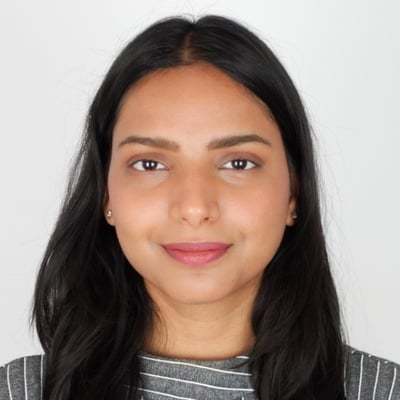
Kangaroo Mother Care, prolonged skin-to-skin contact between a caregiver and a small or premature baby, is one of the most effective ways to prevent newborn deaths, and one of the hardest to deliver well. Supriya Bansal, co-founder and CEO of Ansh, joins Jonathan Jackson to share how her team is bringing it into government hospitals in India, growing from two pilot hospitals to 15 district hospitals in Rajasthan, with Madhya Pradesh next.
Supriya explains why Kangaroo Care is really a behavior change intervention, why Ansh’s nurses ask new mothers to try it for just one day, and why she designed her pilots to look like scale from the start. She also talks about keeping quality high as delivery shifts toward government, pairing accountability with a weekly call where nurses share what keeps them going, and adding care for critically ill newborns and follow-up at home on top of the hospital model.
She closes with advice for anyone looking to have more impact: keep an open mind, and get your hands dirty.
“It’s not a medicine and it’s not a vaccine. This is a behavior change intervention. You are working with the family to encourage and change a behavior.”
Supriya Bansal, Co-Founder & CEO, Ansh
In this episode
- How Supriya went from studying forensic psychology to co-founding Ansh through Ambitious Impact, after a conversation with GiveWell at EAGx India
- Kangaroo Mother Care 101: skin-to-skin contact, exclusive breastfeeding, and close monitoring for danger signs
- Why an intervention that sounds simple is really an intensive behavior change ask of families with a newborn
- The Ansh model: nurses and coordinators who find low birth weight and premature babies in the labor room, then stay with each family through the baby’s first month
- Asking mothers to try it “just for one day,” and how trust builds from there
- Designing pilots to look like scale: district hospitals from day one, and two pilot sites instead of one
- Measuring 30-day mortality to make the case to funders, and raising scale-up funding for all of Rajasthan within six months
- Layering on community-based KMC with Dimagi’s Connect, and early KMC for critically ill newborns based on new WHO research
- The hardest stage: delivering at scale with quality through government, and pairing accountability with a weekly “what keeps you going?” call
- Advice for anyone looking to have more impact: keep an open mind, and get your hands dirty
Resources from this episode
- Ansh, the organization bringing Kangaroo Mother Care into government hospitals in India
- Ansh Kangaroo Care Scaling Grant, Rajasthan, India, GiveWell’s write-up of its grant to Ansh
- Kangaroo Mother Care, GiveWell’s review of the evidence
- Immediate “Kangaroo Mother Care” and Survival of Infants with Low Birth Weight, the WHO study published in the New England Journal of Medicine (2021)
- Introducing Ansh, Supriya’s post on the EA Forum
- Ambitious Impact’s charity directory, the incubator program Ansh came out of
Related episodes
- Joey Savoie: Why Grantmaking, Not Money, Is the Bottleneck, the founder of Ambitious Impact, the program Ansh came out of
- Grow the Pie: GiveDirectly’s CEO on Absorbing the Third Wave, Nick Allardice on planning for new philanthropic capital
Read the transcriptExpandCollapse
This transcript was generated by AI and may contain typos and inaccuracies.
Amie Vaccaro: Welcome to High Impact Growth, a podcast from Dimagi for people committed to creating a world where everyone has access to the services they need to thrive. We bring you candid conversations with leaders across global health and development about raising the bar on what's possible with technology and human creativity.
I'm Amy Vaccaro, VP of CommCare Growth and Strategy at Dimagi, and your co-host along with Jonathan Jackson, Dimagi CEO and co-founder. Today, we're looking at one of the most effective ways to save a premature baby's life, and why simple doesn't mean easy. Jonathan sits down with Supriya Bonsal, co-founder and CEO of Onch, which brings kangaroo care or prolonged skin to skin contact between a caregiver and a small or premature newborn into government hospitals in India.
I was coached on kangaroo care myself when my own daughter arrived three and a half weeks early, so this one is near and dear to my heart.
In under three years, Anch has grown to 15 district hospitals in Rajestan with Magya Pradesh next. Anchi is also a Dimagi partner. Supriya explains why this is really a behavior change challenge, why her team asked new mothers to try it for just one day, why she designed her pilots to look like scale from day one, and what it takes to keep quality high as delivery moves from Ansh towards government.
If you're working to take a proven intervention to scale or funding someone who is, this episode's for you. Enjoy.
Jonathan Jackson: Hello, and welcome to the High Impact Growth podcast. I'm here with Supriya Bansal, who is the CEO and founder of Ansh, which is doing amazing work in India, with small and vulnerable newborns, and we're here to learn a lot more about Supriya's journey and her organization. Welcome to the podcast, Supriya.
Supriya Bansal: Amazing. Thank you so much, John, for having me here. I'm really excited, and can't wait to get into it
Jonathan Jackson: Great. Well, I think the first thing I wanna learn is about your journey into this work. We had Joey, who is the founder of Ambitious Impact, which is the program that, that Supriya and many other amazing CEO and founders of high impact organizations have gone through. I'll drop a link to Joey's episode, but Supriya, from the, the side of the entrepreneur going through it, I would love to hear what were you doing before, co-founding and getting Aanchal off the ground?
How did that work lead you to Ambitious Impact? And then how did you land on this idea? 'Cause I looked up your background and it wasn't really something you had studied previously, so I'm very curious to learn just what that journey was.
Supriya Bansal: Yeah, of course. So as you mentioned, I was not studying Kangaroo Mother Care or public health at uni. I was actually studying forensic psychology and criminology, and basically what that entails is the sociology of crime. And towards the end of my studies for my master's, I was looking at child trafficking in India for forced labor, which was quite a difficult subject for me personally to study and research and just hear the cases.
And while I was doing that , at my university, I came across this student group called Effective Altruism. It came around the time where I was starting to question my values and, how to have an impact in this world. And then working on child trafficking, while it is a very serious and important issue that we especially countries like India are facing, it seemed quite difficult to have impact in that area.
It sort of lacked evidence-based strategies that you can work on to actually have an impact and rescue the children from this vicious cycle of, going from their village to these trafficked cycles to these factories, and then even if they would get rescued, they would go back home and then just go back into the cycle.
And then it just seemed quite it seemed like there's lot more that needs to be done in building the frameworks and strategies to deal with this issue. So yeah, around this time I came across Effective Altruism, which is the social movement that focuses on doing good, that is evidence-backed and is measurable.
And around the same time when I was questioning how to have an impact, I think it just started making a lot of sense to me, which led me to my first job at Suvita, which is another AIM incubated charity which works on increasing the uptake of vaccinations in Maharashtra and Bihar in India, which was basically how I started learning a lot more about public health and ambitious impact.
And I think nine months after or maybe six months after Suvita, I, I ended up joining the Ambitious Impact program and decided to start my own charity. So it happened pretty quickly. I graduated, I started working Suvita and then less than a year later I was I was doing the program.
Jonathan Jackson: That's great. And I'm curious from that journey, when you first joined Ambitious Impact, so you are kind of bought into this effective giving, effective altruist movement in uni. Did you have an idea you thought you would be pursuing or you were like, "I just like this philosophy and now I wanna go find, the idea I wanna try to build?"
Supriya Bansal: So when I started out, I did not have an idea when I was working at Sweet. I just really wanted to have an impact that I could just feel certain about. I mean, as certain as you can be about your impact. And this seemed like the best way at that point for me to do that. It's actually really interesting how I came across this idea.
It was basically I was attending a conference in EAGx India a month before I was supposed to start the AIM program. And at this conference there was a team from GiveWell, and I ended up having a conversation with them just to sort of understand, what they see can have a lot of impact in the public health space, but they see gaps in terms of implementation or implementa- im- implementing organizations.
And then they mentioned Kangaroo Care to me, and that they see a lot of potential with this Kangaroo Care intervention. Never heard of the intervention. I did not even know it was, like, a newborn intervention. I was just like, "Kangaroo Care sounds interesting. Something to do with kangaroos, maybe.
I don't know what she's talking about." So I was just completely clueless as to what that was. And then the same day I ended up having a meeting with another founder, the other founder of AIM Carolina, and we were discussing, and she asked me about, what I'm excited to explore more during the program.
I mentioned a couple of ideas that were in the program.- Uh, So AIM actually researches their own ideas and then find entrepreneurs and then connect the ideas with the entrepreneurs. So you can come with your idea, but usually they would suggest the ideas they think have the potential to have the most impact.
And then you try to figure out one of the ideas that closest fit for you. So Kangaroo Care was not one of their ideas during that program.
Jonathan Jackson: Well, and so for our listeners who don't know what we're talking about with kangaroo care, you give kind of the, the 101 on what kangaroo care is and what you saw in it when you were researching to drive you to think this is a really high impact intervention?
Supriya Bansal: So kangaroo care, it's an intervention to reduce newborn mortality. So babies, especially babies who are born too soon, so these are babies who are either low birth weight or premature, , they're statistically more likely to pass away from complications like hypothermia, infections, or feeding issues.
Then there's a simple intervention called kangaroo mother care or kangaroo care, where you basically encourage skin-to-skin contact between a caregiver and the baby, and the prolonged and continuous skin-to-skin care contact can help the baby survive. So in, in theory, it sounds really simple, but it involves a few more things, and we see kangaroo mother care as a package of interventions where you're also focusing on exclusive breastfeeding and close monitoring of the baby for any any danger signs.
So yeah, basically I ended up talking about this to the AIM founder, and then they were already researching the intervention, so they decided to sort of, bring it in my round.
Jonathan Jackson: Very cool. And so when you look at something like that, 'cause I'm really just curious about your journey. I think it's fairly unique within the startup world or the kind of entrepreneurship world where you have this matchmaking, and you're kind of trying to figure out which ideas make sense, which could draw funding.
So when you were looking at this As an aside, Dimagi's spending a lot of time on kangaroo care right now, in part because of all their amazing discussions with you. And it's such a simple intervention. It's so evidence-based that you might look at this and be like, "I don't get why this isn't already scaling," and what's missing here.
How much of the idea to really commit yourself and spend, multiple years of your life trying to bring this to life, how did you think about that problem of this seems too, almost too simple to not have been scaled already? I'm curious how that entered, what you were thinking about given that you were on this journey for, personally trying to figure out where you could make a significant contribution.
Supriya Bansal: So, for us, from day one, it never seemed quite simple as it sounds. it's not a medicine and it's not a vaccine not that those are easy interventions to deliver, but this is a behavior change intervention. You are working with the family to encourage and change a behavior.
And as we know historically, behavior change interventions take quite a lot of time and effort to implement and to scale. So I think from day one, we knew this was not going to be easy because we would need to focus a lot on behavior change. The recommended guideline for kangaroo mother care is eight hours of skin-to-skin contact every day.
That's a lot of time and a lot of effort you are asking from a family who just had a newborn. So, I think in theory that it sounds very simple, but when you actually think about it's quite an intensive intervention. But it is also highly effective and if implemented well, can save quite a lot of lives.
So I think that is what actually pushed us to want to take this up and implement it. It honestly never seemed easy
Jonathan Jackson: Well, that, that's impressive that it didn't seem easy, 'cause I think a lot of people who haven't started their own organization or led delivery on the ground might be misled to think it's easy. But you're right, some behavior change is some of the hardest type of interventions to try to run.
And so take us through, your model. How does it work? How are you trying to affect behavior change? I know you've done a massive amount of work building relationships with hospitals and governments in India where your intervention is focused currently. And so I'd love to just kind of take the listener through just how this works at a top level.
Supriya Bansal: Yeah, of course. So what we need for this intervention to save lives is a lot of low birth weight and premature babies. And what we wanted to do was start with a facility-based intervention. So, it provides you a bit more of a controlled environment to actually try to implement this this behavior change intervention.
So we start with a big district hospital with a very high delivery load and a high prevalence of low birth weight and premature babies. Now in these huge government district hospitals in India, we place a team of nurses and coordinators who then basically go through this journey of first identifying the baby and then being with the baby for the first month of their lives.
So that looks like starting in the labor room where the deliveries are happening and identifying the babies who are low birth weight and premature from their data sources, and then taking the data and going around the hospital to identify and register these babies. So you would go to the postnatal wards where mothers go after delivery, so you would go to intensive care units where babies who are unstable or sick would go, and then you would find these babies, you'd find the mothers, and then you'd start the process of counseling and working with the mothers on getting them to understand and to start this intervention.
So once we identify the baby from the labor rooms and then find them in these postnatal and NICUs, then we start working with the families on first explaining them what this intervention is. Kangaroo Mother Care is not really something they've heard of before this, so they obviously have a lot of questions.
They ask, "Why does it work? How does it work? Why do we need to do this? How long do we need to do this?" So then those conversations basically get started at this point, and then they continue till the babies and the families are discharged. And even after discharge, then we have check-in points with the families to also, again, re-counsel them, answer any questions, and then also for us to get an update on the baby and how the baby is doing.
And those check-ins then continue till the baby turns one month of age.
Jonathan Jackson: That's amazing. And I know I forgot Lizzie's role, but you're head of M&E or impact on, on your team. But she shared an amazing story to the Kangaroo Care community group that we're all a part of around kind of the stigma that can be associated with low birth weight babies in challenging environments, and how the mother, after getting your counseling and after being able to spend time doing Kangaroo Care, kind of completely flipped her perspective on her child.
Can you share that? And is that a common story? Are you seeing this a lot in the, the counseling that you're doing?
Supriya Bansal: Yeah. I mean, we see all, all kinds of stories. I think the one that you're mentioning is to do with the stigma that comes with a girl child. , As some people might know, India has a really a poor sex ratio and a lot of girl girl children, so they're killed at the time of birth or right after birth because they're girls.
And there's just like overall families want a male child. So, when this family mainly the mother had h-had a girl child, she was not very happy, and she refused to feed the girl child, and the girl child was also low birth weight. When we visited her at her home to counsel her we found out that she had not fed the baby for over 10 hours, which could be really dangerous for the baby, and the baby can go into hypoglycemia and get into a critical condition.
we counseled her. The nurses, the team really sat with her and talked to her. One of our strategies with behavior change is that we don't try to get them to agree to it or understand it in one go. We don't ask them to trust us. I mean, they don't know us. We don't ask them to actually believe in the intervention or commit to anything long term.
We just tell them, "Just do it once." It'll take two hours, or just do it for one day. It will take a few hours. That's all we ask, which is a much smaller commitment for the family to make, and then there's a lot less resistance when you're just asking for that. And then the mother finally agreed to do it just for one day and feed the baby.
And then we told her that, we can make decisions later on what to do, but maybe today we just do these two things. And that happened, and then she continued doing that. And then when we did our next visit, she basically shared that she would not put the baby down. Like, She had this strong attachment now with the baby where she just loves her so much and just constantly wants to be with her.
And then our team mentioned that, "Okay, do you still want to make decisions? Do you want us to figure out?" She was like, "No, no one's taking my baby. She's mine. I'm keeping her." So it just was like we just keep finding every day more ways KMC is having an impact on families and on stigmas and, situations.
So I think that was just like one of other ways KMC is changing the society.
Jonathan Jackson: That's awesome. And so I think a lot of the AIM charities have had success, but I think Aanch clearly has. And so you started this, remind me, in what year?
Supriya Bansal: 2023 April was when we were incubated
Jonathan Jackson: Okay. And you went from kind of proving this model in a large high-volume district hospital to then having to scale to, dozens of hospitals, and now are continuing to scale. What was that like generically? I think, all the challenges of scaling, I'm sure. But in terms of the thinking about the cost-effectiveness of the model and what needed to stay the same versus what needed to change as you scaled directly, and then I'm sure you have ambition for further scale.
How have you thought about that? Because you've been extremely successful in making the case around how effective Aanch is and around how cost-effective this intervention is which is really impressive. And I think a lot of our listeners are asking, how do I make that case? How do I think about my intervention?"
So I'm curious how you thought about it for Aanch, and then , any ways that you think really worked internally as a leader for your organization or externally in talking with GiveWell or others about how to think about the scalability of your intervention and, you know, your absorptive capacity in the buzzword that a lot of people are thinking about now.
Supriya Bansal: Interesting. I think there are two things to this. One, KMC in itself is a very cost-effective intervention. It reduces mortality by over 33%, and when you look at low birth weight and premature babies, the mortality is really high to start with. So just by itself as an intervention when implemented well in, in a lot of situations it would have the possibility to be very cost-effective
Jonathan Jackson: And, And just to pause there, I think it's easy to gloss over these numbers, but they're shocking at how effective kangaroo care can be. And there's research showing downstream benefits to cognitive development and others, so the, the benefit might be even higher. But just to put that in context, I think if you created a drug that had this effect today, you would win a Nobel Prize, right?
This intervention is like that effective at saving lives. So it's just really amazing that you're doing this and I just wanted to make sure that was understood 'cause a 33% reduction in neonatal mortality, which is where a lot of mortality is now concentrated in under five deaths, is just a, a huge opportunity for global health.
Supriya Bansal: Yeah exactly. I, really strongly agree to this. The numbers are really good with KMC. As you mentioned, yeah, I think around 50% of under five mortality happens in the first month of life the newborn period. And out of that, 80% of that mortality happens in low birth weight and premature babies .
So low birth weight and premature babies that subset makes a huge percentage of all under five mortality. And then you have this intervention that can reduce it by one-third. So th-these are quite huge numbers. So yeah, I think that, that definitely was one big factor as to why we have been able to be so cost-effective and impactful.
The other thing that for us internally from the pilot stage, we were very focused on ensuring that we're cost-effective even at the pilot stage. So we designed our pilots very similar to how we would want to scale. So while it would have been a lot easier to work in lower level facilities like community health centers or primary health centers, we still decided to spend a few months to get a district hospital partnership, because these are the huge hospitals where you can have a lot of low birth weight and premature babies in your programs without having to spread out and have multiple teams.
I think th-there are benefits in thinking purely about your model and impact and not worrying about your cost at the pilot stage, but that can go a bit too far sometimes, that when you try to actually replicate and scale, it starts falling apart and you're not able to actually reduce the cost where it is cost-effective at scale.
So from day one, we wanted it to look very similar to how we would want it to look at scale which really helped us with planning for something that's that's cost-effective. The other thing that we focused on was having two pilot sites rather than one, so we can have something that, that is standardized, and we are not sort of, designing and planning according to the special sort of characteristics of one district.
We wanted something that could be standardized and scaled from day one, and having two hospitals, we knew what looks similar and what doesn't look similar, and then plan according to that, which then helped us avoid costly sort of decisions we would have made if we only worked in one district thinking that would scale.
But I think it's definitely partly the, the fact that Kangaroo Mother Care is a very cost-effective intervention, and then also working in India, which has a very high LBW low birth weight and premature prevalence, and these huge, highly dense areas where you can work.
Jonathan Jackson: And so , that's great advice to have both pilot sites. And so as you talked with your funders and people who are interested in seeing this work and in seeing it expand, how did you think about when you were like, okay... 'Cause obviously you can always improve your intervention, you can like forever.
When you started the pilot, did you know exactly what milestones you were looking for to be like, "Okay, now we're ready to go outside the pilot sites and go to the next 10 hospitals"? Or how did you think about that and also how did you communicate that externally, as you were trying to fundraise and be like, "Okay, we think it's good enough now.
Let's go to the next step"?
Supriya Bansal: Yeah. So our goal is neonatal mortality reduction. So that is what we were looking at. And we-- again, we are very lucky in the sense that we have quick feedback loops. You know if a baby has survived or not within 30 days, because that's the mortality we're focusing on. And research suggests that if a baby survives the first month of life, the chances of the baby actually, growing up increase by a lot because that's your most dangerous period.
So that is what we're focusing on. And during the pilot stage, what we would do is, because we would have these follow-ups and check-ins with the families, we would have a mortality rate in the programs. So by month three, , the end of month two, when all our month one babies had turned at least a month old, we had a mortality.
And then after three months of running the programs and at the end of fourth month, we had a big sample. We had over 500 babies in the program, and we had a mortality rate for those 500 babies. And then we were able to get some data from the district governments and also based on the estimates by Global Burden of Disease and other statistical organizations and compare the numbers that we had from our programs to those numbers.
And basically we saw quite a huge mortality reduction between those two numbers, which is then what we communicated to our funders.
Jonathan Jackson: That's great. And so what was the reception, in trying to raise funding given that you were just like, "Hey I have the receipts, I have all the data, I can prove this is working." I'm curious did it feel like you were really able to land the argument or did it feel like a struggle?
How did that go? 'Cause you have one of the, the most compelling CEs I've seen in terms of the, the cost-effectiveness and a proven scalability model. So I'm just curious, like how did it feel going through that process?
Supriya Bansal: So this was our year two and this is towards the end of our year one and finishing our pilots. And , again, were quite lucky with fundraising. We started sharing it with a couple of funders, and then we had more funders reach out themselves with a lot of interest. And w-within, I think six months, we had raised scale of funding for the whole state.
So, I think people love seeing numbers, and when they see numbers, when they see an argument they wanna fund it. So , it went quite smoothly for us as a new organization to fundraise.
Jonathan Jackson: That's great. And it's good to hear in the sense that this argument should work, right? There's a proven intervention. You guys all told us you wanted to see scaled up. I showed you a way to scale it up that's cost-effective. Now you should help me scale it up. So that's great. So where are you at today and what are your kind of ambitions or plans over the next several years in terms of scaling this up?
Supriya Bansal: So currently we finished scaling up in the state of Rajasthan, and we started working in Madhya Pradesh with with data collection activities and partnering with the state government, and we hope to start launching full programs in Madhya Pradesh over the next two months. And we are currently in 15 hospitals and 15 district hospitals in Rajasthan.
We are hoping to do 23 district hospitals and medical colleges in Madhya Pradesh and while we are working on that, we plan to start conversations with four additional states in India including Bihar, Uttar Pradesh, West Bengal, and Odisha.
Jonathan Jackson: all the easy ones.
Supriya Bansal: all the easy ones. Yes. We saved the best for the last. While we are scaling our facility-based model, we have also started looking into the community-based KMC model with Dimagi , as you might be aware of. we are quite early in it. We have been running the pilots for six months, and recently we made the decision to scale also , to more facilities.
Just to give everyone a bit of background on the community models. Now we are trying to reach babies we are not able to reach through the district hospital programs. So the community programs would complement our district hospital programs and would try to identify and reach babies who are being born in lower level facilities at home.
And it's looking quite positive. We might be seeing a higher mortality reduction at lower cost through our community programs. So our goal is to figure out how to scale these up first in the state of Rajasthan and then possibly in, in other states. The third thing that we are working on is in 2022 we had some more exciting research that came out.
It was a big multi-country trial that was done by the WHO, where they found that if KMC is started really early with babies who are clinically unstable, so we are talking about babies who are, like, on oxygen support, who are who have really bad infections, babies who are critical and in NICUs.
So if you start KMC with them while they're getting the treatment, you can have an additional 25% reduction on top of the 33% reduction in mortality, which it was just really exciting and especially government of India, because, well, India was one of the research sites for this this huge research study.
They are quite interested in getting that implemented. So now we are working with the government of India and with our existing hospitals to actually implement that res- research study. And we are one of the first organizations who is actually implementing that that study. So that's our third exciting project that's been picking up and taking shape, and we are already seeing the impact of that on, on the ground in the, in, in these hospitals.
Jonathan Jackson: That's so cool. I, I didn't even know about that third one. Obviously, the second one's very exciting to us. We're thrilled that you're partnering with us on Connect and trying to see if we can deliver kangaroo care at the community level. And as an aside, it's been interesting because a lot of our partners that started with community-based kangaroo care through our Connect model also landed on your upstream model where they need to find the families in the hospital.
So I hope it ends up being a both/and to bring the facility-based model and then supplement it or augment it with the community-based model.
Supriya Bansal: Exactly. I think it, it-- the, the best model to us seems like a hybrid model where you identify and start the family on KMC at the facility level and then continue the care in the community at their homes. So that seems to be like the method or the intervention that, that could have the most impact.
Jonathan Jackson: And so on the on the design of the research that you're speaking of, that's a really great additional mortality reduction. I think in the communities that are really focused on cost-effectiveness, there's been a lot of thinking around integration and how you can do multiple interventions that are highly cost-effective and bring the overall cost-effectiveness up.
One of the interesting things I've found internally at Dimagi and then talking with external partners is the difficulty in modeling multiple interventions at the same time. And so you mentioned that additional 25% mortality reduction on this higher risk population that's already receiving additional interventions.
But I'm curious how you think about the cost-effectiveness of these hybrid models, where it's not just year one intervention that you can model cleanly, but the contribution that the community aspect makes or the contribution that this new higher risk cohort makes. Have you found it pretty easy internally to kind of model all of this in terms of how you think about cost-effectiveness?
Or has it been a, a challenge in expanding your model to these additional, hopefully highly cost-effective components, but that make it kind of more complicated to model the overall program effect?
Supriya Bansal: I wouldn't say it has been very easy to basically, separate all these parts and then when you think of like a proper research study, they would isolate these components and they would have control groups and they would have intervention groups like we definitely have not been able to do any of that.
What really is interesting is that we started with just the district hospital program, where you are just doing it with the stable babies in the hospital. So we have a lot of data from that from just that intervention. Now, because we have layered the unstable baby programs on top of that, the babies who are unstable and critical we have a before and after difference.
So in the hospitals, once we have layered it and it has started implementing we have data of modality of that period and the period of before we did not have that intervention. Similarly, with the community programs, because they're separate to our district hospital programs, we again have two sort of like datasets.
We have the home deaths that happen in babies that go home from our district hospital programs and then do not receive any community visits. And then we have data from the community pilots where they go home but do receive visits. And then we have those modality numbers as like two, two numbers we can compare.
So I wouldn't say it's like very clean but it does give us sort of like indications to okay, this does look promising or this doesn't really seem to make a difference.
Jonathan Jackson: Well, that actually sounds super clean to me relative to a lot of other ways. That's great. So you thought about it as you have the time domain, so you had the period at which those two district hospitals were giving the original core facility-based intervention. You have kind of geographic interventions.
You can look at the change in delta over time based on the different layering that you're doing. . That's really cool. What is the part of the research you are doing as Aanch versus what the Indian government or others might be doing?
Supriya Bansal: So we, are an implementation organization. We don't actually do research, and the original WHO trial that happened in this really highly specialized central government facility in New Delhi in I think 2018 and then ran till 2022.
So that was , the original research side where they came out with this research. We do have a partnership right now with Indian Council of Medical Research which is a, which is the research arm of Ministry of Health and Family Welfare India, where They're not researching the impact of this intervention.
They have that, and it would be unethical of them to try to figure out if it's impactful or not. What they're trying to research is how to get this implemented, which is where we come in as an implementing organization. So they have nine sites across India, and we are partnering with them in the site they have in Rajasthan to sort of, support them in figuring out how to get this implemented
Jonathan Jackson: That sounds like really impactful research and it's super exciting to hear that you're doing that and that you have so much data that can be used. I think even when there's an evidence base, and I think going from a 2022 study to studying the implementation of it in 2026 is lightning fast for our industry.
But fact that you're doing it in nine sites and will actually know how to scale it up further is really exciting because one of the problems we see in global health and development is all these really effective proven interventions where the research kind of proves the core model could work, but then the implementation is incredibly hard, as you found. So this is really exciting that you're gonna have both the evidence of the primary intervention and the implementation evidence that your model or others can successfully scale this up. So that's really exciting. Congrats on that, work
Supriya Bansal: Ho-hopefully we have an imple-implementation model that can scale. I would say we're still figuring it out. And it's one thing to implement directly and , another thing to implement through the government. And I think that is something we are now especially recently, we have started focusing a lot more on.
I, I see this as a three-stage process, where stage one was to figure out how to get that behavior change to happen at the newborn level. And then the second stage was how to deliver it at scale, without the government, like independently. And now we are slowly moving to the third, and what we see as the final stage, is how to deliver it through the government at scale.
Which I would say is also one of the most difficult questions to answer, if not the mo-the most difficult one
Jonathan Jackson: Yeah. That's a great guidance on, on how I think a lot of people... I don't know if they can see those models in real time, but as a technology provider to many organizations doing great work, we see that all the time. You're starting with this core element of do CHWs work or does kangaroo care work?
Then the organization is trying to do it directly, but ultimately most organizations are not trying to scale themselves to do all the direct implementation. They're scaling through partners, whether that's the government or other organizations. And so that, that journey I think is very common and resonant with a, a lot of our audience.
What are you specifically finding are your biggest uncertainties as you try to shift your delivery model from what Ensh can control directly to, trying to get the, the other partners, whether it's the government or other NGOs to deliver your model?
Supriya Bansal: One of the biggest uncertainty or the-- one of our biggest question is to how to maintain high quality while we have other partners the government and nonprofits implement it. And I think that is something that we are constantly thinking about and constantly iterating on. And this is where technology is playing a very big role for us and will continue to add hopefully to the picture of like getting it to happen at high quality.
But yeah, I think that's our biggest concern. The Indian government especially has been really interested in Kangaroo Mother Care and implementing Kangaroo Mother Care and encouraging that as the first line of treatment or having that to meet their sustainable development goals, which, one of the main one is to reduce neonatal mortality.
So we have a lot of interest, we have a lot of will, which it's really good because I do understand that, the government priorities and the state priorities matter a lot in figuring out what actually gets implemented at scale. So for us, actually the, the main big question is how to do this at scale with quality.
And Kangaroo Mother Care it's not like delivering a drug, it's something where you can have quite drastic impact differences depending on the quality. From a difference between a nurse just telling a mother to do Kangaroo Care would result in zero impact, compared to a nurse who is engaging a lot with the family, explaining it to them, building trust, getting the baby in the right positions, monitoring the baby properly.
So the, the difference in impact could be quite huge from something that's like bad quality and good quality.
Jonathan Jackson: A-absolutely. My wife Gina does smoking cessation, and she's constantly talking to me about how like, if you can be a good counselor and get somebody to quit smoking, it's basically the most cost-effective thing you could possibly do, right? Like the, the mortality and morbidity from smoking is just so
Supriya Bansal: Thanks
Jonathan Jackson: high and she's done studies in India and elsewhere, and it's exactly what you said, like an effective counselor is incredibly effective. And then there's all sorts of drugs and other things that can also supplement it. But with a lot of interventions, whether it's early childhood development practices at the home, kangaroo care and others, , this question of how to scale counseling, with quality on these extremely cost-effective interventions, I think is a really exciting area.
So as you've looked at that, like there's the tech side of seeing the data and managing it, but from just a human motivation standpoint, like what are you trying? What are you finding? I'm sure you had this issue even when you were still doing direct service.
Some of your counselors or nurses might have not as been engaged as others. And so how have you looked at this? What are you thinking are things you wanna try to-
Supriya Bansal: So one thing that we have focused on the most has been accountability. So we build systems where we ensure that people are kept accountable and well, while it does seem a bit more punitive to have this as your way of getting effectiveness, we have seen it work quite effectively where if you have external accountability systems that work you do have that intervention getting implemented and working.
So o-one of our main ways has been to actually build accountability and having, a lot of external accountability systems in place. Other way that we have found to work is definitely focusing on values and motivation, and we have realized that it starts before you have even hired someone.
You have to sort of build systems that are focusing on hiring the right people, and then you are building systems that are focusing on ensuring that motivation and that value alignment stays high. , One example of how we do this is that with every hospital nursing team, we have a call every week a, a one-hour call where they all come together and then everyone shares like a story that like stayed with them.
It, it could be a story that we shared earlier in this in this call, or it could be anything. It could be like a baby they found struggling at midnight that they took to the to the doctors. It could be a family that a year later is send-sending the pictures of the baby because they've just turned one year old.
We've had cases where families have literally named their babies after the nurses that were taking care of them, so it could be that. So something where there's like a shared platform where they come together and share these stories. And we phrase it as what keeps you going?
What happened this week that is going to make you come back next week? So yeah, I think we have, we have noticed that a combination of both of these, external accountability, where we have very strong monitoring and evaluation systems and we do check and monitor everything that's happening with value alignment seems to work the most.
How to get this in the government systems is another question.
Jonathan Jackson: That's awesome. I'm curious, did you study or read the Institute for Healthcare Improvement's models? 'Cause that weekly sync sounds similar to what they try to do for quality improvement. So I think it's a very similar mental model where you're like, you have a bunch of people who are obviously pro-social 'cause they're working in a hospital, but everybody's got priorities, everybody's got, different things they're doing.
So when they pick a quality improvement initiative, I think that's-- it's very similar to what you said. You try to get these huddles weekly so that talking about the data together and you're motivating the value side of it. And then definitely they think accountability in that data side
Supriya Bansal: Uh, we, we got to these, all these sort of like additions after trying to implement and failing to implement. So it's a lot of just falling down and then it's "Okay, this doesn't work. We need to do something."
Jonathan Jackson: Yeah. Yeah.
I think that weekly call though is so critical to build that shared values and shared alignment. We do that with all of our Connect interventions, With the local organizations to both talk about data but also just, understand and keep reflecting on the design of the program and keep those stories coming.
So I think that's a, an awesome model. You mentioned the external accountability. I'm curious, do you find it harder to change the behavior of like hospital leadership or of the people doing the direct interventions in the hospital so far? I mean, I'm sure there's challenges at all levels 'cause people are crazy busy, there's a million priorities.
But is it-- I'm curious, as you think about the, the behavior change you need to do, with your partners, how does it compare for the people who have to do the intervention and interact directly with the mothers versus the leadership who has to tell the nursing team to prioritize this?
Supriya Bansal: Yeah. So currently we we deliver the programs directly through our own human resource. And then, like separate to this, there, there are frontline healthcare workers in the hospital , that are through the government. With the government, when we have these conversations on, improving quality, not just in KMC, but also like overall maternal and neonatal health, we see that the leadership agrees with us in principle.
The leadership is like: Yes, we would like that. Yes, we wanna do this too. Yes, , we want cleaner, surroundings and cleaner rooms and things like that. So in principle, they agree with us. Where I see things start breaking down is how they communicate these priorities to the frontline healthcare workers and also just Currently the frontline healthcare workers have reached a stage where they're actually really overworked and there's a lot going on and they just don't have the time.
And at the same time, we see this attitude of just not caring and like lack of motivation and just like reaching a stage where you just have sort of, given up and you don't care. So it's, it's a combination of how the leadership actually communicates to the team, what resources are actually available, and then also the attitude of the frontline healthcare workers.
I wish it was just one of those.
Jonathan Jackson: Yeah.
It's amazing work that you're doing. I'm curious as, as you think about your big three initiatives, this moment we find ourselves in where there's a lot of money potentially moving into cost-effective giving.
We've talked about this on previous episodes with the new - philanthropic capital that's coming in from a lot of AI wealth, but also just in general, I think this is coming up more with all sorts of funders. How has it felt from your, seat inside ONCH with having the backing of GiveWell, which is kind of one of the most credible cost-effective giving organizations out there, but I'm sure you're talking with many other orgs and many other funders.
Have you felt any change over the course of this year in terms of resources that you think could be available to ONCH or how well your argument is resonating? I know you mentioned you were able to fund your scale-up plans within six months, so obviously resonates a lot. But I'm just curious to hear from someone who like kind of from day one was very focused on, how do I build an organization that's delivering an extremely cost-effective thing and can scale up?
Supriya Bansal: It is quite exciting to, to hear about all these potential funding that might come in. And as an organization that has majorly focused on direct implementation activities it, it sounds like a really credible way for us to keep scaling and delivering this to a lot more places and reducing mortality and, doing it cost effectively.
Personally, m-maybe it could be the lack of actually focusing on this while, it's still happening. Uh, But yeah, personally, we haven't really felt like a change in the funding landscape for us. And again we are at a stage where we are first trying to start the partnerships with the state government before we reach out to funders and start fundraising.
Because without a partnership with the state government we would not have access to any of these babies, and we can't deliver the intervention. So our strategy has been to first actually get the relationships down with these state governments, and when we see that they're open for us to implement, then go and fundraise for these, these programs.
So it, could just be that we have not actually tried to tap into , this new funding, and could also be just that it's still sort of coming and, but not here.
Jonathan Jackson: Yeah, I think that, that's , an interesting perspective, and I think we've definitely had a ton of discussions on is it here, is it coming? Think it's Nick, the CEO of GiveDirectly was on and he's like, "We gotta plan for it coming." And in some it's already mobilizing.
So I encourage any funders who are listening to email Supriya and tell her she's got a scale with amazing intervention. And, but it's completely responsible of you and makes a ton of sense to lock down these partnerships first and be like, "We don't wanna fundraise to say we could go into a state.
We wanna know they want us coming," funding to expand there. So that's really exciting. I hope all four of those states that you mentioned, Want to expand.
Supriya Bansal: Yeah, - we do expect most of them to because reducing neonatal mortality is either their highest priority or one of their highest priorities
Jonathan Jackson: And do you for the next couple years, do you wanna focus within India, or are you also looking at whether you can support international growth?
Supriya Bansal: We are actually getting quite interested in wanting to support international either organizations or governments to deliver Kangaroo Mother Care. I believe that Kangaroo Mother Care as an intervention is becoming something that we're becoming experts on and we are getting s- a lot of data and information coming in.
And we have put this down as a 2027 agenda to start exploring partnerships and opportunities in countries in Africa
Jonathan Jackson: That's great. And I know , we've been discussing partnerships with you where you can bring that expertise to a lot of the implementers within the Connect Network of community-based kangaroo care. Because I think that's absolutely right. With the deep expertise you have, being able to provide that on the data and quality and implementation side we're really excited to, to partner with you on that.
That's amazing and I think 2047's close. So, so it sounds like yes there, there is a goal for that. And that's such an exciting place to be in. I wonder... just to get into the psyche a bit, I'm curious so it is their top priority to reduce neonatal mortality or small and vulnerable newborn mortality, and you have a proven intervention.
Is it just time that is, governments take time and there's a process and things. Or are you hearing objections where you're like we maybe don't wanna do kangaroo care," or, "This isn't something we think we wanna scale within our state?" Or is it pretty smooth, people are buying the argument and it's just the normal amount of time bureaucracies take to, to decide on priorities?
Supriya Bansal: We are actually getting a lot of interest from the governments. We have had some other smaller state governments reach out to us and ask if we could come and support them in those states to implement Kangaroo Mother Care. Kangaroo Mother Care is getting really encouraged and the central government is putting it up really high up on the priorities as as one of the interventions they want states to be implementing.
It also is , so the governments also really like Kangaroo Mother Care because it's a bit more natural. It less to do with machines and drugs, and it's more to do with actually keeping the mother and the baby together and, focusing on breastfeeding and skin-to-skin.
Like, all of these things to the government is quite aligned to how they want to actually, do things. So we actually walk into state government meetings and we are a very new organization. We are not, we are not UNICEF, we are not organizations they've been talking to for decades or having meetings.
And they tell us that the only reason they are considering this partnership is because it's about Kangaroo Mother Care. Because new organizations that it takes quite a lot of time to actually partner with state and central governments. And I'd be very honest, I don't think we are that special.
It's just really Kangaroo Mother Care and how excited , the governments are to actually get this implemented.
Jonathan Jackson: Well, I doubt it's true that Ansh that you are not that special at this, 'cause it is phenomenal work you're doing. I know we've taken a ton of your time. I really appreciate you, you coming on. I just wanted to ask , one closing thought to reflect on. For those who might be listening and either are already in the industry but are considering switching what they're working on or are maybe new to, to global development, what advice do you have for somebody thinking through that journey?
Obviously, there's the Ambitious Impact program, which people can apply to, to start their own organization, but maybe not everybody wants to do that. I'm just curious, what advice do you have for people thinking about how to really reflect on their own values, how to think about the impact they might wanna make in global development and global health?
It's just like I'm so in love with the ambitious impact model of taking amazingly talented people, bringing them together. I was joking with, I can't remember if it was Joey's episode or Klaus, but I was like, I always bump into you personally, at Skoll, and you guys are always together.
And it's like all of the CEOs I know of all these amazing organizations doing this incredibly impactful work. And so I just think it's like really amazing what you all have built in these variety of organizations. But it's a unique jump to, to make, to go through a program where like I don't actually know the intervention I might wanna do coming out of this, but I just, I have this feeling where I wanna go make a bunch of impact.
Supriya Bansal: I think what really works for people who wanna do the program or who wanna have an impact is to have an open mind. Just not be really married to an idea or to just a way of doing things. I think especially when you start exploring an idea, when you start exploring, how to have an impact, there's so much you can learn and so much you can find.
For me, it really worked to have an open mind. When I started the program, I was not really trying to do one specific thing in one specific area. If the goal is to have huge impact and, have have it scale, I think openness to, changing your mind could be really helpful.
I think the other thing I would say is be open to getting your hands dirty. Going to the ground, going to the field, and just getting yourself in it to understand what actually is happening, what is working, what is not working, what is needed, what is actually causing a lot of suffering.
I understand there's so much available behind the desk, but no amount of research or readings could actually give you the perspective you would get once you actually go to the ground and see what's happening. So I would say an open mind and, openness to to go to these places and see with your own eyes what actually is needed.
Jonathan Jackson: Wonderful. That's a great place to close. Thank you so much, Supriya
Supriya Bansal: Amazing. Thank you, John. It was great talking to you. And yeah have a great day.
Amie Vaccaro: Thank you to Sapria Bansal for such an honest look at what it takes to scale a powerful behavioral intervention. And thank you for listening. A few things I'm taking away from this one. First, simple isn't easy. Kangaroo mother care is a behavior change intervention And asking a family with a new baby To spend eight hours in skin to skin contact is a huge ask. Second, ask for one day, not forever. Anch's nurses don't ask mothers to trust them or commit long term. They ask them to try it once and the trust builds over time.
Third, pilot the way you plan to scale. Anch started in large district hospitals with two pilot sites instead of one, so what they learned would hold up when they grew. Fourth, quality is the intervention. A nurse who just tells a mother to do kangaroo care and a nurse who builds trust and stays with the family as they figure it out can produce completely different results.
Onch pairs strong accountability with a weekly call where nurses share the stories that keep them going. And finally, if you're looking to make a change in your career and find a way to have more impact, keep an open mind about what might be needed of you and get your hands dirty. That's our show. Please like, rate, review, subscribe, and share this episode if you found it useful. It really helps us grow our impact and write to us at podcast@dimagi.com with any ideas, comments or feedback. This show is executive produced by myself.
Michelle Avalencia is our editor. Prithana Balachandar and Natalia Gloaki are our producers and cover art is by Sudan Shu Khanth. A final note in the spirit of transparency, we use AI to assist with guest research, copywriting and post-production so a small team can produce a high quality show. All AI assisted content is reviewed and edited by humans and we retain full responsibility for what you hear.