About this episode
Tuberculosis ranks as the second most fatal infectious disease after COVID-19. It is a widespread contagion and a pervasive public health emergency that requires patients to undergo intensive treatment regimes. The Stop TB Partnership, a hosted entity of the United Nations Office for Project Services (UNOPS), is a collective force working to transform the fight against TB globally.
In this episode, Jackie Huh, one of the initiators behind Stop TB's Reimagining TB Care initiative, explains how it addresses the intricate challenges of combating tuberculosis through a comprehensive 360-degree, people-centered approach. She is joined by Dr. Kelly Collins, co-creator of SureAdhere's VDOT, to discuss what it takes to design TB treatment and care around the people living it.
In this episode
- Reimagining TB Care: how Stop TB's initiative rethinks treatment around the people living through it
- A 360-degree, people-centered approach to one of the world's most fatal infectious diseases
- Inside the Stop TB Partnership, a UNOPS-hosted collective force transforming the global fight against TB
- SureAdhere's VDOT: video-supported treatment adherence, with co-creator Dr. Kelly Collins
- The weight of intensive treatment regimes and why patient experience has to come first
- Putting people at the center: bringing technology and care together for TB patients
Read the transcriptExpandCollapse
This transcript was generated by AI and may contain typos and inaccuracies.
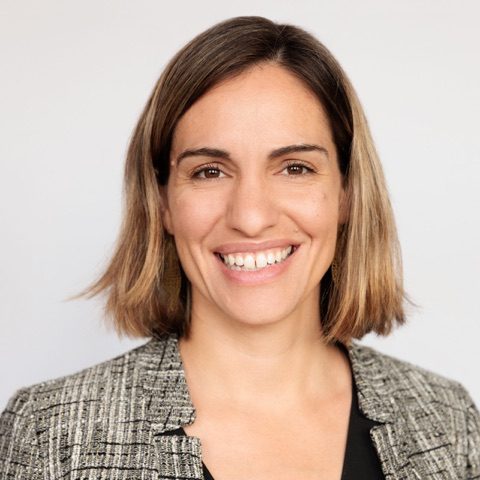
Amie Vaccaro: Welcome to High Impact Growth, a podcast from Dimagi about the role of technology in creating a world where everyone has access to the services they need to thrive. I'm Amie Vaccaro, Senior Director of Marketing at Dimagi, and your co-host, along with Jonathan Jackson, Dimagi's CEO and co-founder. Today we're joined by two notable figures in global health, Jackie Huh and Dr. Kelly Collins. Jackie is the head of External Affairs and Strategic Initiatives at the UN's Stop TB Partnership with a 20-year career in both the public and private sectors.
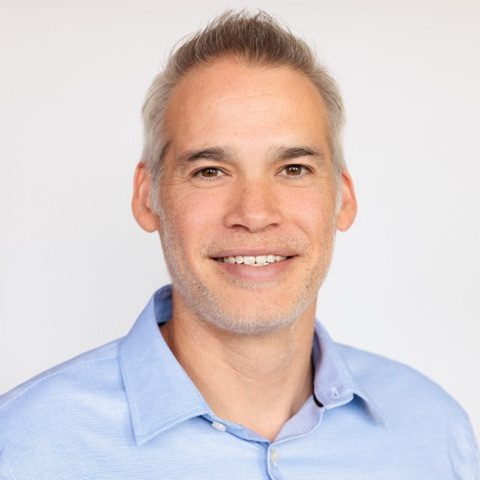
Known for her innovative strategies in TB care, she co-founded the Reimagining TB Care Initiative, which has accelerated the adoption of digital health technology for TB treatment in low-resource settings. We also welcome back Dr. Kelly Collins, a familiar voice on the podcast. As both a social entrepreneur and an infectious disease epidemiologist, Kelly is committed to scaling evidence-based digital health interventions globally. Formerly the CEO of SureAdhere Mobile Technology, she now works at Dimagi, which acquired SureAdhere last year.
Kelly's research, published in leading journals, has been instrumental in shaping the World Health Organization's TB treatment guidelines. We're excited today to discuss their transformative work in the realm of global health. Enjoy. All right. Welcome to the podcast. Today, I'm joined by Jackie Huh from the Stop TB Partnership, hosted by the UN Office for Project Services, as well as Dr. Kelly Collins, Dimagi's Director of Digital Adherence, and as always, my co-host, Jonathan Jackson.
Hey, everyone. Hi. Hi, Amie. Thanks for coming on, Jackie. Oh, thanks for having me. I'm very excited. We are excited to have you. So today, we're going to be discussing innovative approaches taken by key organizations to reimagine tuberculosis care and address the challenges and funding involved in combating TB, pulling from Jackie's experience spearheading Stop TB's Reimagining TB Care initiative, as well as Kelly's experience working on technology to support better treatment outcomes.
So really excited for our conversation today. And I want to start with you, Jackie. Can you walk us through a bit of your journey into the global health space? Yes. So my journey into the global health space has been quite different and unique than from many others, I think, who have entered our area. So I actually worked in the private sector for probably all the evil companies in the world for over 10 years before I had like a mini midlife crisis in my early 30s and decided to just change everything in my life except for, of course, my family and friends.
And then just took this huge pay cut, moved across the country and started working for the O'Neill Institute for Global Health, which is hosted at the Georgetown Law Center. And so that's how I actually started my journey into the global health space. And what led you into global health specifically in that career shift? Were you trying to kind of do something in that field or was it kind of more happenstance? Yeah, I think, you know, since I was like very young, global health was something I was very interested in, primarily because I have and I always will have a lifelong chronic illness, Addison's disease.
And health and healthcare has just been something that has been just in my face since I was a very young girl. As I was growing up, even in the US and then because of various trips I took when I was in college, I just started to realize how inequitable it was in so many places in the world in terms of how difficult it was for people to have just health and healthcare services that I thought was just inherent in everyone's life. And so I think I knew it was something I wanted to do.
But funny enough, I thought, you know, being an insecure, overachieving Korean American, I thought when I had this midlife crisis and I wanted to get into global health, that I would just apply for a job at the Bill and Melinda Gates Foundation and just, you know, I would get this job. Obviously, it doesn't happen that way. And so I found the next best thing, which was actually a Gates funded initiative project at the Aneu Institute where Mark Dybul, who was the former head of PEPFAR, as well as the former executive director of the Global Fund, was actually the principal investigator.
That's great. And so you've clearly stayed in the industry after having made that transition. I think a lot of people might come from the private sector, jump in and then be like, whoa, like a lot of stuff is broken here. Why? I might want to jump back to the private sector. So as you entered, did you have moments like that when you were first adjusting to how global health operates? And then what kind of kept you in the space after that transition? You know, so it was really interesting when I was working for Mark and I was contemplating what kind of master's degree to pursue.
And I was like, oh, maybe I should get a master's in public health or something similar like that. He's like, no, we have enough doctors. We had we have enough MPHs. Can you please go like get a business degree? We really just need people who are strategic and can make things happen. And my response to that was that's like one of the most expensive master's degrees. And I'm not quite sure if there will be an optimal like return on investment. But anyway, that was kind of like a very big turning point for me.
And when I did actually start working in the public sector, particularly for the U.N., it was a culture shock. And in both ways, I think for me, just seeing just how the system works, how bureaucratic it can be. And, you know, sometimes there's like really no KPIs or performance indicators in our world was a bit weird to me. What I have learned and what I have told young people is how the public sector and specifically the U.N. system actually really welcomes those who have come from the private sector, because I do think people from that space do bring a very unique skill set or mindset and then skill set. And I think that is what is needed, in my opinion, to really achieve all these different SDGs in the next seven years.
And to your other question, Jonathan, I think the reason why I've stayed is, you know, there's always that diagram that I always see on LinkedIn where like it's like those three different circles. And then you're supposed to like, you know, where you find your true happiness is like that little triangle. And I wish I could remember all the different circles, but it's kind of like I am able to bring a certain mindset and skill set. I love the mission we're trying to achieve and I forget the other circle, but I think that's why I have stayed.
And I feel like it's people like my husband and I who need to be in this space. I think we coming from such privilege, if we don't advocate for those who may not have the voice or the recognition or I don't even know what the right words or phrase are, if we're not the ones that are fighting for them, I don't know who will, whether it's the affected countries, communities or the people. Thank you so much, Jackie, for sharing that. And I resonate with so many aspects of your journey, even just from the multiple.
I feel like I've had multiple kind of queer midlife crises and done similar to what you describe and also just that feeling of privilege and wanting to give back. So thank you so much for sharing that. So I'd love to fast forward a little bit. I know you've been really the driving force behind an initiative called Reimagining TB Care. Can you talk to us a bit about this initiative and where it came from and where you're headed with this? So, you know, as I mentioned, Mark suggested I go get an MBA, which I did.
I went to IMD Business School here in Lausanne, Switzerland. And as part of that experience in our strategy class, we had to develop a new strategic initiative for the company or organization that we were working at. And so, you know, there was that impetus. But then I think, you know, by that time I had been working at the Saabti Partnership for maybe a few years and also coming from that private sector and seeing how things operated, I just found it very confusing that everything seemed a little backward.
Like, for example, I think everyone likes to say everything we do in TB and global health is country driven. And I do not think that is an entirely true statement. I think there is still a lot of prescribing that is done, whether it's from donors, funders, or even entities that are based in Geneva. And while we like to say things are country driven, I think we are really helping to form and shape kind of like countries do with the funding that they are provided, for example. I also thought it was interesting how the product innovations seem to be the end rather than the means to the end.
And so whenever a shining new tool comes on the pipeline, like we just talk about that as like, it's kind of like the golden whatever that's going to just solve everything. And that's not the case. And then the other thing that I thought was a little bit backward was how we also like to say that things are people centered, but like, I did not know what that actually like tactically and tangibly meant. Like, what does that mean apply? Like just some folks come to meetings and they provide inputs and then we like check a box that says, oh, we had civil society and community representatives and like TV survivors in the room.
And we asked them how they felt. And we're saying that is what it means to be people centered. So I think these are just like some examples, but I just felt like something seemed a little bit backward, including I think this is probably the big thing that I could not understand if we were developing and bringing to the people who need them these like amazing solutions, why was it taking so long to get them introduced and maybe more importantly scaled up? And so when sometimes I would hear it takes 10 years or, for example, a product to get into or to become part of the routine use, I was like, if I'm a CEO of a company and someone tells me it's going to take 10 years for our product to get to the customers, I would kind of like, you know, I think say no, go.
And so I think putting all of that together is how like the Reimagining TB Care initiative was initially started. So it was actually business school strategy paper, but having said that, I definitely cannot take full credit for it because there were so many people who were involved in building the initiative even, you know, five years ago and definitely now. That's such a beautiful painting of so many challenges. And I think a lot of those really resonate with what I've seen as well, especially just like the length of time it takes and that sort of over focus on the launch moment, but then really scales when the value comes.
Can you tell us a little bit about so what are the primary objectives and scope of this initiative? So, you know, our T.C.'s vision is to transform when, where and how T.D. services are accessed by the T.D. affected people and delivered by the care providers and health care workers. And the way we're trying to do that is by improving and increasing the provision of localized. And by that, I mean closer to where people live their daily lives so they don't always have to go to a hospital maybe two hours away integrated.
And by that, I mean for T.V. across communicable and non-communicable diseases, because for sure now there are, you know, solutions that don't have to be just for one disease. It can be for across diseases and for and people centered. And by that, I mean understanding the various user groups needs, wants and preferences. And so in order to achieve all of that, there are three concrete specific phases to RTC, which is the first phase is what we like to call the inspiration phase, where we conduct interviews and focus group discussions to listen and understand the various user groups needs, wants and preferences.
And maybe I should clarify when I say various user groups, I mean, of course, T.V. affected people, but also the care providers, the people who take care of the T.V. affected people at their homes, health care workers, including nurses, lab technicians, pharmacists, etc., and T.V. survivors to really understand their end to end journey. But one interesting user group that we didn't think about, but was recommended to us by one of our initiatives donor, was to also interview family members who have had people who passed away from T.V., which is actually a user group that I definitely had not thought about, as well as, for example, village leaders.
So this is what I mean by various user groups. So we actually are taking the time to really understand what they need, want and prefer. And then there's a second phase, which is which we like to call the acceleration phase. So based on these various user groups, learnings and insights, leveraging those learnings and insights to then identify, prioritize and select the service and product innovations that the country stakeholders and partners will want to introduce. So we're hoping what this allows for is that inherent baked in demand from the various country stakeholders, partners and the user groups.
And hopefully that will lead to more optimal introduction, but more importantly, scale up. And last but not least, the third phase is what we like to call the connection phase. So as these countries selected services and products, innovations are being introduced, that they also optimally be linked to a country's health management information system so that the different country stakeholders and partners have access to real-time data in terms of how not only these solutions are performing, but also whether or not, for example, certain services and the way the care is being provided to that TB-affected person needs to be changed.
So those are the three different phases. But I think the one thing I want to emphasize about why RTC is so unique and special is that it is end to end, even across those three phases. There's a constant feedback loop where we are pressure testing everything with the country stakeholders and partners, including the various user groups. And that end to end, it is driven and decided by the various countries, stakeholders and partners and these various user groups. So that is in a nutshell what RTC is.
That's great. And the across those three areas that you mentioned, the world has an ambitious goal to kind of stop TB by 2030. I'm curious, how have you seen RTC and stop TB be successful across these areas? Like what are some of the major wins that you have have experience with that integrated model and that feedback loop? At a very high level, it is really incredible to hear people now use of phrase people-centered because I think that is important to ensure mindset shift. But what is more tangibly amazing to me and has actually been reenergized me is we have been implementing the people-centered design mindset and approach in two countries, specifically Uganda and Vietnam.
And in Vietnam, for example, they conducted 88 interviews in five different cities in Vietnam. Fifteen hundred statements were collected. Against those fifteen hundred statements, fifteen thematic and opportunity areas were identified. And then recently in Hanoi, they had workshop one of three where different countries, stakeholders and partners came together, including the national TB program, hospitals, directors from the different levels, local implementers, technical agency representatives and more importantly, civil society and community representatives, including five TB survivors.
They literally came together for a two-day workshop where they reviewed kind of the synthesis from those 80 interviews and fifteen hundred statements, reviewed the fifteen opportunity areas to ensure that there was not something majorly missing. I think in the private sector, they call it human-centered design. They came together again, started voting against those fifteen opportunity areas to collectively prioritize five. And the beauty of this was you literally had a national TB program manager's voice and vote count equally to a TB survivor's voice and vote.
And that has never, I think, from what I am aware of, has been done before. And then they got so excited about the next workshop, which will take place in Ho Chi Minh City in a few weeks. I see this as a win that now we have documented interviews, statements, opportunity areas that not only can help identify next year what Vietnam can potentially introduce, but I feel like all of that is such a treasure chest for, you know, even current and future innovators understanding what the various user groups need, want and prefer as they develop and design new TB innovations.
But I think even donors and funders like the Global Fund can really understand this is like what Vietnam really says they need, want and prefer, and hopefully be able to use that to support the country's, you know, desire to introduce certain services and product innovation. So currently I see that as a win, but this is also happening in Uganda. And I think if we can bring together and synthesize all these learnings from these two countries, you know, I think we are going to be able to leverage this for many other things going forward in TB, including, in my opinion, the introduction of any TB vaccines that comes down the pipeline.
That's great. And I know we have Kelly with us who you've heard from on previous episodes that, because I know in your career took a strong user centered design approach, you know, we're talking directly with TB patients and providers all throughout building SureAdhere. So I'm sure that this resonates a lot with the journey you took. But Kelly, from your perspective, like hearing what Jackie just described, do you kind of feel like that's the approach that you always had all along?
How did you incorporate that user centered design and making sure that, you know, VDOT and video directly observed therapy was something TB patients really wanted, that countries wanted, that providers wanted? Yeah, so thanks. Thanks, Jonathan. That's a really great question. And Jackie, I got really excited hearing you talk through just this process sort of on a higher level. I think when we first started to develop VideoDot, our goal was to make it user centered. In fact, we actually started with very small focus group and conducted conversations with TB patients and TB providers.
So I think on a smaller scale, we're able to conduct a similar process to then develop an intervention that was actually wanted and needed. Definitely just one intervention. I'm really excited to hear that you are sourcing multiple opportunity areas. So I think, you know, from that perspective, absolutely. We started, you know, developing VideoDot with that goal in mind of how do we make a TB patient centric, TB provider centric technology that would actually be used and scaled.
What I think is also interesting from this perspective is that, and Jackie, I'd be interested to hear what your thoughts on this, but I think, you know, the goal here is not just to do this once. I think the goal from my perspective, the concept of digital adherence technologies has evolved in the 10 years since we originally developed it back at UCSC and the concept of patient support has evolved over time. And so starting with user centric design 10 years ago could look very different today.
You know, the wants and needs could look very different. And so I want to maybe just understand your thinking around, you know, doing this once is fantastic, but continuing this process of keeping innovation growing out in the country user centric over time is really interesting. And so I'd love to hear your perspective on that. We did not want what we were trying to do in implementing a people centered design approach and process to be a one off activity and also just for RTC.
And so, for example, what we are doing in Uganda and Vietnam is also strengthening the capacity of our country's stakeholders and partners, including the national TV program, the local implementers, civil society, community representatives to learn the ins and outs of what it means to be people centered and how you actually apply it. Am I remembering correctly that RTC invested in Chard here or supported it early on? When we started working with different startups and SMEs like Chard here, we wanted to pressure test a few assumptions.
And so Chard here and Kelly were very kind to be our guinea pig in that effort, as well as some other startups and SMEs. But yes, Chard here and Kelly was one of the innovators we worked with to pressure test some of our assumptions as we were building out RTC. Within that pressure testing, Kelly, what did it feel like being an entrepreneur, trying to go in and convince WHO that B.DOT was there, trying to work with Global Fund and these things? And one of the big complaints we hear a lot about from other social impact organizations, other social enterprises is the industry is so bureaucratic.
Everybody talks about innovation and you make it impossible for startups to work with big government contractors or the multilaterals like Global Fund and Gavi. So you've actually had a successful pathway being able to partner with StopTV, being able to partner with RTC and getting to global scale. So I'm curious from your perspective, Kelly, what were some of the attributes of that early period that really helped? And do you have recommendations for other entrepreneurs who may be trying to bring innovations aligned to these problem statements that came out of this participatory design process that Jackie mentioned, like from your experience, both how did it feel going through it at the time? And I'm sure it's changed.
But also, what advice would you provide to our listeners who may be like, oh, wait, I need to go talk to Jackie and sell my TV innovation? So I think for us, it was about building relationship. Well, first one, building the evidence base. You know, I think what was really key for us is that we didn't have any conversations with StopTV or Gates Foundation or Global Fund or anybody. And so there was a really strong evidence base for our sort of methodology, I would say product, but also methodology that the concept of VOT had already started to catch on.
The concept of digital adherence support had already started to catch on. And so there was a trend around the concept that helped drive some early demand for testing these technologies in new countries. And so what I think was really important about that is we got connected with the StopTV partnership and StopTV through the TV reach mechanism was funding not just VOT innovation, but also other digital adherence technologies. So we had a chance to work with country level partners to apply for grants through TV reach. And we had a couple of them funded through TV reach wave six, I think it was.
And so I think we were really excited to partner with StopTV in that effect, working with country level partners, contextualizing our interventions for local contacts, you know, understanding how best to roll them out in low resource settings, for example, or, you know, the difference between Africa and Asia and where or even just country to country, where were the specific, you know, different pieces that had to be incorporated into the intervention. So I think that was one really important piece was partnering with TV reach and StopTV to continue to build the evidence base beyond what was already there.
And then I think secondly, you know, building relationships and having a mission, I think was really key to some of our success. You know, I mean, a lot of innovators that Silicon Valley funded, you know, they've got this great product. They can go and find millions of dollars of investment. But that doesn't necessarily mean that one, a country is going to want their product or two, that they have a mission and a mindset that is focused on scaling and intervention in a low resource setting.
And as we all know, as social innovators don't get into this job to make money. I wish that was the case. It's just not in global health. It's absolutely the funding mechanisms are very different. And so having that mission and mindset, I think, was key to building relationships in the global health field and help pave our way, because people really, truly understood that we were focused on TB affected persons and getting outcomes for them as opposed to just scaling the business for business sake.
But I think that that really helped pave the way as well. And then maybe, Jackie, I'd love to hear your thoughts on this. But I think also from a standpoint of a startup trying to work in the global health space, I mean, making those positive connections is just absolutely key. And I think our relationships within Stop TB and our mission and mindset helped us build those connections that helped us grow our network and made it much more seamless to continue to build relationships.
Whereas I don't think that would have been the case had we not come into it with that mindset to begin with. And before we hand it off to you, Jackie, I'd love to just highlight something Kelly mentioned that I think is critical for innovators to be thinking about. Kelly, you separated kind of the overall movement of the industry towards digital adherence technologies, towards VOT. You did primary research during your Ph.D. that contributed to this, but there was a field that was doing this.
And I think one really important thing and Jackie, I want to get your take on how you think about this evidence based question. If you are an innovator and you have to go build the evidence base from scratch to convince people to agree with your problem statement in the first place, that is a very different problem than trying to claim you are the best solution to a problem statement people already accept. And it can be very frustrating when you think you're selling a product and the other party is discussing your product as if that's the discussion you're having when really they weren't sold on the problem statement in the first place.
And so understanding, oh, people don't agree with my problem statement, that's a very different, that's not a startup problem. That's a evidence problem. That's an evidence problem. That's a, you know, how does policy work problem? And I think that's really critical that both, you know, entrepreneurs understand that. But then Jackie, I'm going to put you on the spot here. That's equally clear that funders are able to articulate this back to innovators of saying like, no, we're not bought, we're not sold on your problem statement.
Your product may do exactly what you're claiming, but we don't agree this problem is actually worth solving at the price point that you're claiming you can solve it for. So, Jackie, how do you think about that? You know, you mentioned these five areas that surfaced from Vietnam. I'm sure there were 10 other great ones. But when you look at value for money, how to build this pipeline of innovators, how to bring stuff to market, how do you think about that kind of separation of which problems are worth solving and then how do we go find innovators to bring solutions to market that can scale?
So I think the way I'm going to answer that question is it's not up to the StopT Partnership and myself to determine the problem statement that different countries may have. So I guess the way I would answer that question is I don't think there's one problem statement that applies to every country. I think there are definitely problem statements where there's overlap, which is what we're seeing in Uganda and Vietnam is that because the country context and setting is different.
So there are some opportunity areas where there are similarities, but there are also opportunity areas where there are no similarities. So I think the best of the StopT Partnership and folks like me could do is to be very honest and clear to innovators who come to us that here are what we have heard from, for example, Uganda and Vietnam. And if the solution that you're proposing potentially address these opportunity areas, then I think the role that we can play is to be the facilitator.
So to let the national TV program, let the local implementers and other countries, stakeholders and partners know about your solution so that they know they have a buffet of options to choose from. And so I think that's the best way, Jonathan, I can answer your question. But I think too, and what we should do, and this is like why we're doing it is to collect all those problem statements and opportunity areas and make it known to the innovators earlier, sooner rather than later, so that they are also not spending a lot of time and money on products that the people will not want.
And then wonder, why is it not being purchased? So I think that's the best role that the StopT Partnership and folks like myself can play. I think to Kelly's point, you know, I used to work or grow up in an environment where I think I used to hear a lot this statement that people are expendable, and I no longer believe that's a true statement in that I think everything is about people, including the innovators, the local implementers, whomever we're working with. It's all about the people.
And I think to Kelly's point, you know, the UN and the StopT Partnership definitely, you know, has a mission. But we also recognize that innovators also have not only a mission, but obligations and responsibilities. And so I think we simply cannot paint the private sector as like the evil character in some Disney movie, but we actually need to work with them because they are the ones developing the solution. We need to find a way where we can work with innovators, knowing and understanding and acknowledging that while we may have a shared mission, we may have different obligations and that's okay.
So under that scenario, how do we work with innovators? And I think for me, and I think I can say this for the StopT Partnership and definitely for myself, I think the folks who are developing transformational solutions outside of vaccines and whatnot are these SMEs and startups. They are the ones developing the solutions that potentially can make TB caring services more convenient, affordable, and accessible. And so I think this is like why not only are we trying to obviously continue to build and nurture our relationship with the big manufacturers and companies, but we are equally trying to build and nurture our relationship with the SMC and startups like Shird here because they are developing a different type of solution that we also think that the big companies cannot develop.
And they are developing the solutions that will make TB care and services more localized, integrated, and people centered. And so I think under that principle, the other thing that StopT Partnership and I feel really passionately about, and this is probably where Kelly just kind of came in at the right time, was really building and nurturing this women innovators ecosystem. I mean, if you look at who are the people that are providing TB care and services, they are women. And I would still contend, even though it's not like I've done some scientific research on this, that the solutions that are being developed are still not gender sensitive or gender transformative.
And so I think this is like one of the reasons why we are really strongly advocating for more women innovators to enter TB and global health and really thinking hard about how we support that area that I think still hasn't really been talked a lot about in any substantive way. Jackie, I really appreciate you saying that. And I definitely have been the only woman in the room oftentimes with innovators. And so I think that resonates heavily with me. But I also wanted to just glom onto something that you said, which I think is really important.
You know, the role that RTC is playing of telling a country about an innovation, I mean, just making them aware. It's the company's job to go out and sell the product and make sure it's at the right price point and have the right customer service and, you know, have all the things to go along with the sort of selling and procuring a product. But I think that awareness is something that, you know, most countries didn't know who we were, didn't know what we did before, you know, having those relationships with Stop TB.
And so that awareness factor, our product, I would say, almost sells itself. If somebody wants a VOT, working with us is a no brainer. But they have to know about us and they have to understand that our product exists. And I think that that's an invaluable role that Stop TB can play in helping innovators or helping countries become aware of innovations that exist. And so I love that this concept of sourcing innovations and making countries aware of transparent pricing, for example, and forcing innovators to have pricing that's open and available.
Those types of things, I think, are really important for allowing countries to have choice and allowing countries to identify their opportunity area and then come back to the innovator and say, this is what we actually want. Because I think something that we're recognizing with digital adherence technologies is it was very much a top down, you know, at the very beginning, it was a top down approach. It was, you know, these are the innovations that are out there. This is what you should be deploying.
But now we're starting to see a demand generation issue on the ground because countries are moving towards more, you know, support centric models versus monitoring models. And so as an innovator, my goal is to shift to what the country wants. We want to be shifting our technology to support the more support centric model. But the way it rolled out was not that way. It was very top down heavy. And so I think, you know, allowing countries to sort of source innovation, choose innovations, but having an organization that can make countries aware, I think is really critical.
The more choices and options the end buyer has, including countries, stakeholders and partners, the better it is for them. Like when you have more options, you can negotiate prices, for example. You know, I think it also catalyzes innovators to really design and redesign the products so that it actually aligns with what the customers need, want and prefer. So I think interestingly, this is like the private sector mindset coming into play where you want to give customers as many options and choices as possible.
But I think the one thing you mentioned related to this is like, because of those 15 opportunity areas, Vietnam has been able to identify as part of that effort, we have been able to identify over 170 plus product innovations that potentially Vietnam can consider. It might be too much, but what that showed me was even how, you know, our space just has very limited visibility to what's out there. I think we tend to be more reactive and wait for innovators to come to us or for us to be introduced to innovators rather than be proactive and actually see what is going on out there beyond TB and how those product innovations can be translated for TB, even if they may not have originally been developed and designed for TB.
Absolutely. Yeah. This has been such a rich conversation and got so many more questions, but I know we need to wrap. So I'm curious, maybe in closing, I'd love to hear what are some final words of advice or learnings from your journey, starting with Kelly and then over to Jackie to close it out. Sure. Absolutely. I think some of my largest takeaways being an innovator in the global health space is that human centered design has to be first and foremost, the way we approach development.
I think Dimagi is heavily aligned with that. Sure. Here, prior to coming into Dimagi was heavily aligned with that. I'm really excited to see the global health space starting to capture that and try not to be quite so top down in the way we resource innovation, but actually come at it from a human centered approach. And then I think the second is that building relationships based on mission has been a key to, I think, our success. For other innovators out there, I would say that finding a really strong mission and then building your relationships based on that is probably the only way you're going to make it in global health, unless you've got a new drug or a vaccine out there that's indispensable.
And Jackie, what about you? Yeah. One of the reasons why I love working at the Saabti Partnership and why I've been here for over 10 years now is that the organization and our executive director, Luchika Ditu, just gives me such a long runway to come up with new ideas. And when I go to her and then literally did this just yesterday, I'll go to her and I'll be like, you know what? I have a new idea. And the only question she asked me is this going to kill anyone? And I say, no.
It's like, OK, then go try it. You know, and I think that kind of attitude is so rare to find, I think even in the private sector, but let alone in the public sector. So I think why I'm saying that is we should not be shy. I think we need to dream big and be bold and maybe ask for forgiveness later. But I sometimes feel like in TB, we tend to be very shy for some reason. And I think we should stop being shy because I do think TB has served as a Pathfinder, particularly in the innovation space.
And I think we should go full speed ahead. I think the other thing I would want to say and close by is, you know, when I think about how certain private sector companies operate like Apple and other lionized companies that people tend to admire, like Amazon, is they always put the customers first. You know, not only what they need now, but what they might need in the future and are constantly thinking about and breathing, about making their customers lives more convenient and better somehow, maybe at the expense of other things.
And I don't know why we don't have that kind of like baked in mentality in our space. It is about the various user groups first, and we need to just breathe and constantly think about what do they need now, but what might they need in the future and just put that front and center going forward. Yeah. So well said. I think both of you really just echoing that importance of really focusing on the humans and the people at the heart of all of this. So thank you so much for joining us today.
This has been a pleasure. Thank you to Dr. Kelly Collins and Jackie Huh. I'll share a couple of my takeaways. First, we definitely need more entrepreneurial and mission-driven talent in global health and development. So if you were listening to this and perhaps working in the private sector, hopefully Jackie's story is inspiring. I also heard some really great takeaways for any of you out there building new technology interventions. First, build the evidence base for your tech or your intervention first and foremost.
Second, when you're developing partnerships to take your intervention forward, clear mission alignment is essential and can take you a long way as it has for sure here. Third, align on the problem statement you're going after before getting into solutions and products. This is especially important if you're getting pushback from funders. Take the time to step back and ensure that people are aligned on your problem. Lastly, as we heard so clearly from Jackie, human centered design is absolutely needed in global health and development.
Hopefully, Jackie's experiences gave you some ideas for ways to create a human centered innovation process. I will also note it is especially challenging to do human centered design in this space where users are not the buyers. This makes it more challenging to incorporate feedback loops into product development and also means we need to get funders aligned to the need to be user centered. At Dimagi, we have this stated explicitly in our core strategy to make our users' jobs better to improve outcomes through our technology.
We have to call this out explicitly because it won't happen naturally due to those complexities of the market. Thank you so much. That's our show. Please like, rate, review, subscribe and share this episode if you found it useful. It really helps us grow our impact. If you found it useful and write to us at podcast at demagi.com with any ideas, comments or feedback. This show is executive produced by myself. This episode was edited by Asangi, Jasim Bilyana and Sarah Strauss and cover art is by Sudhanshu Kanth.