About this episode
Dimagi's CommCare platform has been shaped by its users since its inception. This episode revisits some of the first Community Health Workers who helped design and test CommCare back in 2008 in Tanzania.
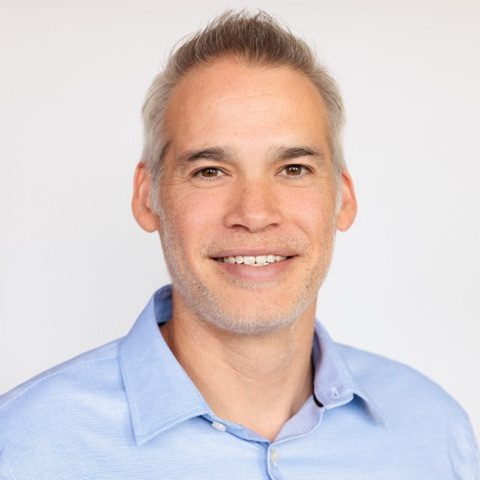
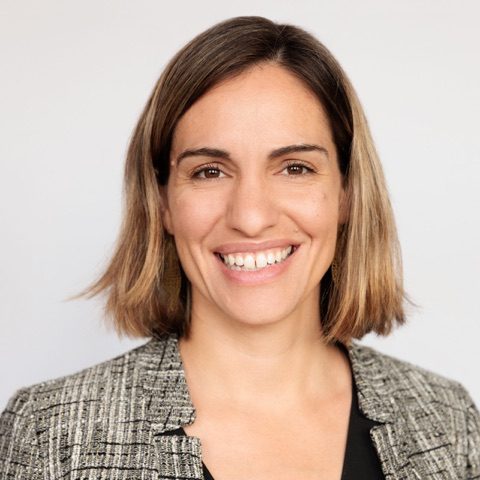
Co-host Amie Vaccaro speaks with two people who led that early research: Gayo Mhila, who recently interviewed five of the earliest users, and Dr. Brian DeRenzi, Dimagi's Global Director of Research. Together they trace how technology can enable Community Health Workers to provide vital support to their communities.
The conversation shows how CHW input helped shape essential functionality of CommCare, marking the genesis of Dimagi's Design Under the Mango Tree approach.
In this episode
- Back to 2008 in Tanzania, revisiting some of the very first Community Health Workers who helped design and test CommCare
- Five of the earliest users, recently interviewed by Gayo Mhila to capture their experience in their own words
- The genesis of Design Under the Mango Tree, Dimagi's user centered approach to building technology in the field
- How CHW input shaped CommCare, with frontline feedback driving essential functionality of the platform
- Technology that enables CHWs to provide vital support to the communities they serve
- Why users come first, and how listening to frontline workers in context has shaped Dimagi since its inception
Read the transcriptExpandCollapse
This transcript was generated by AI and may contain typos and inaccuracies.
Amie Vaccaro: Welcome to High Impact Growth, a podcast from Dimagi about the role of technology in creating a world where everyone has access to the services they need to thrive. I'm Amie Vocaro, Senior Director of Marketing at Dimagi and your co-host. In recent episodes, we've had the privilege to hear from community health workers directly, with stories from Jared, Lawrence, and Maruka, three CHWs supported by Lawala, and most recently, Margaret Odera. Today, we're continuing this series.
Joining me today is Dr. Brian DeRenzi, Dimagi's Global Director of Research, and our special guest, Gayo Mhila, who worked with Dimagi in the early days of CommCare back in 2008 in Tanzania. For those of you who've been avid listeners to this podcast, you may recall episode 10, where we delved into the origins of CommCare. In that episode, we pointed out that Gayo's voice was missing from that conversation, as were the voices of the community health workers who were early testers of CommCare.
And this is something we're rectifying today. This episode showcases highlights from five conversations that Gayo conducted, speaking directly with the earliest users of CommCare about their experiences with our solution. This research brings us back to the time when Brian, Gayo, and others were working diligently under the mango tree at the Kabata Health Facility in Tanzania, designing and testing CommCare alongside community health workers. And of course, that early work gave birth to the concept of design under the mango tree.
That defines how we engage users in designing our products. CommCare isn't your typical SaaS product. Its roots and unique development journey truly set it apart. Something you'll appreciate as you delve into the evolution from its early days to its present form. We hope you enjoy this deep dive into the history and the voices that have shaped CommCare. Enjoy. Welcome to the podcast. Today we have a really special episode.
I'm joined by Brian DeRenzi, who leads Dimagi's research and data team, who you've heard from before. And we have a very special guest, Gayo Mhila, who is here to talk to us about a project he ran recently where he reconnected with some of the earliest testers of CommCare who were community health workers in Tanzania, who worked with us under the mango tree to test and use and give feedback on CommCare. So, Gayo, can you introduce yourself and a bit about how your work has intersected with Dimagi's over the years?
Yeah, sure. Thank you. As I mentioned, my name is Gayo Mhila. I was connected with Dimagi in 2008, working at the LA studio CommCare, where I was involved in recruiting and also training the community health workers and the use of CommCare application on their phones as they performed their home-based care services. And so for this project that we're going to be talking about in this episode, you went back to Dar in Tanzania, near the Kabata Health Facility, I believe, and you met with some of those first community health workers who were testing and using CommCare.
I think you had five different conversations. You recorded them, you transcribed them. We want to kind of hear about those conversations and hear about what you learned. So maybe set the scene for us and share a little bit about who did you meet with and where did this all happen? Yes, actually, I was lucky to be one of the persons who went back to Kabata area in Jamboree district. And I happened to go to the Kabata Health Facility and we did meet some of the various community health workers.
There were a number of people who were part of the team that we worked together. And it was an exciting time because some of them have moved on to other roles, but they could remember a number of these things as community health workers. So we did talk about what they were doing at that time and what they're doing right now and why they were interested to be community health workers. Awesome. And so let's start there. You asked them, you know, why did they become community health workers? Can you share a bit about what you heard of why these five community health workers got into the field?
Yeah, they were very moved by the work of community health workers based on the problem of HIV and other chronic early diseases such as diabetes. And some of them had some tuberculosis problems. So it was a range of chronic problems with those patients. That's why there were a number of organizations working with the Ministry of Health. They created the program of community-based care where very good members from the community would become helpful to their fellow members in the area.
So community health workers were trained in order to go house to house, first of all identifying if there are people who are sick and try to encourage them to go seek care at the health facilities, but also the community health workers were going to the health facilities to receive best training on how to take care of the patient at home. And so community health workers joined the program because they wanted to help their fellow community members, their relatives, and other people around their villages on the streets.
So they received the training of six weeks, and then they joined the program. What motivated them is actually they wanted to help their fellow community members. One thing I wanted to bring up was in the early days of CommCare, Gayo and I spent a lot of time with different community health programs that existed in Tanzania. So the particular program that we were working with in Kibada, Gayo, correct me if I'm wrong, but I think the specific focus there was around supporting HIV-positive individuals.
The health workers, the community health workers there were specifically tasked with going and following up with members of the community who were HIV-positive, providing social support and encouragement to keep up with medicines and regimens that they'd been prescribed, and check for all the things that Gayo mentioned, check for additional sickness, do some referrals to the health facility, etc. Yeah, I think, Brian, there was a range of problems that needed to help workers during the program. Some of these issues may not be HIV-related.
HIV was one of the issues that I remember even building people who had, for example, there were a number of people who had a stroke, for example. Okay, people had a stroke. And so community health workers would play a role of going to the household and, of course, talk to the members to make sure that people, the person who had a stroke, the hospital, but also providing some simple exercise to make sure that people be exercised. If you remember correctly, at the time when we went to Paliako earlier, we community health workers, visiting some clients, and I wouldn't call them patient because community health workers would never call those people's patients. They would say they are clients.
But the moment you say patient, you are somehow introducing stigma to the community. They are clients. Those were their clients. So we went there and there were people who would have high blood pressure, for example. They would remind them to take medications for high blood pressure. They would remind people to take tests for their diabetes. And people who had HIV, for example, would be reminded to take their medications regularly because once you start the regimen of HIV, you have to take that every day.
And so they would remind them of the time to make sure they did not skip an education, especially when you have to get a refill. Okay, you have to go. They would remind people to go get an education at the hospital whenever they needed it. And sometimes some of the community health workers would even go to the health facility, get the medication, bring to the household for their patients when it was necessary to do so. Yeah, and I think, Gayo, I think that's so important. I think the piece that you're highlighting, if I were to generalize it, is just how skilled and passionate these community health workers were.
I mean, this wasn't just a, I need a job. This was the first one I saw available, so I took it. The people we were working with, community health workers, they were actively engaged in their community. They cared about people. They went above and beyond sort of the standard job description to make sure that people were getting tested, to make sure that the in-charge at the health facility understood what was happening in the community, to help reduce that stigma. It really resonates and kind of underscores the importance of the work that the community health workers are doing. And they are the thing that matters in community health programs is how good the community health workers are.
So we need to be doing everything we can to support them and make sure that they have all the tools that they need. Yeah, and one of the interesting parts I remember just visiting, talking to community health workers and even in the early days, visiting them in the household. It took time before a client disclosed to be HIV positive, for example. Before the client disclosed they had their negative result was HIV positive at that time. So the first thing they did was to create a relationship. It took months and sometimes weeks before the person disclosed to say, actually I tested the HIV positive.
Or actually I have this. It was easier for other people to talk about. If it was the closest issue, we would talk about it. But it was time. And community health workers would find even more time for the person they are serving is very important. That's an area I think which the work of community health workers is very important when it comes to the point of helping a person but not knowing exactly what it is. Yeah, that's an excellent point. And to put in that time and energy to build that relationship and build that level of comfort so that in, you know, we're speaking specifically about HIV and we're speaking about a time that was 15 plus years ago.
So to get to the amount of stigma that existed in the community and in the country around HIV and to really build the relationship and get the trust required to be able to disclose that. Yeah, and I remember once people understand what this is happening to the workers. He's providing services for people who are chronically ill. That was the term that was used during the village meeting when they were introducing this community health workers. Usually, we go to a village meeting and then the leaders of the village will introduce the person who is in training as the community health workers.
That here is the person who has gone for training and he's a community health worker in our community here. He will be coming around households to help you with some community health education. So people know this person is going out around to help people who are chronically ill. And that's why we didn't really mention specifically about HIV the way because the moment people saw the person going with that probably bag, then people would associate. That's why in that household, there is somebody who is probably HIV positive. And so they were trying to always remind people that they are serving chronically ill patients, not necessarily HIV patients.
So that we use this stigma and that's why you always fear chronically ill patients at the time that was used very much. At the same time, when we brought the use of CommCare for the first time, our worry, we were discussing like, okay, how are they going to take this? It was very much the opposite. They are used to carrying the bag with all the books and then this paper screening form. But when we introduced Nokia, actually, and the first phone we used, everybody had phones at that time, at least in the village.
So even when they sat down with the patient to start going through those screening questions, nobody could actually notice that the community health workers is starving the client here because people looked at the person with the phone and just going through the phone. It's different from somebody who is holding a piece of paper. People would wonder what is happening in that household. Somebody is asking questions. This is one of the examples how CommCare helps the community health workers.
I think that's so interesting and I did see that in the transcriptions. So these are community health workers that had been using paper for their visits and the paper was like quite hefty, right? And so when they would show up at someone's home, it created this. And at the time there was a lot of stigma around HIV status or sickness status. And so people would feel embarrassed that a community health worker was at their home. And when they switched to testing out CommCare, they were able to get this much smaller phone.
And it was a lot more discreet in terms of why they were in somebody's home. I'd love to hear a bit more from you, Gayo, around what were some of the things I know that was one of the areas of questions that you asked. What were some of the themes that you heard around reactions and responses to CommCare back in 2008? That's a good question. It actually took me all the way back when we introduced CommCare for the first time in the Nevada area under the Mango Tree. I mean, the first thing we actually had requested was their paper forms so that we could match exactly what was in their paper form, put it electronically.
But also telling them that we can even automate some of the things that they were required to do manually. For example, counting the number of patients. So the phone would give them how many patients they had visited. One of the interesting things that came up really quickly was the issue of privacy. And I remember people talked, they had this big note where they would write down the initial of their patients because they did not want other members in the family to identify their clients.
And they had to remember with those initials. So when we talked about the form, they said, okay, if somebody got a hold of this form, they'd be able to see these two of my clients. And I remember immediately they wanted to have a password in the application. And that's when we came up with a login password for CommCare right in Ipiban. And we separated it between a demo side and the side where they could actually record their clients, where they could get a password. And then if somebody gets a hold of their phones, they didn't have to worry that they would see their clients.
That was an interesting part. And the other part that actually was also very much of interest to the community at work was CommCare was the referral. When they went and asked a series of questions, CommCare would somehow prompt that they would refer to this client. And they would then record which referral is that. So whenever they gave a referral, they could actually see the kind of referral that had been given to a client. That was the second part. And the third part was whenever they gave a referral to a client, they were required to come back to see if that patient has actually gone to the health facility.
If not, they continued to emphasize the importance of going to the health facility. So what happened was we compared it to remind the community health workers that these are the clients who gave a referral and these are the clients who should not follow up to see if they actually went to the health facility. I think that was very interesting as we worked on CommCare with the community health workers. This is great stuff. I'm so impressed at how much you remember. And obviously you had a chance to talk to the community health workers and get some more information.
But I think those are two important points that you raised. I just want to restate them quickly. One is that by having CommCare, they were able to suggest the feature and we were able to add the feature of having a password so that everything was password protected so that they moved from having these paper notebooks that were open to anybody's peering eyes, even though they tried to obfuscate it a little bit by using just some initials instead of the full name. So there was an added level of privacy that came in with CommCare and the digital tool. And then I think the second piece that you're bringing up is a really good point, too, which is without CommCare, without the digital tool, there was nothing to remind them to go and follow up with patients who required some sort of follow up.
Like, for example, they were referred to the health facility to go get an HIV test and or some other test or get some additional medications or things. And the tool was able to remind them to go and follow up with that person, whereas previously they would have had to try to remember themselves or make a note in their notebook and hope that they check it and were able to get there in a timely manner. And actually, I've got a couple of direct quotes, or these are obviously translations of the quotes, but I want to read one on this theme of privacy.
When you go to the patient, you don't hold anything. So really that privacy theme came through. I think another thing I was looking at in the responses, and maybe this has to do with kind of automating some of the work and the referral workflow that you both mentioned is just general the way that CommCare was able to help reduce their workload. It was easy to use and it was actually able to help streamline their efforts, which I really liked seeing. Yeah. I mean, the other piece that was suggested at first, when we introduced CommCare, they had to go back, help to bear supervisors.
And just remember, community workers were in the community and the bear supervisor was always at the nearby health facility. So at first, when we introduced CommCare at the community, they had to go back. They would use CommCare and then they had to go back to their supervisor with the summary sheet as a report to their supervisor. So then they requested saying, is it possible to create a supervisor or tool for our supervisor to be able to see the work we do using CommCare? And that's when we started thinking, actually, we have one piece here. And so I think, Brian, they worked very hard to design a supervisor or tool with the community health workers and the bear supervisors as to what kind of information the supervisor would like to see from the community.
And then we created a tool that actually helped a lot to bring acceptance of CommCare at the supervisor level. But then they started seeing how many patients have been visited, how many patients have been given referrals. They had the statistics. Every day, they could run whenever they wanted to know the kind of service that had been provided by the community health workers every day. Yeah, I love that. So just the supervisors were getting much better visibility and able to kind of understand the work and get that in real time.
So many of the features that we take for granted in CommCare and that are useful across the world and in various CommCare deployments have their origin story in the co-design that the guy and I were doing back then. The supervisor, even the idea of building another application for supervisors, that wasn't something we came in with necessarily. It was something that emerged out of this collaboration. We previously mentioned the passwords and the referral tracking. And there's just so many of these features came out of the relationship Gayo that you were able to build with the community health workers who in turn built a relationship with the community.
And the relationship Gayo that you had with the community health workers, the trust that you engendered with them really enabled them and empowered them, allowed them to participate as equals in the design process to bring these additional features that they wanted to ask for these things. And I think that's the role that you Gayo played in this, I think is really important to highlight, but to shift the focus momentarily back or kind of back to the community health workers, it's really, it's their tool.
It's their work. Our job is to empower these community health workers and to strengthen the work that they're doing to amplify the impact that they're having. And so it was really about listening to them and letting them drive where so much of this goes, because they're the ones who come in with the passion, the relationship with the community, the knowledge and the energy to make this change. It reminded me, the design part of the community application, at first when there were only forms that you could fill and submit.
And I remember, I am sitting under that number three, where they said, how will we get a list of our patients? We need to keep a list of our patients. And so we're like, okay, we felt we're just filling this form and submit. And that's when we came up with a case, a tool where we can keep a record of the patients there. And designing those, what we call the type of prototype, it's my favorite part that I remember all the time. Yes, they are not probably IT guys. These community health workers, they are just people who are not well educated, probably.
But if you give them a chance, give them a piece of paper and say, how would you like the application to be? They'll just draw down what they think the application should be or should look like. And just put in a piece of paper very simply and say, if we did this and this, and there were a lot of drawings and papers, and then we would use those to turn into the design of the application. I think that was very interesting. Community health workers take a piece of paper with a pen and say, can we have it do this and do that? And that was very interesting to involve people in the designing moment.
That's so cool. I love hearing these stories, Gayo. And essentially what you just described sounds like the genesis of case management within CommCare, which is one of the most important things that CommCare can do is create a case around a person so that you can follow up and follow them over time. I want to read one other quote that kind of stuck out to me from your interviews, Gayo, that really just speaks to how momentous that shift from paper to digital was. And they write, they said, we were so encouraged when CommCare came before we were gathering patients' information using papers about six forms.
So we were bringing six books with us as we visited patients. There were referral forms, patients' information like age, it was hard. And once you're with the patient, you're supposed to fill in one book after the other. But after having this CommCare, for sure it came to simplify our work because all the forms were in the phone and we were trained on how to use the phones. So I love that. And, Gayo, if we think about sort of creating digital comfort and literacy, what did you hear from these community health workers and what did you see in terms of how did their experience using CommCare kind of help them?
Did it help them get more comfortable with technology? And how did they speak about that? That's an interesting question, Amie. We had community health workers who had knowledge on how to use a phone, but we had a number of community health workers who had never used their phone before. They could read and write, but they didn't have access to the mobile phone. So I remember what we did was the first time we entered into the community was first to identify and know which community health workers have knowledge about the use of a mobile phone.
And so the way we would do it, we would take a person who has never used their phone before, the person who has used their phone, put them together in a pair. And then we actually asked a community health worker to train the other community health workers on how to use a phone. The first training we provided was how to use a mobile phone, the regular use of a mobile phone. And it was much easier for their fellow community health workers to train another community health workers rather than me training a community health worker.
That was the first part. In the second part, we had drawings, we had pictures. We viewed a picture of a mobile phone with buttons. And then we had to actually map each button with the use of each button and say, here's the button. When you press here, you actually you hang up a call. Here's the button. If you press this, you make a call. Here's a button. So I have a picture of those drawings that we mapped and we just put on the wall in a training course. People start playing with their phones as part of practice. As a result, Brian, you may remember this.
Because they wanted to practice using CommCare, they requested, they didn't want to mix the information they put in for practice with regular information where there are patients. They requested to have two sites of the application that we call a demo. And they even requested to put a reminder, you are actually entering using a demo. Demo for only practicing purposes. Demo is not for really patient. If you are actually visiting your client, switch, log in using a password so that you can provide service to the client.
So that was the kind of training that you will find. Yeah, we learned so much in those trainings. And two fun stories that I remember, Gayo, from our time was, one, the Nokia phones that we were using with one of the projects, there was a big center button. So there was kind of the four arrow directions and then the whole keypad below that. And in the middle of the four arrow directions was the big center button. And we didn't have a good name for that button. And I think it was with the community health workers that we decided that we would call that the belly button of the phone.
So that was the word that we used in Swahili was we're going to press this button here, the belly button as the center button, and that's how you accept things. And the second story I remember was training around delete because there was a problem or a UI bug, but maybe feature of those early Nokia phones where if you selected the application and you unintentionally hit one of the contextual menus, it would pop up another menu and everything was in English. So if they unintentionally press the belly button as a phone, then it goes to delete. There's a confirmation that pops up. And the first thing that's highlighted is yes. So if they just keep mashing that belly button, they'll accidentally delete the application, which happened at kind of later stages.
And so we had to train on the word delete and what it meant. And I remember the training that we ended up with after working with these community health workers was, look, if you take a piece of paper and you throw it in the rubbish bin, that's not delete. You can always go to the rubbish bin, pull out the piece of paper, figure out what it said again. Delete is as if you lit this thing on fire and the whole thing burned up and there was nothing left. So let's make sure we don't delete.
So yeah, there were a lot of good learnings from training. But again, like you were saying, the community health workers were so good at training other community health workers that we not only did we learn how to design the application from them and have all these features that we added, but we also learned how to train. And teach. I wanted to share a couple of the quotes that kind of jumped out to me from those interviews, Gayo, around using technology. So one community health worker described that, you know, after using CommCare, they were able to start using other digital tools. And she said CommCare enlightened me and built me up.
And another one wrote or said, today I use my smartphone for so many things. I use Google, Instagram, WhatsApp and Facebook. So many things. But I got experience from CommCare. So it's kind of cool to see like just all of that intensive training that you did kind of led to this more comfortability with technology. So Gayo, I'm curious, I'm curious to hear like, what's your message? And not just for Dimagi, but for our broader audience? Like what would you want our audience to know and be thinking about?
Well, I think from my side, there's an experience we've had so far with Dimagi and even other organizations working on the digital world. My suggestion is we need to digitize 100 percent of our services. So we need to have a link from the community, the health facility and the referral hospitals. They should all be connected. This will help a lot in terms of understanding where the case will be identified in the community. The second point of care at the health center or a dispensary, for example, if there was a referral to a hospital so that you have a complete loop of digital information. I'm very grateful for Dimagi specifically.
Looking at how much it has grown as a company, but also looking at CommCare. I've used CommCare recently on other cases, apart from community health workers. I've used it for surveys in Kenya, for example. I've used it as a data protection tool as well. The work I think Dimagi has done to develop CommCare is something that needs to be supported very much in terms of the capacity, but also scale at the national level. How does the scale compare at the national level to that? If a country wanted to use the digital tool, can they rely on CommCare to use at the community level, at the dispenser level, at the referral hospital level? How can you make sure there's an interoperability between CommCare and the other tools that are available?
So basically, integration. I'm talking of the interoperability where data can be moved from one platform to another so that these different platforms can talk to each other. That I think is something that needs to be acknowledged. Thank you so much, Gayo.
So much has kind of reminded me that it really all boils down to relationships, whether it's the relationships that the community health workers are able to build with the community, or it's the relationships that you, Gayo, are able to build with the community health workers. The whole thing is about building tools to support innate compassion and dedication that these community health workers have for the health of their peers and fellow community members. And so I think it can be easy to get distracted by the technology piece, but at the end of the day, it's really just about the humans.
Thank you to Gayo and Brian for joining us today. Here are a few of my takeaways and reflections from today's conversation. At its core, technology is about enhancing human relationships. This is particularly evident when considering the stigma that community health workers confront when dealing with diseases like HIV. Their role hinges on fostering trust within the community, challenging the vital aspect of their job that they are uniquely positioned to do. In this light, we discussed how CommCare offers privacy and discretion. Rather than carrying large, conspicuous paper registers, community health workers can now use a small, discreet mobile device, thus improving not only data security, but also the perception of their role within the community.
This is just one of the ways that digitizing health workflows has improved efficiency and dignity in community health work. Success for a digital health tool means creating value for every user. From streamlining the workflow for community health workers to providing better oversight for supervisors, CommCare has proven its worth at multiple levels. And I loved hearing this. Today's discussion vividly paints the picture of what designing with users truly looks like. As reiterated by Raj Kumar in a recent episode, sitting with the people you aim to serve and collaboratively crafting solutions to improve their jobs is vital.
We call it Design Under the Mango Tree at Dimagi. Moreover, the benefits of digital health tools extend beyond efficiency. Tools like CommCare foster digital literacy, and with 70% of community health workers being women, it's easy to envision the ripple effect of empowering women through technology. And lastly, Gayo emphasized the potential of fully digitizing health services from community to facility and to government levels. Interoperability is essential for maximum impact, a concept that we at Dimagi and as creators of CommCare care deeply about.
That's our show. Please like, rate, review, subscribe and share this episode if you found it useful. It really helps us grow our impact and write to us at podcast at dimagi.com with any ideas, comments or feedback. This show is executive produced by myself, Danielle Van Wieck is our producer, Brianna DeRoose is our editor and cover art is by Sudhanshu Kanth. Thank you.