About this episode
Disability inclusion in global development starts with a question most teams never ask: who is your technology quietly leaving out?
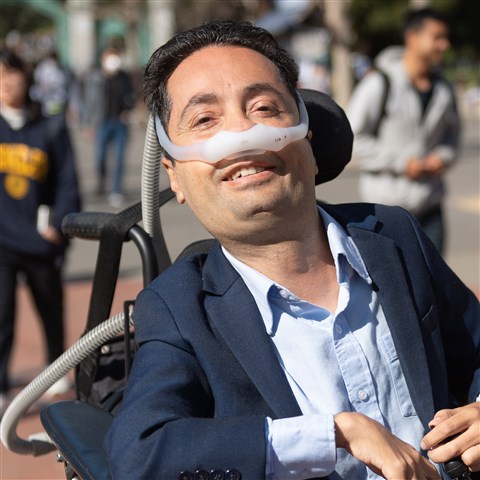
Dr. Victor Santiago Pineda, executive director of Berkeley’s Center for Independent Living, president of the global inclusion nonprofit World Enabled, and one of the youngest delegates to help draft the UN Convention on the Rights of Persons with Disabilities, joins host Amie Vaccaro and guest co-host Erin Quinn for a conversation that moves from a Caracas classroom, where his mother was told her son could never be educated, to the floor of the United Nations, to the frontier of artificial intelligence.
Dr. Pineda explains why the assistive technology of today becomes the mainstream technology of tomorrow, why AI trained on averages risks erasing the people at the edges of the bell curve, and what implementers and funders can do differently starting tomorrow: hire disabled technologists, build to WCAG AA, optimize for screen readers, and demand accessibility through procurement.
Underneath it all is his central claim: we already have enough knowledge to unlock human potential. What’s missing isn’t know-how. It’s the collective decision to use it.
“An able body is only a temporarily able body.”
Dr. Victor Pineda, Executive Director, Center for Independent Living
In this episode
- Dr. Pineda’s childhood in Caracas, where his mother was told he could never be educated, and how that shaped a career defending disability rights
- What “independent living” means, and how principles born at Berkeley’s Center for Independent Living in 1972 were later written into the UN CRPD
- Why “the assistive technology of today is the mainstream technology of tomorrow,” from text-to-speech to the word prediction behind today’s large language models
- Why AI models trained on statistical averages risk erasing the people at the edges of the bell curve, and the work underway to bring lived experience into training data before the loop closes
- The film Being Heumann and the 1977 Section 504 sit-in it dramatizes, and why some of those hard-won rights are on the verge of being rolled back today
- Concrete steps implementers and funders can take starting tomorrow: hire disabled technologists, build to WCAG AA, optimize for screen readers, and demand accessibility through procurement
- Dr. Pineda’s closing challenge: we already have enough knowledge to unlock human potential; what’s missing is the collective decision to use it
Resources from this episode
- Dr. Pineda’s own podcast, The Independent: Meeting the Moment for Disability Justice, available on Spotify, Apple Podcasts, and YouTube
- The Center for Independent Living (CIL), Berkeley, the world’s first independent living center, founded in 1972 and now led by Dr. Pineda
- Pineda Foundation / World Enabled, Dr. Pineda’s global nonprofit advancing inclusive urban development, digital equity, and disability rights worldwide
- UN Convention on the Rights of Persons with Disabilities (CRPD), the treaty Dr. Pineda helped draft, setting out the rights and dignity of over a billion people with disabilities
- Being Heumann (Apple Original Films), Siân Heder’s film of Judy Heumann’s memoir and the 26-day 1977 Section 504 sit-in, in theaters November 6 and on Apple TV November 13, 2026
- Protect Section 504 (DREDF), tracking the multi-state lawsuit challenging Section 504 regulations that Dr. Pineda references
- Web Content Accessibility Guidelines (WCAG), the W3C standard Dr. Pineda urges teams to build to at Level AA or higher
- Positive AI Labs, a nonprofit building open datasets and evaluations to steer frontier AI toward pluralistic knowledge of human flourishing
Read the transcriptExpandCollapse
This transcript was generated by AI and may contain typos and inaccuracies.
Welcome to High Impact Growth, a podcast from Dimagi for people committed to creating a world where everyone has access to the services they need to thrive. We bring you candid conversations with leaders across global health and development about raising the bar on what’s possible with technology and human creativity.
I’m Amy Vaccaro, VP of CommCare Growth and Strategy at Dimagi, and your co-host, along with Jonathan Jackson, Dimagi’s CEO and co-founder.
Today’s episode is one that has stayed with me, and I suspect it will be the same for you. Our guest is Dr. Victor Pineda, who leads the Center for Independent Living in Berkeley, the birthplace of the independent living movement. And Erin Quinn, our senior director of customer success, joins me as guest co-host while Jonathan is away
Dr. Pineda is a big-picture thinker with decades of advocacy behind him. In a single conversation, he moves from his childhood in Caracas, where his mother was told her son could never be educated, to the floor of the United Nations, to the frontier of AI. But what stayed with me since we recorded isn’t just the sweep of his story, it’s the way he sees everything, care, technology, justice, as fundamentally relational.
A few of his points I haven’t stopped thinking about. An able body is only a temporarily able body. Justice is a baton passed between generations, and we already have enough knowledge to unlock human potential if we make the collective decision to use it. We were so lucky to have him on the show. I think this conversation will shift how you see your own work. Let’s get into it.
Amie Vaccaro: All right. Welcome to the podcast. I am so excited for today’s conversation. So first off, Jonathan Jackson is not on this show today. I’m joined instead -- by Erin Quinn, who is senior director of customer success at Dimagi, as my stand-in co-host. So Erin, thank you so much for joining today.
Erin Quinn: Yeah, thanks for having me, Amy. I’ll try to fill John’s big shoes
Amie Vaccaro: In your own way. And I’m so excited for today’s conversation. We’re really honored to be joined today by Dr. Victor Pineda, who’s the executive director of the Center for Independent Living in Berkeley, which was the birthplace of the independent living movement, also president of the global inclusion nonprofit World Enabled, and one of the youngest delegates to help draft the UN Convention on the Rights of Persons with Disabilities.
So Dr. Pineda, thank you so much for joining us today.
Dr. Victor Pineda: It’s wonderful to be here and I’m excited I’m excited for this conversation as well
Amie Vaccaro: Us too. So, Dr. Pineda, I’d love to start with your story because I think it’s a really remarkable one, starting from your childhood in Caracas to helping draft the UN Convention on the Rights of Persons with Disabilities, now leading the Center for Independent Living. Take us back to the beginning and tell us a bit about your story and what shaped you into the advocate that you are today.
Dr. Victor Pineda: Well, Amy, , I think when you consider how many obstacles and how many ways there are to f- to fall through the cracks, to slip into poverty, to have a door shut in your face, , I realize that there are quite mirac- miraculous moments where we come together. And a- as a way to create context for the audience, I am a, you know, 40-something-year-old, , Hispanic male.
I’m sitting in front of my computer in an electric wheelchair. I use a machine to help me breathe. It’s a like a BiPAP. And I have a very unique set of experiences that require me as a quadriplegic to navigate and coordinate every aspect of my care. So e- eating, using the restroom, getting to appointments, getting dressed, all of this is a relational act.
And the story that I wanna share is a story about relationships. Now, as a child, I was f- you know Brought to the public school by my mother, and my mother was told, “Your son will not be educated, cannot be employed, will never form a family. And ultimately, your child should be kept in, at home in order not to be bullied, in order not to be exposed to a world full of barriers.”
Now, that childhood in Caracas wasn’t one where people were intentionally trying to be mean or evil. At the end of the day, there was a lack of imagination by that school and by those-- that context, that society, that time, that could not imagine and would not have the creativity to conceive that I would be able to, get an education, get a PhD, and teach at some of the world’s most prestigious universities.
That I would be able to, get married twice and have two families.
Initiatives and partnerships that mobilized over $50 million towards impact projects all over the world through my own foundation. And now, the deep legacy and the honor to lead kind of like the NAACP of the disability rights movement, right?
Or the A-A-A-L, AL, ACL. To lead an organization like the American Civil Liberties Union for the disability community is a tremendous honor, specifically because, as I said before, in relationship, having a relationship to the leaders that helped build this movement, , this correction of inequality, of Made me understand that we are in a multi-generational partnership, this long arc towards justice.
It’s not something that one person does in one generation. And so, to that moment where I were denied an education and then skipping to the floor of the United Nations where we declared, a set of 50 promises to uphold the human rights and the dignity of a billion people with disabilities worldwide is quite a large narrative arc.
What’s interesting though is that many of those principles in the United Nations Convention on the Rights of Persons with Disabilities were invented in 1972 at the Center for Independent Living in Berkeley. And so the idea that emerged from this movement, nothing about us without us, something that also comes out of disability rights groups in South Africa, really says we should be agents in telling our own story.
We should be action... an active, action-oriented community of problem solvers that can direct the future that we want. And so, there’s a beautiful and challenging reality that many of those rights are now on the verge of being taken away
Amie Vaccaro: Thank you so much for, sharing your story and I just, yeah, felt really m-moved to kind of hear the arc that you’ve gone through and also I really love that, like, just long-term framing of, , no one person is going to solve this one problem, right? This is a multi-generational story. I actually haven’t heard it explained that way, and I think that’s such a beautiful way of looking at it.
And also scary the moment in time that we’re in right now.
Dr. Victor Pineda: And we each pick up the baton where we can. We each try to, solve for a challenge where we are, at the moment in time with the resources that we have, knowing that somebody else will pick up the baton after us, or trusting that somebody is going to be there to carry these values forward
Amie Vaccaro: Awesome. Well, so, and you’ve started to touch on this, of kind of this Center for Independent Living founded in Berkeley in 1972. For people that haven’t heard this phrase before, what does independent living mean?
Dr. Victor Pineda: Yeah, I think that the issue here is ultimately, the ability to make choices on the type of life that you wanna live. It means that you have the resources, the tools, and the support to be in the community and not a nursing home. And if you think about the great set of forces, with housing affordability, with inflation, with job displacement, people with disabilities are experiencing those very acutely because if you acquire a disability, you oftentimes slip into poverty.
And if If you’re in poverty because of the harsh living conditions, you can acquire a disability. And so the question becomes, how do we ensure that people can have the resources and the tools that they need to live in their communities and not end up in a nursing home, in a care facility, in a medical kind of segregated life?
I think the movement that linked disability rights to independent living was pushing back against a dominant narrative that said that people with disabilities were to be medically abnormal and needed to be fixed and needed to be cared for in a segregated setting versus understanding disability as a normal part of life.
People acquire a disability because of the myriad In fact, of aging, people acquire a disability through unexpected accidents. An able body is only a temporarily abled body. It’s a category that anybody can join or an equal opportunity, demographic group that anybody is welcome to be part of.
But I think the narrative around having to be fixed, having to be, segregated out of society because society is, unable to address or unable to respond to these quote unquote special needs. I don’t have a special need, to go to school. I have a reg-regular need to go to school.
I don’t have a special need to have a job. I have a regular need to have a job. I don’t have a special need to go to the movie theater, hang out with friends, or, go on on a trip with my family to the b- to the beach. I think the question is, in an ableist framework, we value an able body over a disabled body.
And so the question becomes how do we reimagine what society can do and accomplish when those barriers are removed? And not only for people with disabilities, but for everybody
Erin Quinn: I love what you said there, Dr. Panetta, about everyone that you just have a regular need. You have the need that everyone else has to go to work or go to school or go on trips with your family, and it might just be a more imaginative way that you find to meet that need. And you have this line that I really love that the assistive technology of today is the mainstream technology of tomorrow.
I’m wondering if you could talk us through that a little bit.
Dr. Victor Pineda: I was like, we all have needs The biggest lie is that we are, self-directed, self-sovereign, self everything on our own. We’re an island. The reality is that we all live in a relationship, and the assistive technology of today means that if there’s a tool that is developed today for somebody that is blind, for example, to be able to listen to text, digital text, right?
That is text to speech. A tool for somebody that can’t type. Voice recognition is developed to be able to dictate, right, to, to a computer without using your hands to type or even something like word prediction that Stephen Hawking’s used to predict the next words. All of those were technologies and algorithms that literally are driving today’s economy.
To predict the words became the large language models of ChatGPT and Anthropic and, and all of these these, these generative AI. So when you solve for the, unique use case of a human, you end up kind of expanding the layer level of opportunity for everyone. And I think the question that we should be asking ourselves, how can technology advance independent living, longevity, disability justice globally?
The work that you’re all doing to build data infrastructure in over 130 countries is very important because if those data sets incorporate the lived experience of disability, you’ll be able to support a bigger impact in h- in how AI-powered tools could address the needs of people that, could tap into, let’s say, Google Maps that understands accessible pathways, or could tap into knowing that if you get to this train station, there’s wayfinding devices, or knowing that this movie theater has captions or assistive listening devices, or knowing that this refugee camp has sign language interpreters, or knowing that, you would have sexual education or sexual reproductive education classes, with material in braille or material that you can download on your phone and watch a video with closed captions.
So, how you have data that... and data Empower tools so that people have the choices and the information to unlock their own potential becomes the biggest opportunity for the development community. And when I’m development, I’m only talking about 130 countries or 190 countries. But even, zip codes in the US have dramatic inequality and dramatic poverty and dramatic structural injustice
so creating data models and data sets and AI-powered tools that understand that my life isn’t a tragedy because of I have a disability. The tragedy is not having the infrastructure and the resources that allow me to be included in society
Amie Vaccaro: I love that reframe, Dr. Pineda. The tragedy is not your life on its own, it’s that infrastructure and resources are not allowing you to be included in them. That’s really well put. I’m curious to dig in a little bit around, this independent living philosophy was born in Berkeley. 80% of the world’s disabled people are in low and middle income countries. And I know you’ve worked around the world. You’ve worked in Damascus, Nairobi likely many other places. What happens when this very American idea of independent living meets different cultural and resource realities?
What translates? What gets rebuilt? How does that ethos translate into other cultures?
Dr. Victor Pineda: Well, that’s a great question. If you look back at the independent living movement, the group of, rambunctious disabled advocates in 1977 who storm into a federal building in order to demand that regulations are passed that would, for the first time in the world, give disabled people civil rights.
And those civil rights were a set of protections against discrimination based on disability. Now, those services to live independently very much became the, the nucleus to what would become the Americans with Disabilities Act. And so the Center for Independent Living is very much at the very forefront and part of the catalytic innovators that invented all of these opportunities.
What’s interesting is that by 1981, the same founders of the Center for Independent Living, Judy Heumann and Roberts, the people that took over that federal building in April of 1977 and held it for 26 days, many of those folks ended up developing what’s called the World Institute on Disability and connected with activists around the world to celebrate the world’s first International Day for Disabled People, and that’s celebrated on December 3rd.
And those coalitions and those relationships, built a momentum to bring people together at the UN, and to bring together State Department, the former USAID and development agencies around the world to ensure that Your programs from the World Bank, the International Inter-Development American Bank, the Asian Development Bank, all, all these global development actors are understanding that relationship between disability and poverty.
And the US story isn’t a story that is US-centric. It is a story of fundamental rights that become interpreted and activated through the local ownership of those values of choice and dignity and, collective solidarity around local communities given resources and identifying and eliminating barriers.
Making, government buildings accessible to disabled people that were not able to access those, their own government’s services around the world. So, I think the American idea of independent living at the very core is a very radical idea of democracy, and a very radical idea of self-directed decision-making.
And I think in other parts of the world, and I’ve done a lot of work all over the Middle East, for example, and Africa, some people don’t wanna be independent from their families. They very much wanna be part of their families. But sometimes those same families create abusive and oppressive conditions where you are stuck with your mother taking care of you and washing you, or you’re stuck with your siblings needing to cook for you and provide-- drive you to s-school or medical appointments, so that erodes your agency
and so the global understanding that, you know, your own human rights and your own choice, and your own freedoms, and your own dignity should be directed by you, not by some able-bodied person that thinks they know what’s best for you. And what’s interesting philosophically and theoretically is these movements are all interrelated.
The civil rights movement, in the South, and how that became a new understanding to understand race, and gender movement, and LGBT movements, and, youth movements, youth organizing. These are all ways to reclaim our own power And not just let someone else decide for you. So in the work that I’ve done in over 80 countries, it’s clear to me that we have a lot more in common, and we have a lot more to learn from each other in a multi-directional, understanding that there are things being invented in Uganda where city councils, the local level, have a city council representative that represents disabled community members.
We don’t have a city council, in US municipalities where one of the council members is only in charge of ensuring disabled folks are participating and benefiting from those services. We have ADA coordinators which allow for any governmental agency over 50 people to develop a strategy and a plan to ensure people with disabilities are included.
But again, this is really about how we are in relationship with the Global North, Global South. How do we have, knowledge that moves in all directions? And the Center for Independent Living has historically had massive amounts of
impact through exchanges. We’ve hosted in the ’90s and 2000s over 100 exchanges with Japan and other countries, and then Japan built up its own independent living movement, and then they supported Pakistan, and South Africa developed their own disability rights communities as well. So you think about the interconnectedness of these experiences.
It’s very organic, but at the very same time, it’s also very natural in terms of how we collectively can move towards... Move away from control and constraints on our individual choice to agency, individual and collective agencies
Amie Vaccaro: It’s beautifully put and I love like just your the way you’re articulating the way that relationships are so essential to, to any of this. Like it’s just that really stands out to me. Erin, did you wanna take the next one?
Erin Quinn: Sure. You spoke at the beginning of that last answer about the early days of the disability rights movement, including the famous sit-in that lasted 26 days in San Francisco at the Department of Health, Education, and Welfare building. And I think it’s clear, I’m sure most of our listeners will agree that so many of the rights that we all have, many of which are enshrined in the ADA, have been really hard fought and hard won.
And you mentioned at the beginning of our talk here that some of these are on the verge of being lost, and I was curious if you could talk a little bit more about that.
Dr. Victor Pineda: Well, let’s not mince any words. We are looking at an incredibly aggressive campaign to, remove people’s healthcare and Medicaid in the US. And, removing international development assistance has caused millions of deaths, preventable deaths, right? And we’re looking at, climate change and the ability for us to adapt and to respond, and to have the capabilities of ensuring that, we’re not inflicting more suffering and violence on people. But at least, from the US perspective, and this definitely, is relevant globally, to be able to have, collective understanding and a collective set of knowledge, tools, programs, and resources that would empower people to join the workforce, to have healthier lives, to build their own families, irregardless if they have difficulty seeing or hearing or moving around without assistance, right?
No matter if, people have an intellectual disability, right? We have enough knowledge to unlock human potential, but only if it is a political and collective decision that we want to unlock human potential. And those are the challenges. There are decisions being made to take us back to a time where we did not have those programs and policies and services.
Those activists from the Center for Independent Living that took over that federal building were fighting for 504. 504 was a section of the Rehabilitation Act in 1973 that really enshrined a public sector’s commitment not to discriminate against people with disabilities, and that any organization receiving federal funds would use those funds in a way that did not leave people with disabilities out.
And so all over the world, those ideas became commonplace. But now we are looking at a Supreme Court case where Texas is saying that they don’t want to follow federal laws around the civil rights of people with disabilities and are challenging 504. What will that show the rest of the world in terms of those hard-won fights?
Now, for this audience, I will give you a special treat and an invitation Over the last 10 years, a very unique project has been underway. My mentor, my dear friend, Judy Heumann, the main organizer that led that sit-in, wrote a memoir, and that memoir was optioned into a big Hollywood film. The film is called Being Heumann, and it’ll premiere at the Toronto International Film Festival on opening night.
And it’ll retell the story to a new generation of how 150 disabled people in a wonderful scene in the film where Kitty Cone, one of the organizers, said, “Can we, the shut-ins, the shut-outs, those that have been discarded, we have waged a fight at the highest level of government, and we won, and we have taken back our rights.”
So that is a very inspiring story of collective action in the face of danger and fear and intimidation. And I think that is a moment we’re all being called to. Not to pretend that we’re not afraid. Many of us are afraid. But to have enough courage collectively to take action in the face of fear.
Because having, being brave isn’t the lack of fear You know, having courage is action in the face of fear.
Amie Vaccaro: I wanna shift gears because there’s another force right now that’s reshaping everything you’ve been describing. How are you thinking about artificial intelligence?
Dr. Victor Pineda: And many of us are feeling afraid, not only about, political changes and, you know, a lot of climate change, but also AI.
Amie Vaccaro: Mm-hmm
Dr. Victor Pineda: So let’s talk honestly about AI. So these same models that pretend to make the world better, a model that is making my life easier or the life of a blind user to be able to understand their environment, because the AI can understand and describe, visual im- visual images, right?
It can recognize voices. Those models, could also continue to exclude our populations because they’re based on averaging means. They’re based on, in essence, like mitigating or erasing differences in outliers and sort of flattens an average persona and personality type. Now, there’s some really great work being done on really like, aggregating insights from, folks and communities that are At the end of the bell curve, on the edges of the bell curve, so that those perspectives are brought in.
A wonderful project called Benevolent AI and Positive AI Labs, they’re bringing in wisdom traditions and indigenous, knowledge and your spiritual practices and native, grassroots insights into these AI models before they start training themselves in a closed loop system, right?
And so we won’t have that space to interject our humanity into those systems. Some people are saying that horizon is 18 months from now. So really, the energy consumption, the water consumption, the displacement of land towards these large server farms, all of that has to be done, ethically and thoughtfully and has to be balanced in terms of real impact for humanity.
And in essence, to have those tools in the hands of people that can have their own potential unlocked, not just large corporations to optimize algorithms on social media. Not just, to have, an easier way to sell a service, but actually an easier way to navigate bureaucracies. An easier way to understand complex language on a website so you can make that webpage plain text.
An easy way to navigate an envi- environment because the AI can Help you, see the world in a different way and move through that world a different way.
Amie Vaccaro: There’s an enormous amount of new wealth and power concentrating in Silicon Valley right now, a lot of it from AI. When you look at that world, what do you see?
Dr. Victor Pineda: I’m looking at Silicon Valley, as a very potentially destructive place, disruptive place, but also as a place that if we get the right values, and we can bring a collective understanding, then we can’t put the genie back in the bottle.
We can’t, just like we can’t eliminate electricity and live off the grid as a disabled person, I can’t do that very easily because I need a wheelchair and a respirator, and all of these require electricity. The question is, how do we do this in a way that is also equitable? So I’m excited and genuinely scared, but I know that, the Center for Independent Living is innovating uses of AI towards attendant matching.
So if you need an attendant to come to your home, the AI can, like, review all the applicants and say, “Oh, we really think that this person can be really great to come to you on Monday, Friday, and Saturday mornings,” because those are your needs, and they can do those dates. Or intake process, right? A lot of disabled people feel administrative violence.
So many papers, so many agencies, so many bureaucracies that have to review, your petition for services. Can the AI help you create a simple way to to, To respond to that.
Amie Vaccaro: You’ve described both the danger and the possibility of this moment in time. For folks listening who wanna be part of what comes next, what would you say to them?
Dr. Victor Pineda: All of our listeners today should realize that there’s a picture forming for all of us, right?
And that is, can we reclaim the values that most differentiate us from machines? Can we reclaim a radical legacy of justice and collective action to building a new chapter where innovation is focused on human flourishing? And that’s the vision that I have. CIL is turning 55 years. That 504 Sit-in that’s documented in this film that’s gonna be released by Apple in November is turning 50 in April of ’27.
I would invite you all to reach out to me because we’re organizing to make protests and sit-in at that same federal building in San Francisco and in cities across the world to really have the unified voice and together determine what the next 50 years of disability rights is gonna look like and how can development professionals, technologists, and funders create catalytic capital, innovations, and solutions that could help us build a better tomorrow today
Amie Vaccaro: Beautiful and, and so well put. Thank you so much for that, and I really appreciate hearing your perspectives on AI and the things that, like, excite you and scare you and so much rich context there. And I’m curious as we wrap up today, our listeners are largely development professionals, technologists, funders.
What’s one thing they can do differently starting tomorrow in how they build, fund, or design the projects they’re working on that would make their work more disability inclusive?
Dr. Victor Pineda: So for the High Impact Growth Podcast, really there is no other community that has such a high impact, as a disability-inclusive, practitioners. A disability-inclusive practitioner, whether you’re a social impact practitioner, whether you’re a development practitioner, we are at the front lines of unlocking human potential.
So when you’re researching, prototyping, and testing your technologies, make sure that disabled people are part of your teams. Hire people with disabilities that have technical skills in the areas that you work in. Build all software, mobile apps, and dashboards to meet Web Content Accessibility Guidelines, it’s called WCAG, level double A standard or higher.
Optimize for assistive tech. Ensure mobile applications integrate seamlessly with built-in Android and iOS screen readers. That’s VoiceOver, TalkBack, text-to-speech engines. All these technologies become a way for your digital infrastructure, for your tools, and your companies. If you’re investing in a social impact startup, by having that team build accessible from scratch, you will already be AI native.
You’ll already be closer to funding a really transformative venture. And so to think about, demand inclusion through your procurement policies, through your vendors, ensuring that you have a voluntary product accessibility template that demonstrates inclusion practices, and advocate to institutional donors and partners like the Bill and Melinda Gates Foundation and others to really center disability-inclusive development in their work.
We have to build a culture that understands that the future is not one of barriers and frustrations and, costly, transactions. You wanna have a smooth interaction with whatever the service you’re Benefiting from. So recruit developers, product managers, and field staff with disabilities to ensure that the diverse lived experience natively shapes product roadmaps.
And I’m happy to support this work, and the Center for Independent Living is happy to support this work. I’m personally very honored to be a trustee at one of the world’s largest humanitarian organizations, which is Save the Children. And, the board has approved, my recommendation and the recommendation of the CEO, Janti, that Save the Children becomes one of the world’s most inclusive and accessible humanitarian organizations for children worldwide.
And so that is a process. It’s a journey, not simply a destination. And I encourage you all to reach out and support the work of Save the Children, support the work of the Center for Independent Living. And if you do work with disabled communities, perhaps consider funding them on an exchange program with the CIL, with the Center for Independent Living, to continue this Global Fellows work with disability advocates and grassroots practitioners and development experts that consider the lived experience of disability in global development
Amie Vaccaro: Thank you so much. And Dr. Pineda, where can people find you if they wanna find more about your work?
Dr. Victor Pineda: I would encourage you to connect on LinkedIn, Victor Pineda also The CIL, thecil.org. And we’re definitely gonna be growing our training programs and capacity building and technical assistance work. And ob-obviously, if you have a relationship with Save the Children in the field offices, definitely reach out and sort of, connect the dots around what we can do on the ground. And Amy F- Amy Karageorghis is our chief advisor on disability at Save the Children as well. So reach out on LinkedIn or over email, v-p-i-n-e-d-a @thecil.org. Looking forward to staying in touch. Thank you so much, Amy and Aaron.
Amie Vaccaro: Thank you, Dr. Pineda. We really appreciate your time
Erin Quinn: Thanks so much. It was a great conversation
A huge thank you to Dr. Victor Pineda for this conversation, and thank you for listening.
Sharing a few things I’m carrying with me from this episode. First, justice is a relay. Dr. Pineda describes his whole life as a relational act and disability rights as a multi-generational partnership, where each of us picks up the baton where we are with what we have, trusting someone will carry it forward.
Second, an able body is only a temporarily able body. Disability is a normal part of life, a group any of us may join, which is why Dr. Pineda rejects the old narrative that disabled people need to be fixed or kept separate Because society can’t respond to, quote-unquote, special needs. As he puts it, “I don’t have a special need to go to school or work or the beach with my family. I have a regular need.” Third, we already have enough knowledge to unlock human potential. What’s missing isn’t know-how. It’s the political and collective decision to use it.
Fourth, building inclusive tech is concrete, not abstract. Hire disabled technologists. Build to the WCAG level AA accessibility standard. Optimize for screen readers. Demand inclusion through your procurement. Teams that build accessible from scratch are already building for the future. And finally, Dr.
Pineda’s vision, which I’ll let stand as the challenge of this episode: can we reclaim the values that most differentiate us from machines and build a new chapter where innovation is focused on human flourishing? One more thing. The story of the 1977 sit-in Dr.
Pineda references is coming to the screen. Being Human, from the Oscar-winning director of CODA, arrives in theaters and streaming on Apple TV this November. Do check it out. That’s our show. Please like, rate, review, subscribe, and share this episode if you found it useful. It really helps us grow our impact.
And write to us at podcast@dimagi.com with any ideas, comments, or feedback. This show is executive produced by myself. Prarthana Balachandar and Michelle Valencia are our editors. Natalia Glowacki is our producer, and cover art is by Sudanshu Kant. A final note in the spirit of transparency: We use AI to assist with guest research, copywriting, and post-production, so a small team can produce a high-quality show.
All AI-assisted content is reviewed and edited by humans, and we retain full responsibility for what you hear.