About this episode
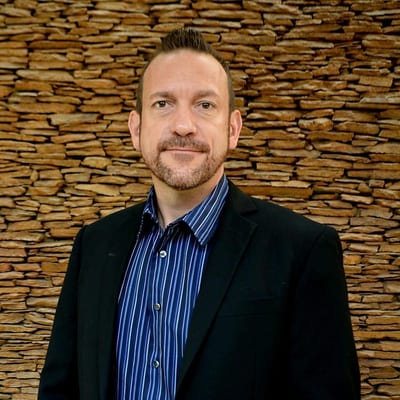
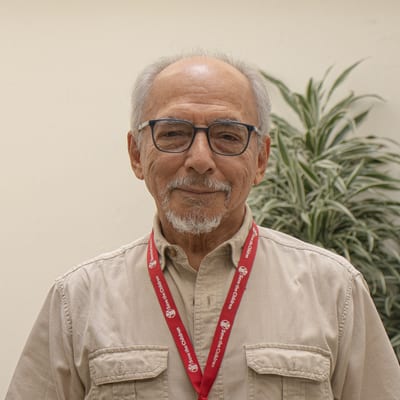
When Save the Children needed a monitoring system for a new school meals and literacy program in Guatemala, it adapted one built by Global Communities, an organization it competes with for funding. Marc Valentin of Global Communities and Salvador Baldizon of Save the Children join Jonathan Jackson and guest co-host Erin Quinn to talk about how that handoff worked.
Global Communities built the system on CommCare for UNIDOS, a USDA McGovern-Dole school feeding program that reached 450 schools in Guatemala’s Western Highlands. Save the Children then adapted it for SABES, its own McGovern-Dole program, while the UNIDOS team was still in place to train its staff.
They talk about why the timing mattered, how the people using the system came to see the data as theirs, and what Salvador found when one local partner kept reporting months late. Salvador explains why counting activities isn’t enough, and Marc makes the case that competition between organizations should end once the program is won. A practical conversation for anyone who runs monitoring and evaluation, or wants a digital system to outlast a single grant.
“I think our competition should be limited to the proposal writing period. And once the program is won by whichever organization, I’m a full supporter of sharing, collaborating, and learning.”
Marc Valentin, Country Director, Guatemala, Global Communities
“You go and do your activity, but you need to know what you expected to happen after this activity.”
Salvador Baldizon, Director of the LENS Program, Save the Children
In this episode
- What McGovern-Dole programs do: school meals, literacy, teacher training, and buying fresh produce from local farmers
- UNIDOS: 450 schools, two departments, and more than 50 indicators to track
- Moving from data as a donor-reporting requirement to data as an everyday management tool
- Designing for sustainability from day one, so PTAs, schools, and municipalities owned the tools before the program ended
- Why Save the Children dropped a platform that was giving its team headaches and adapted the UNIDOS system instead of starting from scratch
- Why the overlap between UNIDOS closing and SABES starting made the handoff possible
- “The data belonged to the program”: competing for funding, then collaborating once the program is won
- Winning over field staff who worried the new system was a way of policing them
- The partner still sending paper forms to Guatemala City, and what the dashboards revealed
- Setting a clear point for getting off paper, so frontline workers don’t do the job twice
- Beyond counting activities: asking what you expected to happen, and whether it did
- Scaling the system to other McGovern-Dole implementers
Resources from this episode
- McGovern-Dole Food for Education Program, from the USDA
- Global Communities in Guatemala
- Save the Children in Guatemala
- CommCare, the platform the UNIDOS and SABES monitoring system is built on
Related episodes
- Out-collaborating vs. Out-competing, with Gillian Javetski
- Prioritizing Platforms Over Projects
- Creating a Digital Ecosystem for Humanitarian Impact, Mercy Corps’ approach to monitoring, evaluation, and learning
- Ethiopia’s Digitization Journey: The Path to Paperless
Read the transcriptExpandCollapse
This transcript was generated by AI and may contain typos and inaccuracies.
Amie Vaccaro: Welcome to High Impact Growth, a podcast from Dimagi for people committed to creating a world where everyone has access to the services they need to thrive. We bring you candid conversations with leaders across global health and development about raising the bar on what's possible with technology and human creativity.
I'm Amie Vaccaro, VP of CommCare Growth and Strategy at Dimagi, and your co-host along with Jonathan Jackson, Dimagi CEO and co-founder. Today, we're joined by leaders from Global Communities and Save the Children, two incredible organizations who compete for the same funding. So when Save the Children needed a monitoring system for a new school program in Guatemala, a competitor wasn't the obvious place to look, but that's where they found one. I was on leave when we recorded this one, so my colleague Erin Quinn, who leads CommCare Customer Success, joined Jonathan as co-host. They talk with Marc Valentin of Global Communities and Salvador Baldizon of Save the Children.
Global Communities built a monitoring system on CommCare, Dimagi's platform for frontline data collection and service delivery for a USDA funded school meals and literacy program in, in Guatemala's Western Highlands. Save the Children then took that system and adapted it for a program of its own.
Hear why the timing of the handoff mattered as much as the technology, What Salvador found when one partner's data kept arriving months late and why Marc thinks competition between organizations should end once the program is won.
Over to Jonathan and Erin to take it from here.
Jonathan Jackson: I'm so excited to, to talk with both of you about this journey because it's extremely rare that an M&E system that was built successfully and institutionalized by one organization in a single project is then able to be used by another organization in a new project.
And today we have two amazing leaders talking to us. Global Communities, which built this system originally as part of the UNIDOS project, and then Salvador, who was then able to adopt it in a second project with a similar target. And so we're gonna hear a lot of amazing elements of that journey. and it's something that we wish happened a lot more in our industry. We'll talk about why it may or may not, and just about how much effort it is to do this. So really excited to have you both here.
Erin Quinn: I was wondering if we could start off by having you each briefly introduce yourselves and tell us about your connection to the UNIDOS program.
Marc Valentin: Thank you very much, meet you. My name is Marc Valentin I'm the country director for Global Communities in Guatemala. and I was the country director during the, last two and half years of the UNIDOS program which is my connection to the program Thank you
Salvador Baldizon: Thank you very much. nice to be here. Thank you invitation. am Salvador Baldizon Director of the USDA McGovern Dole food for education the child nutrition program named SABES the Spanish acronym, means sustainable Food Well-being and education system which is currently being implemented by Save the Children in 230 public schools in 7 municipalities of the Department of Quiché in Guatemala My connection to UNIDOS experience' is particularly meaningful because we have been able to build on and adapt a monitoring and evaluation system developed under UNIDOS to our SABES The innovation that place was just the transfer and adoption of the digical- digital tool, but also the system has enabled collaboration between our two organizations, learning from each other and adaptation of several tools to be more agile at gathering, processing, and present the results of what we are doing. Thank you.
Jonathan Jackson: for those of our listeners who are not familiar with McGovern-Dole programs, can you just explain what that initiative is and, what those programs tend to look like that are rolled out?
Marc Valentin: Uh, McGovern-Dole programs are a longstanding food security program funded by the United States Department of Agriculture which sends commodities agricultural commodities to countries around the world for use in those countries' school feeding programs. Those activities are also complemented locally with activities that reinforce school learning, educational outcomes, and other needs that may be identified between the Department of Agriculture and the local government
Salvador Baldizon: I would like to emphasize that it plays a tremendous role in complementing the, feeding of the children. Because in many developing countries children not necessarily eat a good breakfast before they go to school. So they might be hungry, and they might not be able to pay attention, to concentrate or be sleepy.
This program makes sure that a meal is prepared at mid-morning and is served to the students so that it can enhance their nutrition, their health, and their capacity to pay attention perform much better in the school. So it's a tremendous contribution to the future of our new generations in many of these countries.
It's also improving literacy literacy is the, basic skills that children need to master early in the schools to really learn everything else. And so the, the program focus on literacy nutrition and health, attract people to school, attract children to school, maintain children to school, help them to pay attention includes training of teachers so that they learn new methodologies to make learning more participatory.
Because the traditional was the teacher says, students memorize and repeat, and that's it. No, This is changing now because we want the students to be thinkers from the very early times in the schools, and the teachers to be able to facilitate that active participation of the students.
In addition, the last component is strengthening local economy because they provide also cash to buy local fresh produce around the schools, which allows the poor farmers that never had a market to sell what they produce, to have a s- secure market where they can sell their produce, which also has a tremendous impact on increasing the local economy.
So it has many benefits, not just the, the feeding. -
Erin Quinn: Wonderful. Thank you guys. And of course, today, the main theme of what we're talking about is how you take a digital technology and a program that one organization built and you scale it to other organizations. But for those who might not be familiar with UNIDOS Marc, what was this program trying to achieve, and why was a strong monitoring and evaluation system so important to its succe-success?
Marc Valentin: Thanks, Erin. Well, UNIDOS was designed as other McGovern-Dole programs to take a comprehensive approach to addressing some key challenges facing rural communities especially in Western Guatemala, where there's low literacy levels, food insecurity, and limited opportunities for quality child education.
So its main goals were to improve nutritional outcomes in school children through improvements to the National School Feeding Program. Also improving educational outcomes related to bilingual literacy. In the Western Highlands, there's both Spanish and Mayan languages spoken. It also tried to improve health and nutrition practices and improve local logistical infrastructure related to the entire supply chain for getting fresh food and vegetables into schools.
So through these different correlated objectives, the programs helped to ensure that children were educated more easily, better nourished, and remained in school. It's a very complex program or it was. It had over 50 indicators so therefore strong monitoring, evaluation, and learning system was very important.
And as the program was funded by the US Department of Agriculture, it really required rigorous, continuous, and quantifiable evidence about what was working and what needed to be improved. So the MEL system allowed us to measure results, ensure quality, and more importantly than anything, make evidenced-based decisions.
And that allowed us to adapt interventions to the real needs of the communities and the schools in which we worked
Erin Quinn: Yeah. Thanks for that overview Marc. I think that really helps demonstrate kind of what a, a comprehensive program this was and also just the expanse of the type of data you were collecting and the, and the types of outcomes you were hoping to come from the program as well. You guys are some of our partners, so you did use CommCare for this.
Thank you by the way for your partnership. But I'm curious how you think that CommCare helped you transform the way that your program teams use data both for decision-making and through different types of learning throughout the implementation
Marc Valentin: I would say that one of CommCare's greatest contribution was helping us move from a traditional reporting model to the evidence-based management supported by real-time information that I mentioned. Very often in humanitarian assistance or development programs, data is viewed as primarily a compliance requirement for donor reporting.
But with CommCare data became an operational tool that the team could use to continuously make decisions in real-time and improve implementation. In the case specifically of UNIDOS it operated across four hundred and fifty schools in multiple municipalities and two departments of the country.
So it was essential to have a system that could collect information in a standardized, consistent, and timely manner. Not only did CommCare digitize monitoring processes that previously used paper forms and manual compilation and manual validation cycles, it significantly reduced the time needed for data collection and decision-making.
But I would say probably more importantly, it CommCare really helped create a culture of learning. Teams no longer had to wait for annual evaluations to identify challenges and trends. Information became available much more quickly uh, allowing us to analyze indicators related to school attendance, literacy activities and participant knowledge of key nutrition and health messaging, and also institutional strengthening, which was a huge component of the program.
That allowed us to then use that analysis to adjust strategies in real-time. So the data stopped being historical information and became a tool for adaptive management. From a collaboration standpoint, CommCare also s-served as a unifying platform between Global Communities and Save the Children,.
And having that common platform meant that program planning and adjustments were based on one single source of data. You could say that the true value of CommCare was not in simply capturing data, but in connecting information, people, and processes. So it allowed us to turn data from just numbers into actionable knowledge, and that knowledge into decisions that strengthened of the program for both partners.
Jonathan Jackson: That's great. And for a lot of our listeners getting to large organizations like Global Communities and SAVE to collaborate is, no small feat. And Marc, you mentioned a ton of things that are about the change management and about the use of the technology and, you know, whether it's CommCare or some other tool, we see a lot of challenges when projects end on maintaining that institutional change, maintaining the use of the data-driven culture that you mentioned.
And so my understanding is you, you were really thinking about sustainability from the start of this project and have had success with that. And so I'm curious, why was sustainability a priority from the beginning? And what steps along the journey helped make, you know, the maintenance and transition of this technology beyond a single project's life cycle possible?
Marc Valentin: Thanks, John. Well, from the beginning of the program, w-we understood that technology should serve local institutions and communities rather than depend on the presence of a project or not. So sustainability was a design principle from the beginning. It wasn't a end of project activity. UNIDOS really focused on strengthening capacities and leadership of local partners and government institutions so that they could take ownership of these tools and processes from the early stages of implementation.
I can mention the food inventory systems that are still used by the parent-teacher organizations today. The PTAs are the organizations that own that process of sourcing and procuring local food. So the project was designed to support community-led solutions backed by national and local actors, particularly government ministries, municipal authorities, and the participating schools.
So to make that transition possible, we invested in ongoing training, technical support, process standardization, and a, a gradual transfer of responsibilities. And as the program approached its end municipalities, schools, and the PTAs already had the skills, processes, and ownership in place to continue using the platform and the information that it generated.
So sustainability was possible because from day one, we prioritized local own-ownership, institutional strengthening, and the integration of CommCare's digital tools into the regular everyday processes of the different program actors
Jonathan Jackson: Yeah,
Salvador, I'd love to hear your perspective as well from, you know, Save's side on how you thought about sustainability at the start of the project and that, that collaboration, because again I, I find it so impressive because it is just historically so hard to get, large implementers that are working across global scale to be able to think this strategically from the start.
And how did that play out within the organization and within your partners as you were on this journey?
Salvador Baldizon: all the implementers, all, the organizations that work in development are always concerned about the sustainability of, what we are doing doesn't end when the project ends. Not only the impact, the benefits, but also, the products we create during the implementation.
And I think, the case of monitoring and evaluation ha- is a e-excellent example of m- many times not being sustainable because most of the time those systems are designed f- specifically for a project and - don't have many possibilities of flexibility to be adapted to other projects.
So what happen is every time you start a new project, you have to start again with a new system. And that's not taking us - farther than any, in any way. And so if we have new technologies knowing that th- in this digital era that can help us to be more effective, more efficient, and reduce the time and the money that we use to set us apart for developing these monitoring systems, I think this is a tremendous great advantage.
And the other thing is having a, program that has its own ongoing platform that will keep it running beyond my project is also part of a great component that makes system more sustainable. So reduces costs, increases efficiency, allows you to spend more time where it... you should spend more time, and it keeps continue keep going beyond your project because could be adapted to many other projects.
That's a wonderful component of the system
Erin Quinn: Salvador, I wanna ask you a little bit. Obviously, you started in partnership with Global Communities on the UNIDOS program, but when you made the decision and you were looking at how you would support the SABES project, I'm curious what made you decide to adapt an existing system rather than start over or build your own system?
Did you ever consider doing it on your own or doing it differently? Or Did you always think you wanted to use the UNIDOS MEL system?
Salvador Baldizon: Well, we know, we didn't want to use the old way of designing a complex and time-consuming M&E system specific for our project. So we say, decided that, okay, let's look at how can we digitalize the system, and we adopted a different platform, and it was giving us a lot of headaches, and it was giving us- a lot of extra work.
Not only learning how to work, but also. not having the flexibility to be linked to other systems like Power BI, for example and have good information in time, and we have to repeat entering data too many times. So we were very frustrated. But at some point we were a partner of Global Communities implementing a component of UNIDOS in our area, we know they were doing something different.
And finally, our M&E staff approached them and said, "Okay, how come you are-" you seems to be very happy with your system. What are you doing that is different from us? And that's when they discovered that it was this new platform that we didn't know about. So we started learning from them and how they were using.
We realized that the features that they already have developed, adapted for the UNIDOS project were applicable to what we were doing in SABES because SABES is a similar project to UNIDOS. And fortunately, the McGovern-Dole projects have like a standard components and always doesn't have as many indicators as Marcia and UNIDOS, we only have thirty-seven.
But still these are the same indicators that we need to follow and the components are very similar. So we say, "I think we, we need to move, get rid of this system that we were-- thought was the best we could do and move into this." Okay. And but now we need to figure it out, okay, but, eh, do we need to start from scratch?
Because we already did something with the other platform, and if we start again, it's going to take too long, too much time. So we say, "But why don't we ask Global Communities if we can adopt the system, use many of what they already developed, clone some of those, and just add what we need."
And that's what we did. We talked to Marc. Marc was generally saying, "Of course, we can help you." And then we started. They trained our staff. We sent our staff to the area of Huehuetenango where they work. And they were very kind in terms of using their own time to make sure that we understood what it was, how it works.
And every time we have doubts, we could call them and say, " how does this work? the support was incredible. And we remain grateful, very grateful to Global Communities for this.
Marc Valentin: Con mucho gusto. If I can add there, Erin, Global Communities Save the Children and CRS, w-we are three organizations that were in a consortium of implementing partners for the USDA McGovern-Dole Programs, and we're all nonprofit humanitarian organizations that are working to the same goal.
So rather than treating data or the platform as the, an exclusive responsibility of our M&E team or even a single organization, we always had the philosophy of promoting a shared approach in which our two organizations played active roles in generating validating, and analyzing the information.
And I think one of the s- greatest strengths of the, the partnership was recognizing that the data belonged to the program and its goals, not to a single organization. And that culture of shared ownership and collaboration not only increased transparency but accelerated learning and led ultimately to better decisions, and it transformed a monitoring system into a management and learning tool that served the needs of Guatemalan schools and students rather than a single organization
Salvador Baldizon: I would like to add another point of view that even though Global and Save the Children, for example, might be competing at some point for development funds, once we move beyond that phase, we are organizations with, strong values that, that recognize that collaborating with all the development partners in the area is critical for the success of each one of us, because no one can do anything of great importance alone.
So, we have these, these phases where we compete, but most of the time we are willing to share. And in the past, I remember the people were saying, "Oh no, they are going to steal our ideas." No. We're saying, "Okay, if they replicate our ideas, that means they are good ideas, and that will go beyond our area."
So I think we have a new vision of how we need to work together to have greater impact and long-lasting sustainability
Erin Quinn: You took the words exactly out of my mouth. I was gonna say, I, the one thing I wanted to highlight was I love what you guys did, but I think it does not always play out this way. Even though you both work for these large nonprofits that are very mission-driven, that do amazing work throughout the world, there is a competitive aspect, and sometimes we see that actually hindering progress.
And I think it's great to see an example where you get back and you say, " I love what you said, Marc, that this is not even our data. Like this is, belongs to none of us. It belongs to Guatemala and the kids and the schools here and the parents. But then also just to acknowledge that what is good for one of us is good for all of us.
And so the idea that if we really are mission-driven, that includes sharing our good ideas with other people. And I know Jonathan has always talks about out-collaborating, not out-competing, this idea that if you can make more impact by collaborating, that's what you should do. And if that means giving up some of your ideas, that's fine, because at the end of the day, we're all working towards that one main goal.
So just a little kudos to you guys for being an example of that.
Jonathan Jackson: Yeah, actually, I, I wanted to learn more about that Marc and Salvador. Salvador, what you described in terms of your staff traveling to Global Communities' site to learn the technology this is often something that partners might aspire to do but might not have budget.
And most often I feel what can get in the way of collaboration, sometimes it's the competitiveness that Salvador mentioned, but often it's just prioritization. You know, you're too busy deploying your own program. You don't have time to share your best practices externally. You don't have time to host somebody for a big field visit or do ongoing mentoring.
So I'm really interested to learn, Marc, how did you find the time and budget, you know, to be able to do that? And Salvador, likewise, like how did you find the time to go learn? Because I think it's a commitment on both organizations' side to really give your staff the time they need to truly learn how to adopt something and to teach.
And I think very often leaders can want that to happen, but not be willing to commit the resources or take the time. So I'd love to hear just more about how that played out and it's really impressive that both of your organizations were able to commit to that collaboration.
Marc Valentin: We were lucky in the sense that when the SABES program was starting up, the UNIDOS program was still active. It was closing down, so it was in its closeout phase. So there was an overlap between the two organizations, which meant that our monitoring and evaluation team was still with us and still there and available to provide technical support and some of the back end details of the transition of the, the platform.
So if it weren't for that overlap between the programs, it would've been much more difficult, obviously, because we would've not had, the technical staff on board still after the end of the program. So the timing was critical. And beyond that, it was really just institutional will. You know, are different personalities within the organization, and some are more territorial, but I, truly believe in sharing and collaborating.
I think that, as Salvador mentioned, of course, we're humanitarian organizations that compete for development funds. I think our competition should be limited to the proposal writing period. And once the program is won by whichever organization, I'm a full supporter of sharing, collaborating, and learning because... between organizations, because our ultimate goal is to do good and to make sure that we're making impact in the communities and beneficiaries we serve. So by building walls and, being territorial about data, in the end is doing more harm to our beneficiaries. And we all live by this principle of do no harm.
So if we're going to live by that principle, we should be sharing tools best practices, and information between partners.
Salvador Baldizon: I think one benefit we have now that we learned from the COVID pandemic is that we learned to, to connect virtually. So that has facilitated the possibility of sharing more among ourselves. I still prefer the in-person, because I think it's more effective. We bounce ideas in a more effective way but this is great because we don't have to spend time traveling from one place to another.
We can do it immediately or we can program it. So that's one convenience that facilitates this process now. The other thing is I think we realize that the conviction that nobody can accomplish any great things alone is another thing that, that opens our systems our time to share with others.
In addition, we always learn from someone else. They say that one of the biggest abilities that will make us move into the future and be successful is curiosity. If you don't c- you are not curious about what others are doing and what you can learn to do it better you enclose yourselves too much.
And the other thing is that we have learned to prioritize our time. - We have 24 hours, all of us. It is our decision where we put that time. And one of the things that we realized is that we don't, as managers, don't have to be involved with every little thing of the project, that we can delegate.
So that will... gives us more time to, to do this sharing.. which I love doing, and I hope we will continue doing in the future
Erin Quinn: one of the things that strikes me, is it feels like your users were really excited and empowered to take this data and use it and be like, "Hey, this is ours.
We wanna look at it, we wanna see what it says, and we wanna actually take action on it." And a lot of times in digital systems, we find that to really be kind of a big behavior change. People are accustomed to collecting data for a report, not to actually help themselves or help the program. And I'm curious if you guys did anything intentional.
Like, did you just have amazing users? Which does happen, Was this something that was really easy to inculcate in your users, or was it something that you really intentionally had to stoke in them and work with them on?
Marc Valentin: One of the lessons we learned is that technology alone doesn't create that culture of data use. Tools like CommCare can provide valuable information, but real change happens when people understand how that information can help them make better decisions in their daily work. We learned that adoption is fundamentally a change management process.
Training alone is not enough. We had to support teams continuously, listen to feedback make adjustments, and demonstrate with real examples how data could help solve implementation challenges. So as a result, - the users saw data begin to influence decisions around planning, monitoring, and resource allocation, and that really increased ownership substantially
Jonathan Jackson: And that, that's a great point, Marc and I'm curious for both you and Salvador, even within Dimagi and I'm sure within your organizations, even if you have the data and you believe the data, it can be a big effort to find the time to really shift into a data-driven culture 'cause it, it is time-consuming, particularly at first when you're trying to adapt to the fact that you now have data you believe and can act on it.
Did you find the PTAs and the partners that had access to these tools pretty comfortable on, that kind of learning journey or that change management journey? Or did you find there was a lot of support you needed to provide before it kind of had that aha moment where you're like, "Oh, now because I have this data, I can act differently and I can manage things differently"?
And I'm sure you have, you know, experiences from your own careers and own organizations, but we face this all the time internally of like, how do you create that aha moment? How do you build on it when you're probably like, "Oh, wait, I can change my processes because we now have this data available in a different way"?"? Salvador, you wanna go first?
Salvador Baldizon: I would like to say that our staff, when they began to learn about the, this new platform, approached it very carefully. Not with the great enthusiasm that I have because - they were having-- had some other platforms that were giving them so many headaches, and they couldn't use it when there was not connectivity in many of the rural areas where they work, and sometimes they had to do the same system over and over because it didn't synchronize.
And the other thing is when they realized that we could see where they were in the field, how many days they have been here, they felt, "Is this like a po- policing system?" I said no. It's a system that will help us to figure out where you guys are doing your best and where you need support to im- to increase the services that, that we need to provide."
So, then when they start using the system they realized, "Okay, this is day and night difference between what we were using before and what we are going to be using now." We have not been able yet to give access to the system, to the schools, for example, or to the PTAs as maybe would be the ideal.
But it has helped us to know where we need to put everyday effort to make sure that our services and our support is reaching the places where that needs to be reached
Jonathan Jackson: That's great. I have a huge smile on my face 'cause I'm picturing Erin whenever I roll out a new system at Dimagi and her balance of, "Oh, could this help me or is it just one, one more annoying, you know, top-down requirement?" Marc, I'm curious what your experience felt like on from your side as well.
Marc Valentin: Similar to the experience of our colleagues at Save the Children there is a steep learning curve for people who are moving from a paper-based system to something like CommCare, a digital system. But the most sustainable digital systems are not the ones with necessarily the most advanced technology.
They're the ones that local institutions truly own, trust, and use to make decisions every day. So an important lesson, I think, was the value of data - visualization and accessibility. Data has a much greater impact when it's presented clearly and understandably, and CommCare's dashboards and reports are very easy to understand, which help the program teams and technical specialists identify trends, detect challenges, and prioritize actions without requiring complex analysis every time.
And that value was readily apparent to the PTAs, and that helped helped improve their uptake and use of the platform.
Erin Quinn: So Marc, that was, I feel like a, a really nice example of a time where you finally got to see maybe some gears click and start to see your users start to feel the value of the system. But I'm curious because you've both talked so much about how important it is to have local buy-in, both for the implementation right now, but certainly for long-term sustainability.
Were there any other moments like that where you thought, "Oh, it's working. They're doing it," or where you felt like you really started to feel the tides change on how users felt about the system? Especially because like what you said, Salvador, they weren't all so excited from day one, right?
So when did you see those kind of start to change a bit?
Marc Valentin: Well, from the side of Global Communities I think our users really appreciate the the ability to track the progress in institutional capacity building. We are able to use this system to see which indicators and which trends and which areas of improvement the, the schools were improving in and, which ones still needed more attention from our team.
So that en-enabled us to really focus like a laser on the, the key po-components of the program that each school needed in order to be able to make it sustainable in the longer term. So I think internally uh, we had more aha moments. It would be very interesting to hear the perspective of some of the PTAs in schools.
But a-as an implementer, I think the ability to track the progress of the schools i-in terms of their performance management plan was one of the biggest aha moments from our end What about you, Salvador? Was there a moment where you thought, "Aha! Ahora sí"?
Salvador Baldizon: the dream of every project manager is to have updated information of what's going on in the field at his or her fingertips. I remember my previous director in other organization say, "This has been my dream for the last 20 years. Still not accomplished, but this is my dream." And so this is what we can get with this system, with the platform, because our staff is now transferring the information, as you say, to very easy and critical dashboards where we can just click and say, "Okay, this is what hap- happening here, or this is what happening there."
This is the dream that came true to all-- for us. However, it is, - as Marc said the, the learning curve is not as fast for everyone as it could be, because we have two implemented partners - in SABES project. And this one partner that is-- was at the beginning of the year, was always behind two... one or two months behind in terms of updating the information. And so we kept on... We don't want to push our partners and, and be bossy with them, but at the same time we wanna know what's going on and why. And so what happened, wh-what we discovered is that their staff was still filling up paper forms and sending it to Guatemala City for the M&E guy there to enter the information.
And we said, "No, but all your staff in the field can enter it immediately." He said, "Oh, they have never done this and this is too much \- work for them." I said, "No. We noticed in the dashboard that they are mainly in the field, mainly in the first part of the day. But after around 2:00 we don't see anyone in the field, and so what are they doing during this time?"
He said, "Oh, we didn't realize that. Well, we can see it now." And so now finally they try and they say, "Oh, it's not as difficult as we thought it was going to be." So now we are getting information on time even for them-- from them. And this is very important because the reason we have local partners is because we as an international organization know we're not going to be here in the country forever. But these local partners are the ones who will stay for much longer than us- And the fact that they are learning to use new technology, efficient technology that will helps to be... help them to be more efficient and have more impact, I think that's another great - advantage of the system
Jonathan Jackson: Salvador, I love that, that point. Erin and I have unfortunately been a part of way too many projects that never make that transition from paper getting sent to the M&E officer and then entered. And I think this is an extremely under-thought-through part of change management, because if your field worker's life is always worse, you know, you have to both enter it on paper 'cause the organization never gains the confidence to get off paper and then digitize everything, you end up with a worse job for the frontline worker.
And so part of, I think, what is so impressive about what you've done in this program in Guatemala, but also is great for our listeners, is like having very clear discussions and success criteria on when you're gonna get off paper is critical. Because if we're overloading the frontline worker, like the second anybody looks away, they're gonna stop doing it.
You know, it's gotta actually be a better experience for everybody in the system, and the beauty of digital is usually it is. You know, if you do it well and you do it appropriately you make it work offline and all the things you both designed for. But it is tragic when you build these great systems and then you realize, you know, six months into the project you're like, "Wait, they're not entering into the system that's getting, you know, sent upstream?"
And we've unfortunately found that way too many times in our experience at Dimagi. And also that really we never got the buy-in, you know, at the top level to get off paper in first place. Everybody's like, "Sure, I'll try this. You're making me do it. I want the money. I want the project.
I'll try it to placate you, but I'm not bought in. You know, I don't, I don't really believe this is gonna help me run a better program." And so Salvador, I'm really curious to learn more. When you found this out, and you talked about, you know, looking at the data and knowing they had time, but how did that dialogue go?
And then did the organization successfully get into to having the, the frontline workers digitize directly?
Salvador Baldizon: Uh, Well, this is happening now. They finally accepted the fact that paper, paperwork was were from the last century and we need to move forward. It's not easy because I remember when we started using Excel, we heard about accountants who will still check if Excel was right by doing the cal-calculations.
And it take, it takes time to trust the new technology. But they are now on board. They is not perfect yet, but is moving much forward, and we know that even though they know that this requires investment, a little bit of money with, on the s- on the platform and the system, they are seeing that this is much effective and efficient than what we used to do in the old, days.
Jonathan Jackson: That's great. Salvador, on that point I'm so curious. So you're now using the system. You're going through with these two partners to adopt further adopt it, get the data better in real time., Where do you wanna take this next? You know, like collecting the data is one point, data-driven decision-making is one point, but how are you thinking about how this can create even more value?
You know, at the end of the day, the goal of deploying these technology systems is that the communities you're trying to serve and that the people you're empowering are able to provide better and better services on the ground. So as you look at where you're at today, where do you hope to be, you know, a year from now?
Salvador Baldizon: I think the the issue here is move into the new world, move into the new systems. Drop your traditions and adopt... Use what is now available and could be-- could help you to be better, greater, more effective, more efficient. And the thing is don't depend exclusively on technology either, because as Marc pointed out before, people don't use it, if people don't believe in it, if people don't believe in it and use it for improving what they are doing and learning if what they are doing is working or not working.
Because there is Something that happens in many projects is that a lot of people focus m- too much on implementing activities. So we did this many things. We did this many trainings. We produced this many things. We trained this many other farmers teachers students. And the issue here is, but what happened after the training?
What we are trying to accomplish was one, and then how do we know whether we are accomplishing it? Because what we try to instill in our staff is, "Okay, you go and do your activity, but you need to know what you expected to happen after this activity, and how do you re- evaluate if that's what you expected to happen is going to happen, is happening?"
If not, you need to understand why it didn't work. And then if it didn't work, okay, what can I do to make it work? I say this is the constant innovation that we need to continue doing because we can do better every day. We can im- improve what we are doing if we don't just repeat what we did in the past.
And so this, system should help us to be more effective at measuring the achievements if we are really reaching the, the goals that we want, and then learning why it works and why it doesn't work, and how we continue doing this, what they call the mindset of continuous improving or continuous learning.
Jonathan Jackson: Wonderful, Salvador. And, we'll close, Marc. I know we've had-- taken a lot of both of your times, but Marc, same question to you. Where do you wanna see things head next now that you've had this big success with technology, seen what Global Communities was able to build and transition and have live on?
What do you, what are your hopes for how you know, your organization continues leveraging this and where you wanna move going forward?
Marc Valentin: Well, we'll definitely be continuing to use this tool and this platform. We're soon to start up a new McGovern-Dole Program in another country. I don't think I can mention it yet because it's not official-official. But McGovern-Dole Programs continue to be implemented around the world, and I think there's opportunity to scale this and to share this platform in the way it was used with other organizations, with Department of Agriculture.
So I think there's a real opportunity to share this at a global scale. How is the question that I'm trying to wrap my head around. There's several spaces, conferences roundtables where we could share these lessons. But I think that organizationally both Global Communities and Save the Children are in a position to be able to share this platform and monitoring system that's based on CommCare across their-- the countries where we implement McGovern-Dole Programs.
So I think there's real opportunity to scale, not just with Global Communities and Save the Children, but with other USDA implementers as well. And I'm hoping that we can continue that conversation and together work to spread this, this great tool throughout the world.
Jonathan Jackson: Well, thank you. Thank you for that, Marc. Thank you, Salvador. Erin, wonderful to have you here today. But we really appreciate your thoughts. We'll drop a lot of links in the show notes to, to relevant material and feel free to, reach out to us and we can connect you with Marc and Salvador if you're interested in learning more about the specific system.
But really appreciate your time here today.
Marc Valentin: Thank much, John, Erin Salvador, un placer
Salvador Baldizon: Thank you.
Amie Vaccaro: A huge thank you to Marc and Salvador for joining us and to Erin for stepping in, and thank you for listening. A few things I'm taking from this conversation. First, timing matters. UNIDOS was closing just as SABES was starting, so the team that built the system was still there to teach it.
Second, the data belongs to the program, not to one organization. Marc's rule, competition ends once the program is won. Third, a system isn't working just because it's been rolled out. Salvador found one partner still sending paper forms to the capital to be typed up. Set a clear point for getting off paper or frontline workers end up doing the job twice.
And finally, as Salvador put it, don't just count your activities. Ask what you expected to happen after them and whether it did. If you'd like to learn more about the system, write to us at podcast@dimagi.com and we'll connect you with Marc and Salvador.
That's our show. Please like, rate, review, subscribe, and share this episode if you found it useful. It really helps us grow our impact. And write to us at podcast@Dimagi.com with any ideas, comments, or feedback. This show is executive produced by myself. Michelle Avalencia is our editor. Natalia Glowacky is our producer and cover art is by Sudan Chukanth.
A final note in the spirit of transparency, we use AI to assist with guest research, copywriting, and post-production so a small team can produce a high quality show. All AI assisted content is reviewed and edited by humans and we retain full responsibility for what you hear.