On this page
Dr. Neal Lesh, Chief Strategy Officer at Dimagi, shares his thoughts following the 2017 SwitchPoint Conference.
I had the good fortune of attending and presenting at the 2017 SwitchPoint conference, organized by IntraHealth International, in Saxapahaw, North Carolina. SwitchPoint brings together musicians, innovators, health practitioners, and a wide range of people working in global health and humanitarian response for a few days of information sharing and soul searching. The event is highly produced, and by putting people who do not typically work together in the same secluded space, and juxtaposing seemingly unrelated ideas, the meeting sparks creativity and self-reflection in the speakers as well as the attendees.
Vulnerability in the room
The word that best captures my experience is vulnerability. There was no jockeying to be seen as the smartest person in the room. Many people talked about mistakes or losses in their experience and how those events shaped their work. It is common for information technologists to urge our colleagues from public health and medicine to embrace failure. We know that the innovative things we build often do not work on the first try; we test them to see what breaks, and then fix the problems.
Design under the mango tree
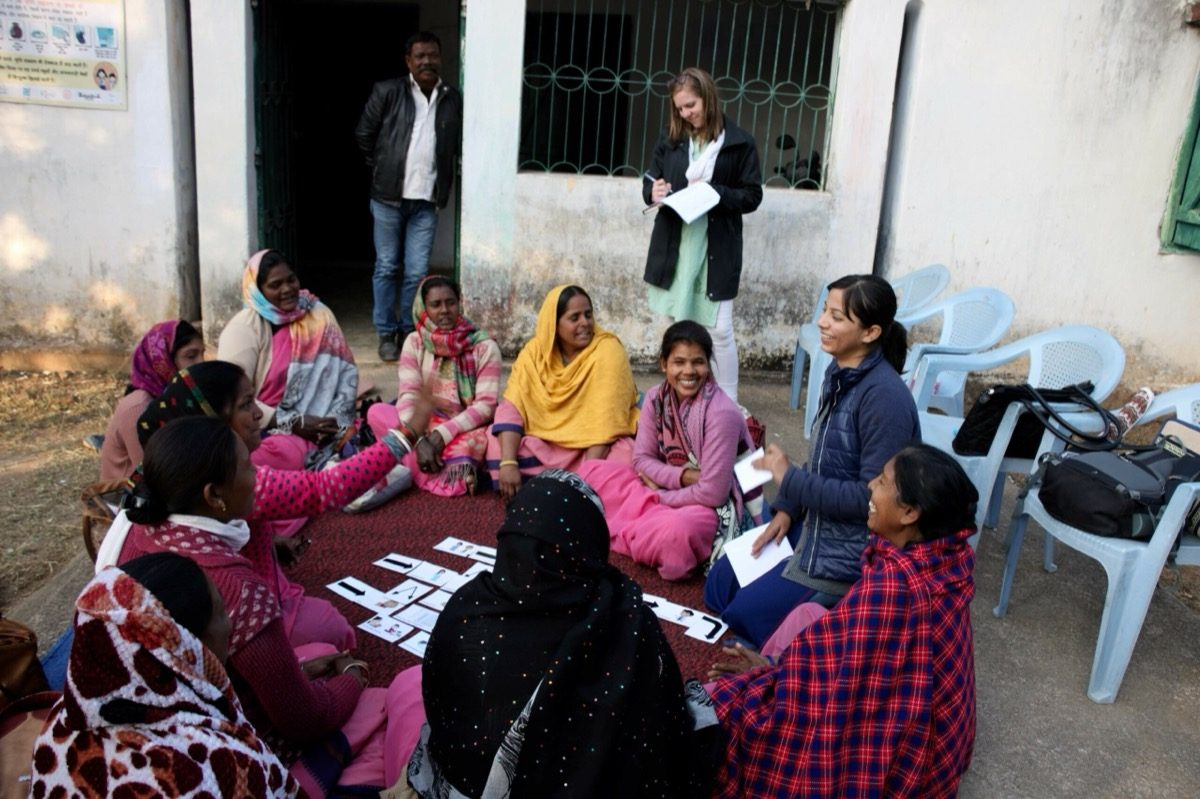
We aspire to fail fast so we can move on to the next thing, which might work or might uncover a new set of problems to fix. In fact, if you are not failing at all, it means you are not trying enough new things, which means you will soon be obsolete. At Dimagi, we often speak about our “design under the mango tree” approach, which involves introducing technology in its early stages to real users, getting their feedback, and improving the technology based on it. We also promote continuous, incremental improvement once a system is launched, introducing new variations and testing which ones improve performance.
A sudden realization
During SwitchPoint, I was moved to hear several health practitioners share stories of patients who had not survived despite their best efforts. In some cases there was a clear lesson or uplifting element; in others it was simply a formative moment. Listening to these stories, I had a sudden realization that now seems obvious:
I don’t want my health providers to fail fast.
Similarly, I do not want a genius medical researcher to boast about having found a thousand ways not to cure a disease, even if that is what they must do to discover a cure. While learning from failure is essential in medicine and public health, each failure can be a profound loss.
Reframing failure for health systems
What I will take from SwitchPoint is a better understanding of why some of our partners may resist an iterative testing approach that inherently involves learning from failure. That resistance is often connected to their commitment and their training to provide the best possible care for each patient. At Dimagi, we will certainly continue our “design under the mango tree” and advocate for continuous improvement of digital systems through ongoing testing of new ideas. It is the only way we know to build a system that provides the most value to its users. But I will now work harder to incorporate this into a health-systems perspective, and to be more mindful of the stories of failure that most health workers carry with them.
Building for frontline impact?
Talk with our team about designing digital tools that start small and scale sustainably.
Get in touch